
Annual Health Checkups: What Tests You Actually Need by Age
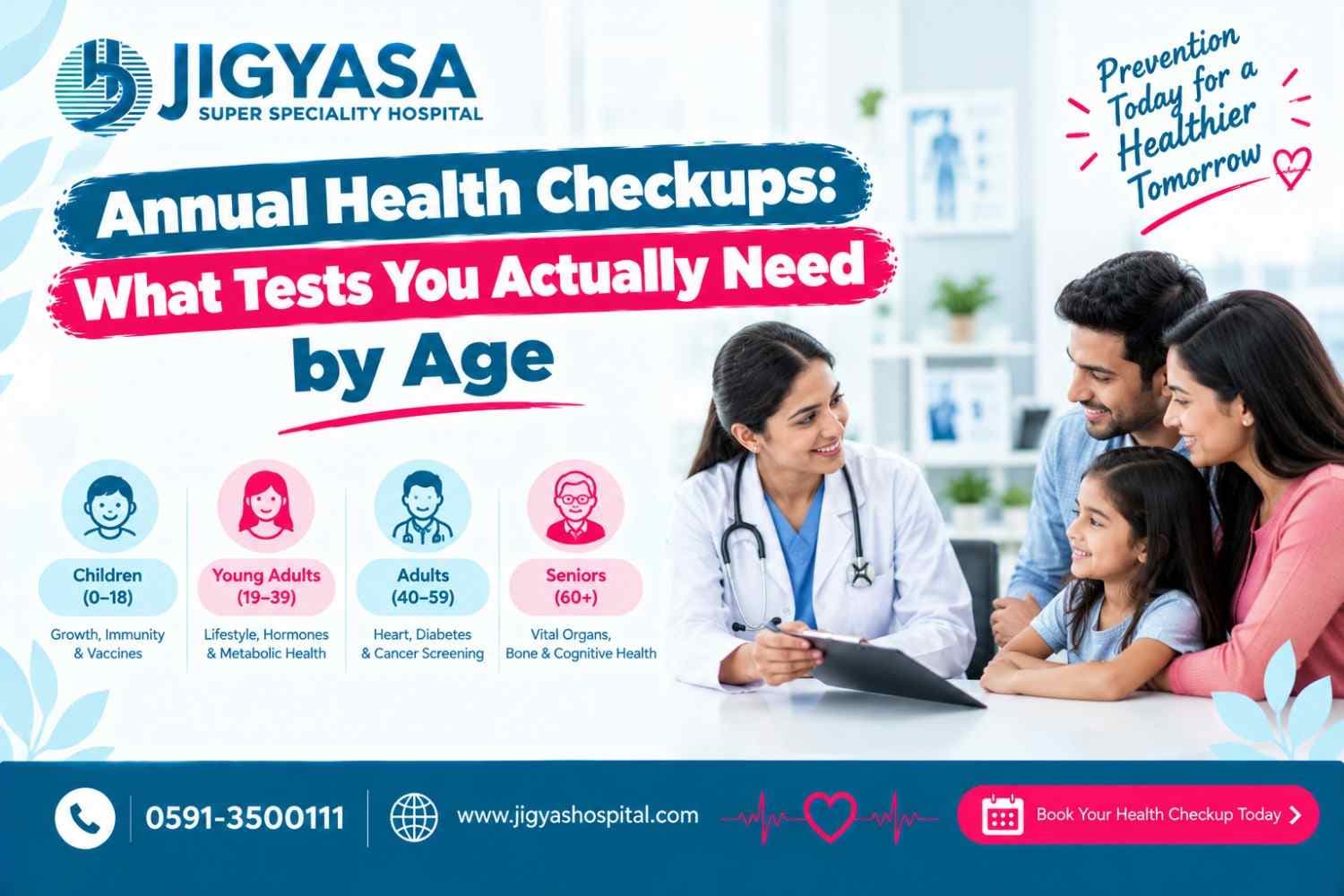
Not every test is needed every year. Learn which health screenings make sense in your 20s, 30s, 40s, 50s, and beyond, with guidance from Dr. C.P. Singh, Jigyasa Hospital, Moradabad.
"Full body checkup" sounds reassuring, but a long list of tests is not the same as a useful checkup. Some tests are valuable for almost everyone, some matter only at certain ages, and some are worth doing only if you have symptoms or risk factors. Ordering everything every year can lead to extra cost, anxiety over minor findings, and further unnecessary tests. At Jigyasa Hospital, Moradabad, Dr. C.P. Singh, Founder and Chairman, advises a simpler approach: choose tests based on your age, family history, lifestyle, and existing conditions. This guide explains what is generally recommended at each stage. It is general guidance, and your own doctor may advise more or fewer tests for you.
The Basics Almost Everyone Needs
At any adult age, a yearly check usually includes:
- •Blood pressure: High blood pressure often has no symptoms
- •Weight, height, BMI, and waist measurement
- •Blood sugar: Fasting glucose and/or HbA1c
- •Cholesterol (lipid profile): Frequency depends on age and risk
- •Basic history and examination: Sleep, mood, habits, family history, medicines, and vaccinations
- •Dental and eye checks at suitable intervals
These simple checks catch the most common silent conditions: high blood pressure, diabetes, and abnormal cholesterol.
In Your 20s
Most young adults are healthy, so the focus is on habits and baseline numbers.
- •Blood pressure, weight, and BMI
- •Blood sugar if overweight, with a family history of diabetes, or other risk factors
- •Hemoglobin, particularly for women, since anemia is common
- •Vitamin D and B12 if you have symptoms or dietary risk
- •Cervical screening for women, as advised by a gynecologist
- •Vaccinations: keep tetanus, hepatitis B, and others up to date
- •Mental health check: stress, sleep, mood
In Your 30s
- •Blood pressure, sugar, and lipid profile, at least every few years and yearly if risk factors exist
- •Thyroid function if you have fatigue, weight change, hair loss, or irregular periods
- •Cervical screening for women, per your doctor's schedule
- •Breast awareness and clinical breast examination for women
- •Eye check if you use screens heavily or have vision problems
- •Discuss family history of heart disease, diabetes, or cancer, since this can change what you need
In Your 40s
This is when screening becomes more important.
- •Yearly: Blood pressure, fasting sugar or HbA1c, lipid profile, weight and waist measurement
- •Kidney function (creatinine) and liver function tests, especially if you have diabetes, high blood pressure, or take regular medicines
- •ECG and heart risk assessment, particularly with risk factors; further tests such as an echo or stress test only if advised
- •Women: Regular cervical screening, and breast screening (mammography) as advised by your doctor, often starting around 40
- •Men and women: Eye examination for glaucoma and refractive errors
- •Thyroid function if symptoms exist
- •Bone health discussion for women approaching menopause
In Your 50s
- •All yearly basics: blood pressure, sugar, lipids, kidney and liver function
- •Colorectal cancer screening: Commonly advised from about 45 to 50, using stool-based tests or colonoscopy, as your doctor recommends
- •Breast screening for women, as per schedule
- •Cervical screening continuing as advised
- •Prostate: Men can discuss the pros and cons of PSA testing with their doctor, since it is not suitable for everyone
- •Bone density (DEXA scan): Women after menopause, and men with risk factors
- •ECG and cardiac review, with further evaluation if symptoms or risk factors exist
- •Eye examination yearly or as advised, especially with diabetes
- •Vaccinations as advised, including flu and others
In Your 60s and Beyond
- •Yearly blood pressure, sugar, lipids, kidney, liver, and thyroid checks
- •Heart review and ECG; echo or other tests if symptoms or known heart disease
- •Bone density testing and fall-risk review
- •Eye, hearing, and dental checks
- •Continuing cancer screening, as long as your doctor considers it beneficial for your health and life expectancy
- •Memory and mood review if you or family notice changes
- •Medicine review: older adults often take several medicines that need regular checking
- •Vaccinations such as flu and pneumococcal, as advised
At a Glance
| Age group | Core tests and checks | Add based on risk or advice |
|---|---|---|
| 20s | BP, weight, hemoglobin | Sugar, vitamin D/B12, cervical screening |
| 30s | BP, sugar, lipids | Thyroid, breast exam, eye check |
| 40s | BP, sugar, lipids, kidney, liver | ECG, mammography, eye pressure, thyroid |
| 50s | Same as 40s | Colorectal screening, DEXA, PSA discussion |
| 60+ | Same as 50s | Hearing, memory, medicine review, vaccines |
Who Needs Checkups More Often
Start earlier or test more often if you:
- •Have diabetes, high blood pressure, heart, kidney, thyroid, or liver disease
- •Have a family history of early heart disease, diabetes, or cancer
- •Smoke, drink heavily, or are overweight
- •Are pregnant or planning pregnancy
- •Take long-term medicines
- •Have had abnormal results before
When You Should Not Wait for the Annual Date
Do not wait for your yearly checkup if you have:
- •Chest pain, breathlessness, or fainting
- •Unexplained weight loss, persistent fever, or night sweats
- •Blood in stool, urine, or cough
- •A new lump, a non-healing sore, or a changing mole
- •Persistent cough, hoarseness, or swallowing difficulty
- •Severe or persistent headaches, vision changes, or weakness
- •Ongoing low mood, anxiety, or sleep problems
Symptoms deserve prompt evaluation at any age.
Are "Full Body Checkups" Worth It?
Comprehensive packages can be convenient, but more tests do not always mean better health. Some tests carry a risk of false alarms, leading to further investigations that do not help. A good checkup starts with a conversation, not a menu. Ask your doctor:
- •Which of these tests do I actually need, given my age and history?
- •What will we do if the result is abnormal?
- •How often should this be repeated?
Preparing for Your Checkup
- •Fast for 8 to 12 hours if your doctor asks for fasting tests, drinking only water
- •Take regular medicines as advised, and ask beforehand about diabetes and blood pressure medicines
- •Carry previous reports and a list of current medicines and supplements
- •Note any symptoms, even small ones, and family history
- •Wear comfortable clothing, and avoid heavy exercise just before testing
After the Checkup
- •Ask for results to be explained, not just handed over
- •Keep reports organised so trends can be compared year to year
- •Act on advice: lifestyle changes, medicines, or follow-up tests
- •Note the date for the next review
How Jigyasa Hospital Can Help
At Jigyasa Hospital, patients can discuss which checks suit their age and risk with Dr. C.P. Singh and the team. Blood tests are processed in our NABL-accredited lab, and where a result needs specialist input, patients are guided to the relevant department. Our 24/7 emergency care is available for urgent symptoms.
Preventive Health Checkups at Jigyasa Hospital, Moradabad
- •Age-appropriate health screening tailored to your risk profile
- •NABL-accredited laboratory for accurate blood tests
- •Specialist referral for abnormal findings across departments
- •24/7 emergency care for urgent symptoms
Book an Appointment: 7900903333
Address: Near Miglani Cinema, Rampur Road, Moradabad – 244001
Online Appointments: jigyasahospital.com
Preventive Health | Annual Checkup | NABL Lab | Cancer Screening | Ayushman Bharat Accepted
Key Takeaways
- •More tests ≠ better health — choose tests based on age, family history, lifestyle, and existing conditions, not a one-size-fits-all package.
- •Basics for all adults: BP, weight/BMI, blood sugar, lipid profile, basic history/exam — these catch the most common silent conditions (hypertension, diabetes, cholesterol).
- •Screening escalates with age: 20s (BP, hemoglobin) → 30s (lipids, thyroid) → 40s (kidney/liver, ECG, mammography) → 50s (colorectal, DEXA, PSA) → 60+ (hearing, memory, medicine review).
- •Test more often if you have diabetes, BP, heart/kidney disease, family history, smoke, or take long-term medicines.
- •Don't wait for the annual date for symptoms: chest pain, unexplained weight loss, blood in stool/urine, new lump, or persistent cough need prompt evaluation at any age.
Frequently Asked Questions
Do I need a full body checkup every year?
Not necessarily. A yearly review of basic measures is sensible for most adults, while the full set of tests depends on your age and risk. Your doctor can tailor the frequency.
At what age should I start regular checkups?
Basic checks like blood pressure and weight can start in early adulthood. Many screenings, including cholesterol, sugar, and cancer screening, are stepped up from the 30s to 40s, or earlier if you have risk factors.
Is a normal report a guarantee of good health?
No. It is reassuring, but tests capture a moment in time. Healthy habits and attention to new symptoms still matter.
Which cancer screenings are commonly advised?
Cervical, breast, and colorectal screening are commonly recommended at suitable ages, and some people may need others. Your doctor will advise based on your sex, age, and family history.
Do I need to fast for all blood tests?
No. Some tests, such as fasting sugar and lipid profile, may require fasting, while others do not. Follow the instructions you are given when booking.
Related Articles

Heart Attack Warning Signs You Must Never Ignore
Recognizing heart attack symptoms early can save your life. Learn the critical warning signs from Dr. Amit Kumar Singh, Senior Interventional Cardiologist at Jigyasa Hospital, Moradabad. Call 7900903333.
5 Early Morning Habits That Prevent Diabetes Naturally
Discover 5 powerful morning habits that naturally prevent diabetes. Expert advice from Dr. C.P. Singh, Senior Consultant Physician at Jigyasa Hospital, Moradabad. Call 7900903333.
Why Summers in UP Are Dangerous for Your Kidneys
UP summers can silently damage your kidneys. Jigyasa Hospital Moradabad explains the hidden risks, warning signs, and how to protect your kidneys this season. Call 7900903333.