

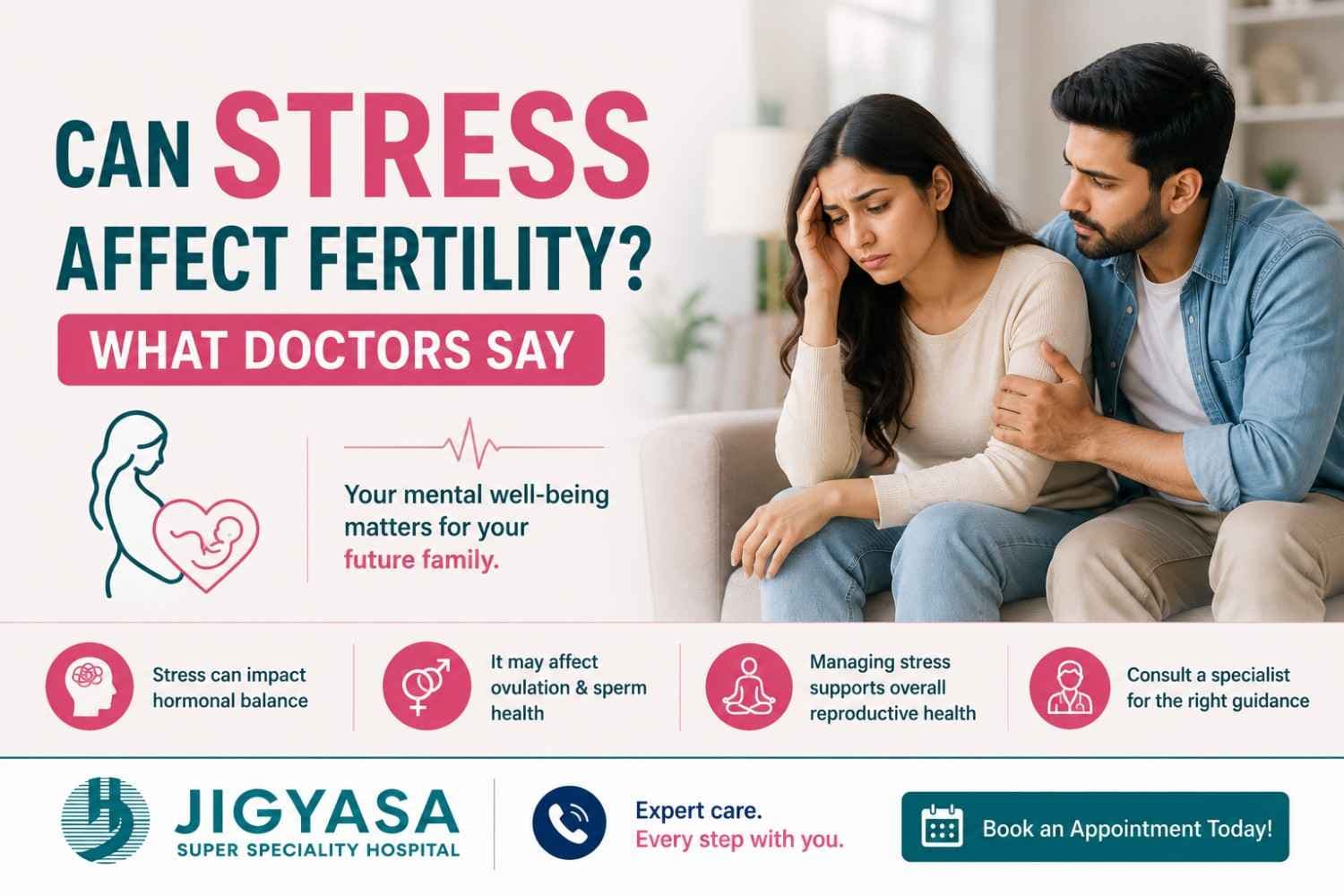
Can Stress Affect Fertility? What Doctors Say
Struggling to Conceive? Stress May Be Playing a Bigger Role Than You Think. Jigyasa Hospital Moradabad's Doctors Explain Exactly How Stress Affects Fertility in Men and Women — and What You Can Do About It.
If you have been trying to conceive without success, you have almost certainly heard some version of this well-meaning advice from a family member: Tension mat lo, itna sochoge toh nahi hoga — relax karo, ho jayega. Frustrating as it can feel to hear this while in the middle of a deeply emotional fertility journey, the advice is not entirely wrong. The relationship between psychological stress and reproductive health is one of the most actively researched areas in modern medicine — and the evidence, while nuanced, is clear: chronic stress does affect fertility, in both men and women, through multiple biological mechanisms. But — and this is equally important — stress alone is rarely the sole cause of infertility. It is one piece of a complex puzzle, and blaming a couple's failure to conceive entirely on 'too much tension' is medically inaccurate and psychologically harmful. At Jigyasa Hospital, Moradabad, our gynaecology and reproductive health team takes a whole-person approach to fertility — addressing hormonal, structural, and psychological factors together.
The Biology of Stress — How It Disrupts Reproduction
When the brain perceives stress — whether from a difficult marriage, financial pressure, workplace demands, or the grief of repeated failed conception attempts — it activates the hypothalamic-pituitary-adrenal (HPA) axis, triggering the release of cortisol (the primary stress hormone), adrenaline (the fight-or-flight hormone), and CRH (Corticotropin-Releasing Hormone) from the hypothalamus.
The hypothalamus is not only the control centre for the stress response — it is also the master regulator of the entire reproductive hormonal system through GnRH (Gonadotropin-Releasing Hormone). When the hypothalamus is in chronic stress mode, GnRH production is suppressed. This sends a ripple effect down the entire reproductive axis:
- •In women: LH and FSH drop → ovulation becomes irregular or absent → progesterone production falls → the uterine lining becomes unreceptive.
- •In men: testosterone production falls → sperm production, motility, and morphology all deteriorate.
The body, in evolutionary terms, is making a rational decision: this is not a safe environment to reproduce. Fertility is a luxury function — the first thing sacrificed when survival is under threat.
How Stress Specifically Affects Female Fertility
Disrupts Ovulation — The Most Direct Impact: Hypothalamic amenorrhoea — the complete cessation of periods due to psychological and physical stress — is a well-documented clinical condition. Less severe stress causes irregular or anovulatory cycles — periods arrive but ovulation does not occur, or occurs unpredictably, making conception timing nearly impossible. Studies show that women with the highest cortisol levels in the follicular phase of their cycle have significantly lower rates of successful ovulation than women with normal cortisol.
Worsens PCOS Symptoms: Polycystic Ovary Syndrome (PCOS) — the most common cause of ovulatory infertility in Indian women — has a bidirectional relationship with stress. Stress worsens insulin resistance (a core feature of PCOS) and increases androgens (male hormones) — both of which further suppress ovulation. Women with PCOS under chronic stress have more irregular cycles, more severe symptoms, and lower conception rates than PCOS patients in lower-stress environments.
Affects Implantation: Even when conception occurs — sperm meets egg — the embryo still needs to successfully implant in the uterine lining. High cortisol levels suppress the immune tolerance mechanisms that allow the uterus to accept an embryo. There is emerging evidence that elevated stress hormones at the time of embryo transfer in IVF are associated with lower implantation rates — one reason why reproductive specialists increasingly incorporate stress management into fertility treatment protocols.
Reduces Libido and Sexual Frequency: Chronic stress reduces sexual desire in both partners — and reduced frequency of intercourse directly reduces conception probability, regardless of any hormonal effects. This is the most straightforward, if least discussed, mechanism by which stress affects fertility.
How Stress Specifically Affects Male Fertility
Male factor infertility is a significant contributor to around 40–50% of all infertility cases — yet stress's impact on male fertility is far less discussed than its effects on women.
Reduces Testosterone and Sperm Production: Cortisol and testosterone have an inverse relationship — as cortisol rises under chronic stress, testosterone production falls. Testosterone is essential for spermatogenesis (sperm production). Studies measuring sperm parameters in men under occupational stress or psychological pressure consistently find lower sperm count, reduced motility (movement), and higher rates of abnormal morphology (shape) compared to less stressed controls.
Increases Oxidative Stress in Sperm: Psychological stress increases systemic oxidative stress — an imbalance between free radicals and antioxidants in the body. Sperm are particularly vulnerable to oxidative damage — it directly damages sperm DNA, impairing fertilisation capacity and increasing the risk of early miscarriage even when conception occurs. DNA fragmentation in sperm is significantly elevated in chronically stressed men and is an underdiagnosed cause of recurrent implantation failure and miscarriage.
Affects Ejaculatory Function: Chronic stress and anxiety are strongly associated with erectile dysfunction and premature ejaculation — both of which directly reduce fertility by limiting effective sperm delivery. Performance anxiety specifically around conception — the pressure of 'trying' making intercourse feel like a task — is a well-recognised, common phenomenon in couples undergoing fertility evaluation.
The Infertility-Stress Cycle — Which Came First?
This is the most clinically important nuance in the stress-fertility relationship — and it is frequently misunderstood. For most couples, infertility causes stress far more than stress causes infertility. The experience of trying to conceive month after month without success — the emotional weight of each failed attempt, the invasiveness of fertility investigations, the financial burden of treatment, the social pressure from family, the isolation of not talking about it — all generate profound psychological stress.
This stress then biologically worsens the very hormonal environment needed for conception — creating a vicious cycle that is difficult to break without addressing both components simultaneously. This is why reproductive specialists globally now integrate psychological support, counselling, and stress management as standard components of fertility care — not as optional extras but as medically justified interventions that improve outcomes.
What the Evidence Says About Stress Reduction and Fertility Outcomes
- •A landmark study from Harvard Medical School found that women who participated in a mind-body stress reduction programme during fertility treatment had significantly higher conception rates than control groups receiving standard care alone.
- •Studies on cognitive behavioural therapy (CBT) for women undergoing IVF consistently show improved pregnancy rates alongside improved psychological wellbeing.
- •Yoga and mindfulness interventions in couples with infertility show measurable reductions in cortisol, improvements in hormonal parameters, and — in several studies — improved live birth rates.
- •For men, stress reduction programmes improve sperm parameters — particularly motility and oxidative stress markers — within 3 months.
Practical Stress Management Strategies That Support Fertility
For Both Partners:
- •Yoga and pranayama: The combination of controlled breathing, gentle movement, and meditative focus directly reduces cortisol, improves hormonal balance, and is culturally accessible across India. Even 20–30 minutes daily produces measurable HPA axis calming.
- •Regular physical activity: Moderate exercise (brisk walking, swimming, cycling) reduces cortisol, improves insulin sensitivity, and supports reproductive hormones — without the cortisol spike of very intense exercise, which can be counterproductive.
- •Sleep prioritisation: Chronic sleep deprivation elevates cortisol, suppresses reproductive hormones, and worsens sperm parameters. 7–8 hours of quality sleep is a non-negotiable pillar of fertility support.
- •Reduce caffeine intake: Caffeine elevates cortisol and is associated with longer time-to-conception in women trying naturally. Limit to 1–2 cups of coffee or chai per day.
- •Open communication between partners: Couples who communicate openly about the emotional weight of fertility struggles show significantly lower psychological distress and better treatment adherence than those who do not.
For Women Specifically:
- •Limit tracking obsession: Ovulation apps, basal body temperature charts, and daily ovulation tests — while useful — can become a significant source of anxiety. Monthly relaxed tracking is more sustainable than hour-by-hour monitoring.
- •Build a social support network: Isolation is one of the most damaging aspects of fertility struggles in Indian society, where infertility carries stigma. Connecting with support groups (including online communities) significantly reduces psychological burden.
- •Address PCOS proactively: If stress is worsening PCOS symptoms, a gynaecologist can offer evidence-based interventions — dietary guidance, metformin, ovulation induction — that directly improve the hormonal environment stress is disrupting.
For Men Specifically:
- •Reduce alcohol consumption: Alcohol significantly increases cortisol, suppresses testosterone, and worsens sperm parameters — a combination that is directly fertility-damaging.
- •Quit tobacco use: Smoking and tobacco chewing (extremely common in UP) dramatically increase oxidative stress in sperm — one of the most powerful, modifiable sperm-quality destroyers available.
- •Antioxidant supplementation (under medical guidance): Vitamin C, Vitamin E, Zinc, Selenium, and Coenzyme Q10 have evidence for reducing sperm DNA fragmentation caused by oxidative stress — ask your doctor before starting.
When to Stop Relaxing and Seek Medical Evaluation
Stress management is important — but it is not a substitute for medical fertility evaluation. See a gynaecologist or reproductive specialist if:
- •You have been trying to conceive for 12 months without success (or 6 months if the woman is over 35)
- •Menstrual cycles are irregular, absent, or very painful
- •There is a known history of PCOS, endometriosis, thyroid disease, or prior pelvic surgery
- •The male partner has never had a semen analysis — this is the single most important and most neglected investigation in infertility workup
- •You have had two or more miscarriages — recurrent pregnancy loss requires specific investigation, not just reassurance
Telling a couple to 'just relax' when a structural or medical cause of infertility is present is not only unhelpful — it delays diagnosis and treatment by months or years.
Fertility and Reproductive Health Care at Jigyasa Hospital, Moradabad
- •Our Obstetrics and Gynaecology department provides comprehensive fertility evaluation for couples — including hormonal blood panels, pelvic ultrasound, hysterosalpingography (HSG), and semen analysis.
- •We provide evidence-based, compassionate care that addresses both the medical and psychological dimensions of fertility — because both matter.
- •If you have been trying to conceive without success, or have questions about how your health, hormones, or lifestyle may be affecting your fertility — a consultation is the right first step.
Book a Fertility Consultation: 7900903333
Address: Near Miglani Cinema, Rampur Road, Moradabad – 244001
Online Appointments: jigyasahospital.com
Hormonal Blood Panel | Pelvic Ultrasound | HSG | Semen Analysis | PCOS Management | Fertility Counselling | Ayushman Bharat Accepted
Key Takeaways
- •Chronic stress demonstrably affects fertility — through cortisol-driven suppression of ovulation, disruption of sperm production, increased oxidative damage, and reduced sexual frequency.
- •The stress-infertility relationship is usually a cycle — infertility causes stress, which worsens fertility, which deepens stress — requiring both medical and psychological intervention simultaneously.
- •Stress reduction strategies — yoga, moderate exercise, quality sleep, counselling, and open communication — measurably improve hormonal parameters and fertility outcomes when practised consistently.
- •Stress management does not replace medical evaluation — couples who have been trying for 12 months (or 6 months if over 35) should seek fertility assessment regardless of stress levels.
- •Male fertility is equally affected by stress — semen analysis is the most underutilised, most important investigation in any couple's fertility workup.
- •Jigyasa Hospital's gynaecology team is here to help you understand the complete picture — medical, hormonal, and psychological — and build a fertility plan that addresses all of it.
Frequently Asked Questions
Can stress alone cause infertility?
Stress alone rarely causes complete infertility in otherwise healthy individuals. It suppresses and disrupts reproductive function — making conception harder and less likely — but it operates alongside other factors. When stress is identified as a significant contributor, addressing it alongside medical evaluation is the most effective approach.
Can stress cause miscarriage?
Extreme acute stress (trauma, shock) has been associated with pregnancy loss in some studies. Chronic stress increases cortisol and inflammatory markers that may theoretically increase miscarriage risk — but the evidence for everyday psychological stress as a direct miscarriage cause is not conclusive. Recurrent miscarriage requires thorough medical investigation, not just stress reduction.
How long does it take for stress reduction to improve fertility?
Hormonal parameters can begin improving within 4–8 weeks of consistent stress management practices. Sperm parameters, which reflect the production cycle of the previous 72 days, typically show improvement within 3 months of sustained lifestyle and stress changes.
Does stress affect IVF success rates?
Evidence is mixed but trending toward yes — particularly for implantation rates. Many leading fertility clinics now include psychological support as a standard component of IVF protocols. Reducing stress in the days around embryo transfer may improve receptivity.
My doctor says everything is medically normal but I still cannot conceive. Can stress explain this?
Unexplained infertility — where all standard investigations are normal — accounts for approximately 15–20% of infertility cases. Stress-related hormonal disruption and sperm DNA fragmentation (not routinely tested) are among the possible explanations. A more detailed hormonal and sperm DNA assessment, alongside stress evaluation, is worth pursuing.
Is it safe to exercise during fertility treatment?
Moderate exercise is safe and beneficial during most fertility treatments — it reduces stress, improves insulin sensitivity, and supports hormonal health. Very high-intensity exercise should be discussed with your treating doctor, particularly during IVF stimulation phases.
Related Articles

Heart Attack Warning Signs You Must Never Ignore
Recognizing heart attack symptoms early can save your life. Learn the critical warning signs from Dr. Amit Kumar Singh, Senior Interventional Cardiologist at Jigyasa Hospital, Moradabad. Call 7900903333.
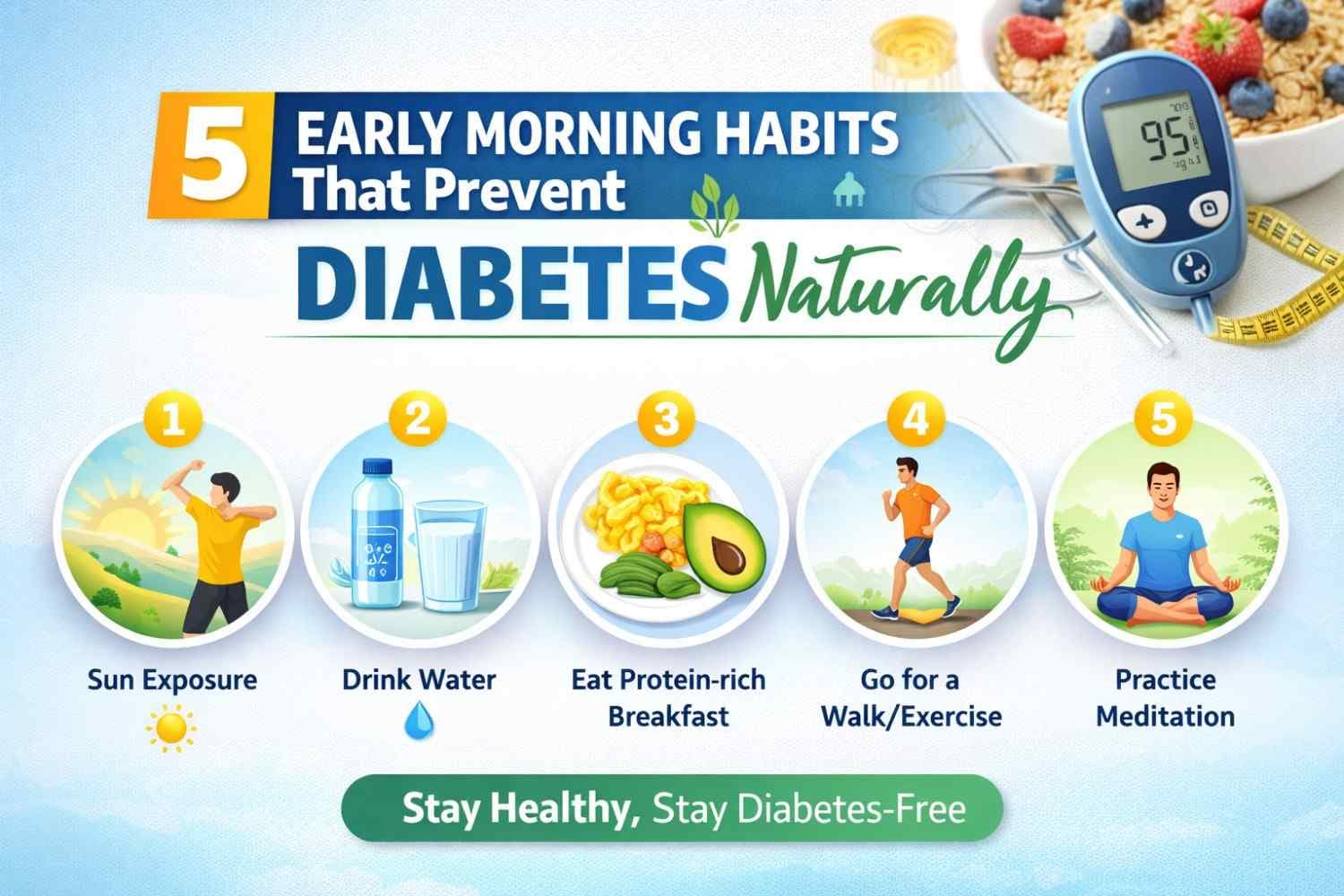
5 Early Morning Habits That Prevent Diabetes Naturally
Discover 5 powerful morning habits that naturally prevent diabetes. Expert advice from Dr. C.P. Singh, Senior Consultant Physician at Jigyasa Hospital, Moradabad. Call 7900903333.
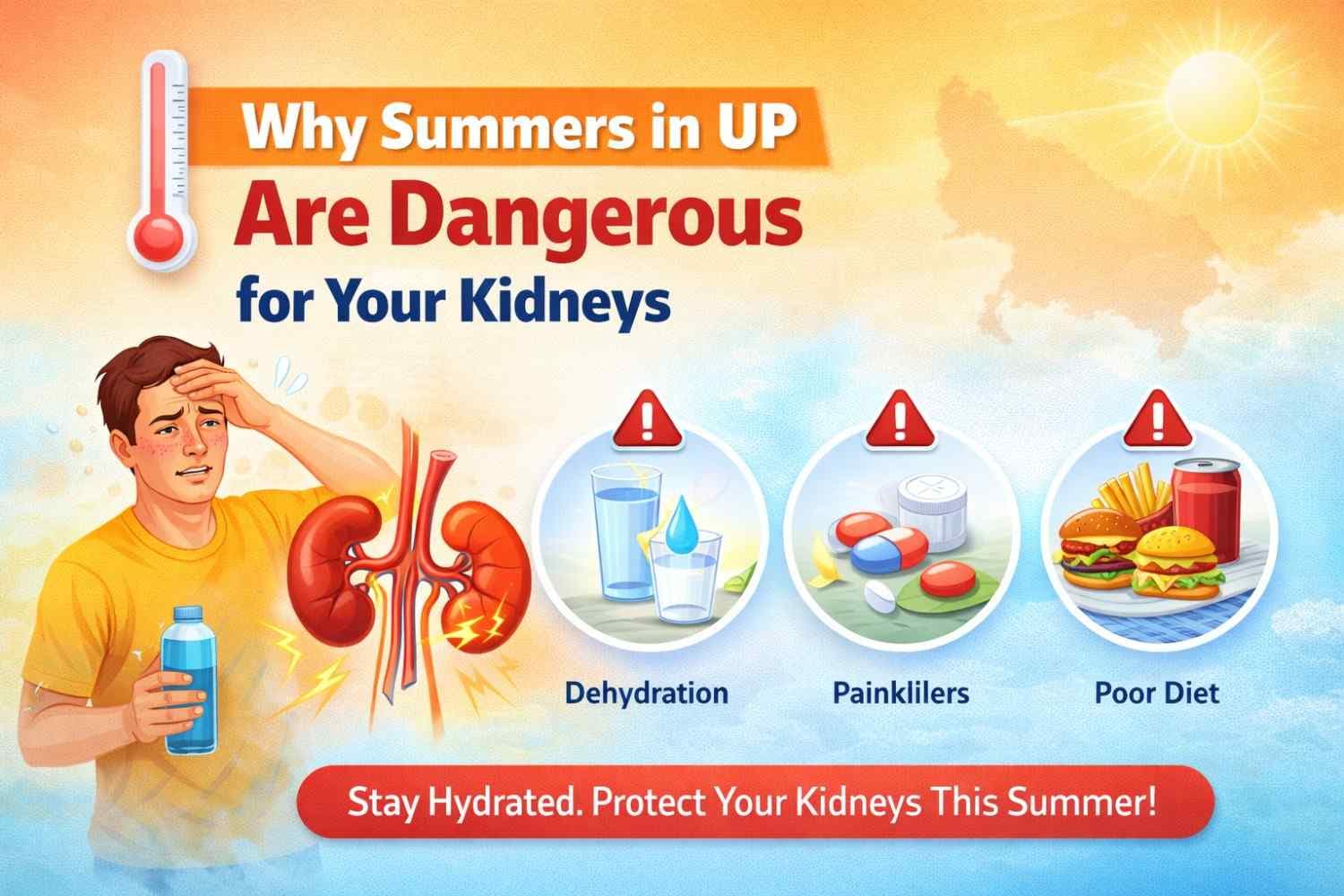
Why Summers in UP Are Dangerous for Your Kidneys
UP summers can silently damage your kidneys. Jigyasa Hospital Moradabad explains the hidden risks, warning signs, and how to protect your kidneys this season. Call 7900903333.