

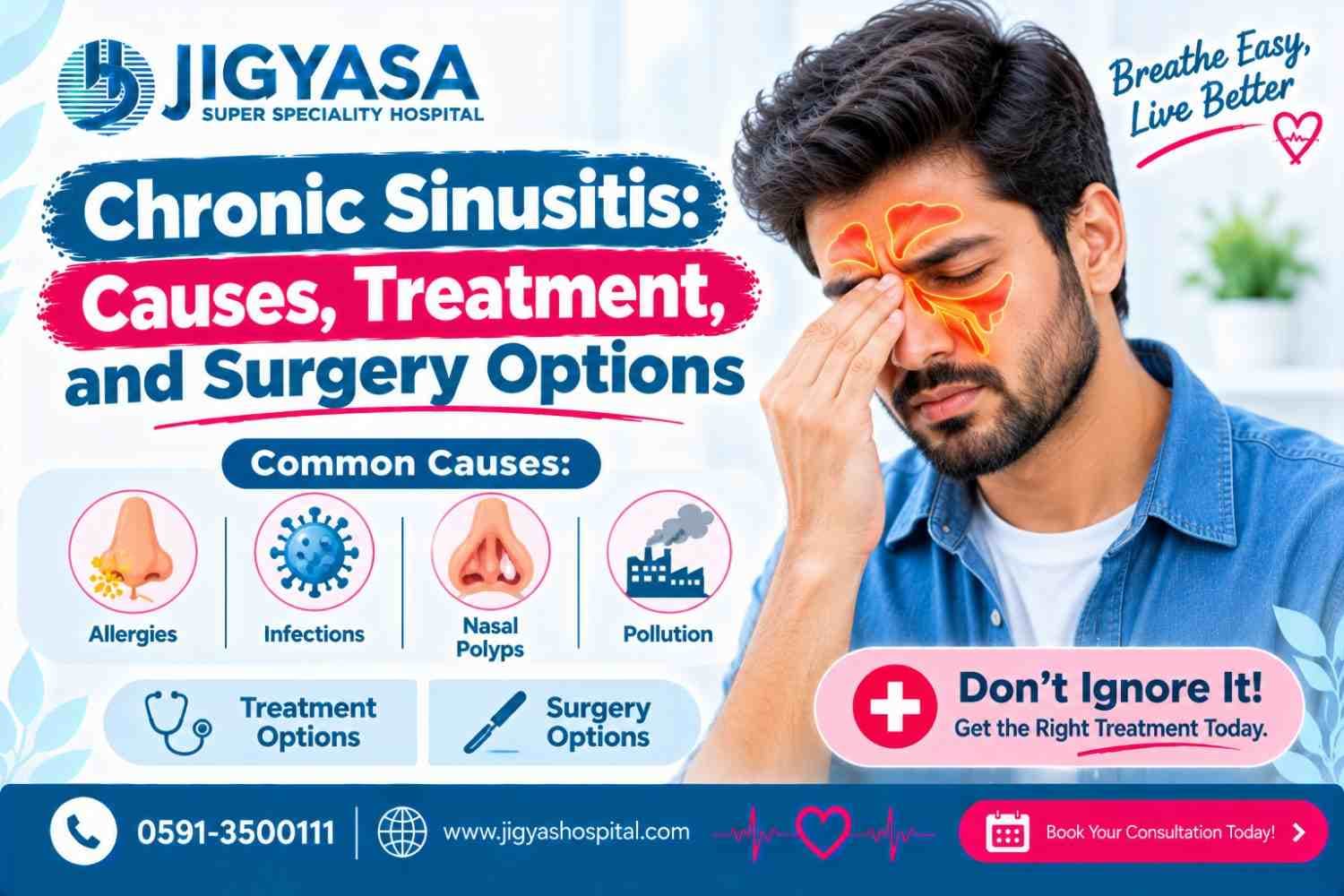
Chronic Sinusitis: Causes, Treatment, and Surgery Options
Blocked nose, facial pressure, and thick discharge for weeks? Learn what causes chronic sinusitis, how it is treated, and when surgery is considered, with guidance from Dr. C.P. Singh, Jigyasa Hospital, Moradabad.
A blocked nose that never fully clears, a heavy feeling around the cheeks and forehead, thick mucus, and a headache that returns every few days: for many people this becomes a background condition they simply live with, treating each flare with whatever tablet or nasal spray is at hand. This is often chronic sinusitis, an inflammation of the sinuses that lasts for months, not days. It is common in cities with dust and pollution, and it is frequently under-treated. At Jigyasa Hospital, Moradabad, Dr. C.P. Singh, Founder and Chairman, advises that a "sinus problem" that keeps returning should be properly evaluated, not repeatedly self-medicated.
What Are the Sinuses?
The sinuses are air-filled spaces in the bones around the nose, in the forehead, cheeks, between the eyes, and deeper in the skull. They are lined with a membrane that makes a thin layer of mucus, which drains into the nose through small openings. When these openings swell or become blocked, mucus is trapped, bacteria and other germs can multiply, and inflammation continues.
Acute vs Chronic Sinusitis
- •Acute sinusitis: Lasts less than about four weeks, often following a cold or allergy flare
- •Subacute: Four to twelve weeks
- •Chronic sinusitis: Symptoms lasting twelve weeks or longer, despite treatment, with signs of inflammation
- •Recurrent acute sinusitis: Several separate acute episodes in a year, with clear periods in between
Symptoms of Chronic Sinusitis
Chronic sinusitis is generally diagnosed when at least two of these main features persist for twelve weeks or more:
- •Nasal blockage or congestion
- •Thick, discoloured nasal discharge or mucus draining down the back of the throat (post-nasal drip)
- •Facial pain, pressure, or fullness, around the cheeks, forehead, or between the eyes
- •Reduced or lost sense of smell
Other common symptoms include:
- •Persistent cough, especially at night or on lying down
- •Bad breath
- •Ear pressure or fullness
- •Tiredness and a general low-energy feeling
- •Toothache in the upper teeth
- •Headache, often worse on bending forward
Fever is less common in chronic sinusitis than in acute infection.
What Causes It?
Chronic sinusitis often has more than one cause working together:
- •Repeated or poorly treated infections: Viral, bacterial, or sometimes fungal
- •Allergic rhinitis: Ongoing allergy to dust, pollen, mould, or animals swells the nasal lining
- •Nasal polyps: Soft, non-cancerous growths that block the sinus openings
- •Deviated nasal septum: A bent partition inside the nose that narrows the passage
- •Enlarged turbinates or other structural narrowing
- •Air pollution, dust, smoke, and strong fumes, including tobacco smoke
- •Weakened immunity or conditions such as diabetes
- •Asthma, which commonly coexists with chronic sinusitis
- •Dental infections in the upper teeth, which can spread to the sinuses
- •Overuse of decongestant nose drops, which can worsen blockage over time
- •Rarely, other conditions that affect the nose and sinuses
When a "Sinus" Headache Is Something Else
Not every headache felt around the face comes from the sinuses. Migraine and tension-type headaches are very commonly mistaken for sinus headaches. Clues pointing to true sinusitis include nasal blockage and discoloured discharge along with facial pressure. If you have headaches without these nasal symptoms, see our article on chronic headaches and when a brain scan is needed.
Complications That Need Urgent Attention
Rarely, a sinus infection can spread beyond the sinuses. Seek urgent care if you have:
- •Swelling, redness, or pain around an eye
- •Double vision, reduced vision, or bulging of the eye
- •Severe headache with high fever
- •Neck stiffness, confusion, or drowsiness
- •Swelling of the forehead or face
- •A fever that does not settle, with worsening facial pain
Our 24/7 emergency care at Jigyasa Hospital is available at any hour.
How Chronic Sinusitis Is Evaluated
At Jigyasa Hospital, Dr. C.P. Singh's evaluation typically includes:
1. History
Duration and pattern of symptoms, previous treatments and their response, allergies, smoking, occupational dust exposure, asthma, diabetes, dental problems, and medicines, especially nasal drops.
2. Examination
Of the nose, throat, face, and ears, looking for blockage, discharge, tenderness, or polyps.
3. Further Tests When Needed
- •CT scan of the sinuses, the most useful imaging test to see blockage, thickened lining, polyps, and structural problems. It is usually reserved for persistent cases or before considering surgery, not for every cold or sinus complaint
- •Nasal endoscopy, where a thin camera examines the nasal passages directly
- •Allergy evaluation and blood tests, when allergy or other conditions are suspected
- •Culture of nasal discharge in selected, persistent infections
Patients needing nasal endoscopy, detailed ENT assessment, or surgical opinion are guided to appropriate specialised care.
Treatment: Starting With Medical Management
Most people with chronic sinusitis improve with medicines and good nasal care, and surgery is needed only in a minority.
Saline Nasal Irrigation
Rinsing the nose with salt water, using a clean bottle or device with boiled and cooled or distilled water, helps wash out mucus, allergens, and irritants. It is one of the most effective and safest measures. Never use plain tap water for nasal rinsing, and clean the device after each use.
Steroid Nasal Sprays
These reduce inflammation in the nasal lining and are the mainstay of long-term control. They work gradually over days to weeks and must be used regularly and with correct technique. They are different from decongestant sprays and are generally safe for long-term use under medical supervision.
Treating Allergy
Avoiding triggers, and using antihistamines or other medicines prescribed by the doctor, helps when allergy is a driver.
Antibiotics
Used only when a bacterial infection is likely, often for a longer course in chronic cases, and chosen by the doctor. Antibiotics are not helpful for viral infections or for inflammation without infection, and repeated unnecessary use causes resistance.
Short Courses of Oral Steroids
In selected cases, particularly with polyps, a doctor may prescribe a short course, balancing benefits and risks. This should never be self-started.
Other Measures
- •Steam inhalation may offer temporary comfort, but should be done carefully to avoid burns
- •Adequate fluids and rest
- •Avoiding tobacco smoke, dust, and strong fumes
- •Avoiding overuse of decongestant nasal drops beyond a few days, since this can cause rebound blockage
Managing Related Conditions
Better control of asthma, diabetes, and dental problems improves sinus outcomes.
When Is Surgery Considered?
Surgery is generally considered when sinusitis has not improved after an adequate course of medical treatment, or when there is a structural problem that medicines cannot fix. Reasons include:
- •Persistent symptoms despite several months of proper medical therapy
- •Nasal polyps causing significant blockage that does not respond to medicines
- •A deviated septum or other structural blockage that keeps sinuses from draining
- •Frequent recurrent infections tied to a blocked drainage pathway
- •Fungal sinus disease
- •Complications, such as spread of infection to the eye or brain
- •Suspicion of a growth or other condition needing tissue diagnosis
Common Surgical Approaches (General Information)
- •Functional endoscopic sinus surgery (FESS): Using a thin camera through the nostrils, the surgeon removes diseased tissue and polyps and widens sinus openings so they can drain. There are usually no external cuts.
- •Septoplasty: Straightening a deviated septum.
- •Turbinate reduction: Reducing enlarged tissue that blocks airflow.
- •Balloon sinus dilation in selected patients.
Surgery aims to improve drainage and allow sprays and medicines to work better. It does not cure the underlying tendency to allergy or inflammation, so continued medical treatment is usually needed afterwards. As with any operation, risks and benefits should be discussed in detail with the ENT surgeon, and a second opinion before planned surgery is reasonable. See our article on second opinions before major surgery.
Living With Chronic Sinusitis: Practical Tips
- •Keep up your saline rinses and prescribed sprays, even when you feel better, as advised
- •Know and avoid your triggers: dust, smoke, pollution, strong smells
- •Wear a well-fitting mask on dusty or polluted days
- •Keep bedrooms clean: wash bedding regularly, and reduce dust and mould
- •Use humidified air with care, keeping equipment clean
- •Stay hydrated and sleep with your head slightly raised if congestion worsens at night
- •Treat colds early and keep vaccinations up to date
- •Do not smoke
- •Do not rely on nasal decongestant drops or repeated antibiotics without medical advice
When to See a Doctor
- •Nasal blockage, discharge, or facial pressure for more than about ten days, or any symptom lasting beyond twelve weeks
- •Frequent sinus infections
- •Loss of smell
- •Symptoms that keep returning after treatment
- •One-sided blockage or bleeding, which needs evaluation
- •Any warning sign of complication listed above
ENT & Sinus Care at Jigyasa Hospital, Moradabad
- •Comprehensive sinusitis evaluation with history, examination, and imaging when needed
- •NABL-accredited laboratory for blood tests and cultures
- •ENT specialist referral for nasal endoscopy, polyps, and surgical opinion
- •24/7 emergency care for sinus complications
Book an Appointment: 7900903333
Address: Near Miglani Cinema, Rampur Road, Moradabad – 244001
Online Appointments: jigyasahospital.com
Sinus Care | Chronic Sinusitis | Nasal Endoscopy | FESS Surgery | Ayushman Bharat Accepted
Key Takeaways
- •Chronic sinusitis = symptoms lasting 12+ weeks (blockage, thick discharge, facial pressure, loss of smell) — not just a long cold.
- •Common causes work together: allergies, pollution/dust, nasal polyps, deviated septum, asthma, dental infections, and overuse of decongestant drops.
- •Not every 'sinus headache' is sinusitis — migraine and tension headaches are often mistaken. True sinusitis includes nasal blockage + discoloured discharge + facial pressure.
- •First-line treatment: saline rinses (never tap water) + steroid nasal sprays (mainstay, safe long-term) + allergy management. Antibiotics only when bacterial infection is likely.
- •Surgery (FESS, septoplasty) is for persistent cases despite months of medical therapy, polyps, or structural blockage — it improves drainage but doesn't cure the underlying allergy/inflammation, so sprays continue after.
Frequently Asked Questions
Is chronic sinusitis the same as a long-lasting cold?
Not exactly. A cold usually clears in a week or two. Chronic sinusitis involves ongoing inflammation of the sinuses lasting at least twelve weeks, with nasal blockage, discharge, or facial pressure.
Do I need an antibiotic every time my sinuses flare?
No. Many flares are caused by allergy or viral infection, or are inflammatory without infection, and antibiotics will not help. Your doctor will decide when they are needed.
Can sinus surgery cure chronic sinusitis permanently?
Surgery can greatly improve drainage and symptoms, but because underlying allergy and inflammation often remain, many people still need regular nasal sprays and rinses afterwards, and symptoms can return.
Is nasal saline rinsing safe?
Yes, when done with boiled and cooled or distilled water and a clean device. Never use untreated tap water.
Why does my nose get worse when I use decongestant drops for many days?
Overuse can cause rebound swelling of the nasal lining, making blockage worse once the effect wears off. Limit use to a few days, and ask your doctor for safer long-term options.
Related Articles

Heart Attack Warning Signs You Must Never Ignore
Recognizing heart attack symptoms early can save your life. Learn the critical warning signs from Dr. Amit Kumar Singh, Senior Interventional Cardiologist at Jigyasa Hospital, Moradabad. Call 7900903333.

5 Early Morning Habits That Prevent Diabetes Naturally
Discover 5 powerful morning habits that naturally prevent diabetes. Expert advice from Dr. C.P. Singh, Senior Consultant Physician at Jigyasa Hospital, Moradabad. Call 7900903333.

Why Summers in UP Are Dangerous for Your Kidneys
UP summers can silently damage your kidneys. Jigyasa Hospital Moradabad explains the hidden risks, warning signs, and how to protect your kidneys this season. Call 7900903333.