
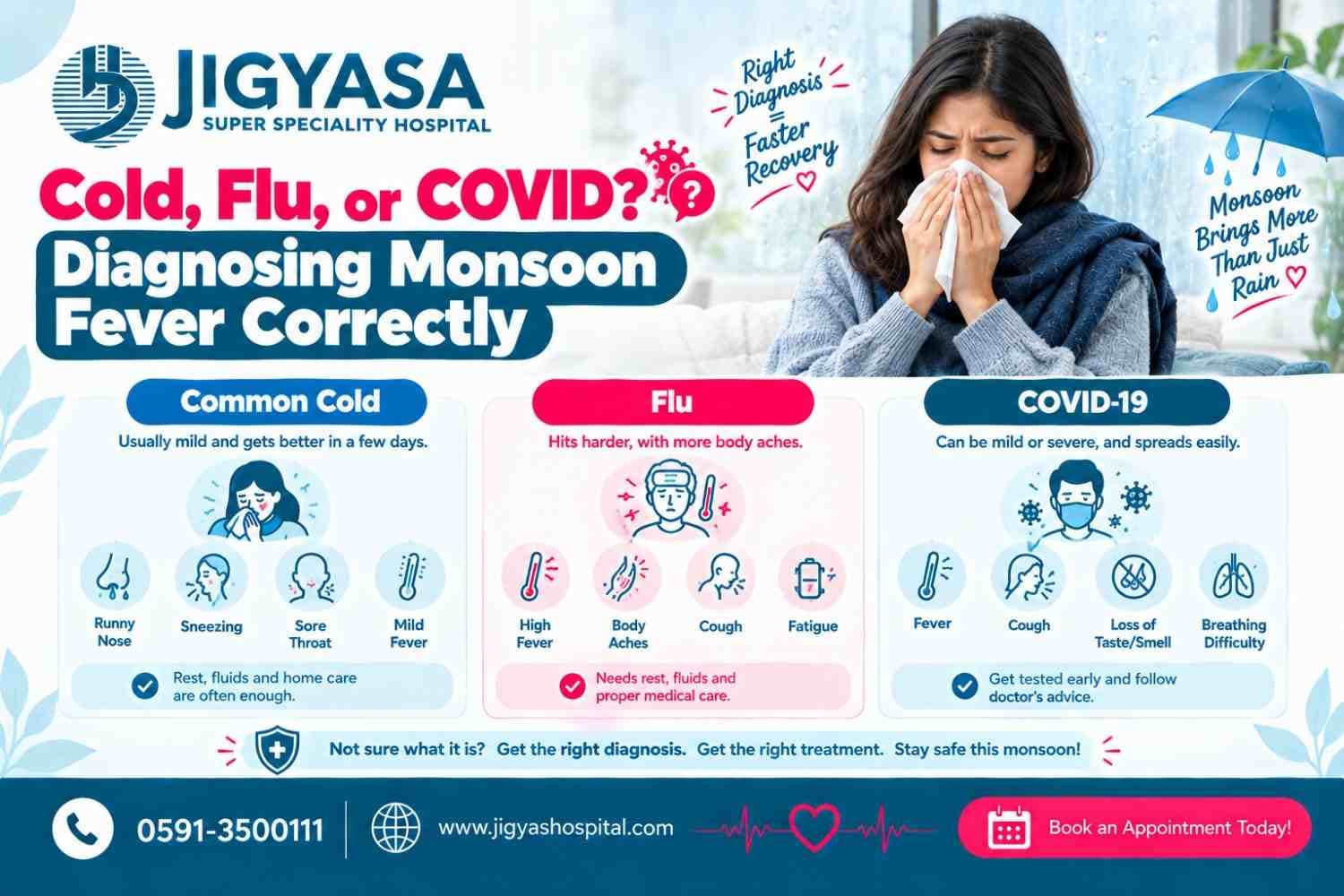
Cold, Flu, or COVID? Diagnosing Monsoon Fever Correctly
Fever during monsoon could be a cold, flu, COVID, or something more serious like dengue. Learn how to tell them apart, guidance from Dr. C.P. Singh, Jigyasa Hospital, Moradabad.
A fever during monsoon rarely arrives with a label. The same week can bring a runny nose, body aches, a sore throat, and a temperature that makes you wonder: is this just a cold, the flu, COVID, or something that needs urgent testing, like dengue, malaria, or typhoid? Because so many illnesses peak together in this season and share early symptoms, guessing is risky, and the wrong guess can delay the right treatment. At Jigyasa Hospital, Moradabad, Dr. C.P. Singh, Founder and Chairman, regularly sees patients who self-treated "a simple viral fever" for several days before the real cause was identified. This guide explains how to tell the common respiratory illnesses apart, and when symptoms point somewhere more serious.
Why Monsoon Fevers Are So Hard to Sort Out
Monsoon brings several things together: damp weather that favors respiratory viruses, people crowding indoors, stagnant water that breeds mosquitoes, and contaminated food and water. As a result, cold, flu, COVID, dengue, malaria, and typhoid can all circulate at once, and their first two or three days often look nearly identical: fever, tiredness, headache, and body aches.
The Common Cold
Typical features:
- •Gradual onset over a day or two
- •Runny or blocked nose and sneezing as the main complaints
- •Sore or scratchy throat
- •Mild cough
- •Low-grade fever or none
- •You usually feel unwell but still able to carry on with daily activities
Colds generally improve within about a week.
Influenza (Flu)
Typical features:
- •Sudden onset, often within hours
- •High fever, frequently with chills
- •Marked body aches, muscle pain, and headache
- •Significant tiredness and weakness
- •Dry cough and sore throat
- •Nasal symptoms present but less prominent than systemic symptoms
Fever and aches usually settle in about five to seven days, though tiredness can linger.
COVID-19
COVID can resemble a cold or the flu, and symptoms vary with the virus variant and a person's immunity.
Possible features:
- •Fever or chills
- •Cough, sore throat, and congestion
- •Body aches and fatigue
- •Headache
- •Loss or change in smell or taste, though this is less consistent than earlier in the pandemic
- •Shortness of breath in more significant cases
- •Occasionally nausea or diarrhea
Because COVID cannot be reliably told apart from flu or a cold by symptoms alone, testing is the only way to confirm it, which matters especially for people at higher risk or those living with vulnerable family members.
Quick Comparison
| Feature | Cold | Flu | COVID-19 |
|---|---|---|---|
| Onset | Gradual | Sudden | Variable |
| Fever | Mild or absent | High, common | Common, varies |
| Body aches | Mild | Prominent | Common |
| Runny/blocked nose | Very common | Sometimes | Sometimes |
| Cough | Mild | Dry, common | Common |
| Loss of smell/taste | Uncommon | Uncommon | Possible |
| Breathlessness | Rare | Uncommon | Possible in significant cases |
These patterns are guides only. Overlap is large, and individual illness can look different from the textbook.
When It May Not Be a Respiratory Illness at All
The most important skill in monsoon is recognizing when fever doesn't fit a cold, flu, or COVID pattern. Features that should make you think of other causes:
Pointing Toward Dengue
- •High fever with severe headache, especially pain behind the eyes
- •Intense joint and muscle pain
- •Rash, or later, bleeding signs such as bleeding gums or nosebleeds
- •Little or no cough and no runny nose, which is a useful clue
Pointing Toward Malaria
- •Fever with severe chills and shivering, followed by sweating
- •Fever that comes in cycles with symptom-free gaps
- •Recent mosquito exposure, especially around stagnant water
Pointing Toward Typhoid
- •Fever that rises gradually over several days
- •Persistent headache, weakness, and loss of appetite
- •Abdominal discomfort, constipation, or diarrhea
- •No significant cough or cold symptoms
Pointing Toward Stomach Infection
- •Fever with vomiting, diarrhea, or abdominal cramps as the dominant symptoms
A useful rule of thumb: fever with prominent nose, throat, and cough symptoms leans toward a respiratory virus, while fever with severe aches behind the eyes, chills in cycles, gradual stepwise fever, or digestive symptoms and little cough deserves testing for mosquito-borne or water-borne infection.
Why Guessing and Self-Treating Is Risky
- •Antibiotics don't work on viral infections like cold, flu, or COVID, and using them unnecessarily contributes to resistance
- •Certain painkillers can be harmful if the fever turns out to be dengue, because they may increase bleeding risk
- •Fever-reducing medicine can mask the pattern that helps doctors identify malaria or typhoid
- •Delay costs time: dengue's risky phase and typhoid's complications both benefit from early recognition
Red-Flag Symptoms: Seek Care Promptly
- •Fever lasting more than three days without a clear cause
- •Difficulty breathing, chest pain, or persistent breathlessness
- •Severe or worsening abdominal pain
- •Persistent vomiting or inability to keep fluids down
- •Bleeding from the gums, nose, or in vomit or stool
- •Confusion, extreme drowsiness, or fainting
- •Yellowing of the skin or eyes
- •Very high fever that doesn't settle with standard fever medication
- •Symptoms in pregnant women, older adults, young children, or people with diabetes, heart, lung, kidney, or immune conditions, since they can worsen faster
How Monsoon Fever Is Evaluated at Jigyasa Hospital
At Jigyasa Hospital, Dr. C.P. Singh's evaluation typically includes:
1. Detailed History
The pattern and duration of fever, accompanying symptoms, mosquito and water exposure, recent contact with sick people, and any underlying conditions.
2. Clinical Examination
Checking temperature, pulse, blood pressure, throat, chest, abdomen, and skin for clues that point toward a specific cause.
3. Targeted Testing
Depending on the picture, tests may include blood counts, platelet count, dengue and malaria tests, typhoid testing, and respiratory testing for COVID or flu. The aim is to test for what the symptoms suggest rather than ordering everything.
4. Treatment Matched to the Cause
Supportive care for viral respiratory illness, antiviral or specific treatment where appropriate, and targeted therapy for dengue, malaria, or typhoid when confirmed.
Managing a Mild Viral Fever at Home
For a mild illness with no red flags, and ideally after a doctor has had a look if fever lasts beyond a day or two:
- •Rest and adequate fluids, including oral rehydration drinks
- •Fever medication only as advised by a doctor
- •Light, easily digestible food
- •Staying home to avoid spreading illness, and wearing a mask around others if you have respiratory symptoms
- •Monitoring temperature and symptoms, and seeking care if anything worsens or a red flag appears
Prevention During Monsoon
- •Wash hands often and avoid touching your face
- •Get the annual flu vaccine and keep COVID vaccination up to date, particularly for higher-risk individuals
- •Prevent mosquito breeding by removing stagnant water, and use repellents and nets
- •Drink boiled or purified water and eat freshly cooked food
- •Avoid crowded, poorly ventilated places when unwell
- •Keep a regular sleep, nutrition, and hydration routine to support immunity
Internal Medicine Care at Jigyasa Hospital, Moradabad
- •Expert fever evaluation and targeted testing for monsoon illnesses
- •Comprehensive diagnosis of cold, flu, COVID, dengue, malaria, and typhoid
- •Personalized treatment plans based on confirmed cause
- •24/7 emergency care for severe symptoms and complications
Book an Appointment: 7900903333
Address: Near Miglani Cinema, Rampur Road, Moradabad – 244001
Online Appointments: jigyasahospital.com
Internal Medicine | Fever Clinic | Monsoon Diseases | COVID & Flu Testing | Ayushman Bharat Accepted
Key Takeaways
- •Monsoon fever can be cold, flu, COVID, dengue, malaria, typhoid, or a stomach infection — early symptoms overlap significantly.
- •Cold: gradual onset, runny nose, mild symptoms. Flu: sudden high fever, body aches, chills. COVID: variable, needs testing to confirm.
- •Non-respiratory clues: dengue (behind-eye pain, rash, no cough), malaria (cyclical fever with chills), typhoid (gradual stepwise fever, abdominal symptoms).
- •Red flags: fever >3 days, breathing difficulty, severe abdominal pain, bleeding, confusion, jaundice, persistent vomiting.
- •Don't self-treat with antibiotics or certain painkillers — get targeted testing and doctor-guided treatment to avoid complications.
Frequently Asked Questions
Can I tell flu and COVID apart just by symptoms?
Not reliably. They overlap heavily, so testing is the only way to confirm which one you have.
If I have a runny nose and cough, can it still be dengue?
Dengue usually causes little cough or nasal congestion, so prominent cold symptoms make it less likely, though it's still possible to have two infections or an atypical picture. If fever is high or unusual, testing is sensible.
When should I get tested instead of waiting it out?
If fever lasts more than two to three days, if you have red-flag symptoms, or if you're in a higher-risk group, it's better to get evaluated rather than waiting.
Is it safe to take paracetamol for any monsoon fever?
Paracetamol is generally the preferred fever medicine, but dose and use should follow a doctor's guidance. Avoid aspirin and anti-inflammatory painkillers unless your doctor advises them, because of bleeding risk if dengue is present.
Do I need an antibiotic for a monsoon fever?
Only if a bacterial infection, such as typhoid, is confirmed or strongly suspected by a doctor. Antibiotics don't help cold, flu, COVID, or dengue.
Related Articles

Heart Attack Warning Signs You Must Never Ignore
Recognizing heart attack symptoms early can save your life. Learn the critical warning signs from Dr. Amit Kumar Singh, Senior Interventional Cardiologist at Jigyasa Hospital, Moradabad. Call 7900903333.

5 Early Morning Habits That Prevent Diabetes Naturally
Discover 5 powerful morning habits that naturally prevent diabetes. Expert advice from Dr. C.P. Singh, Senior Consultant Physician at Jigyasa Hospital, Moradabad. Call 7900903333.
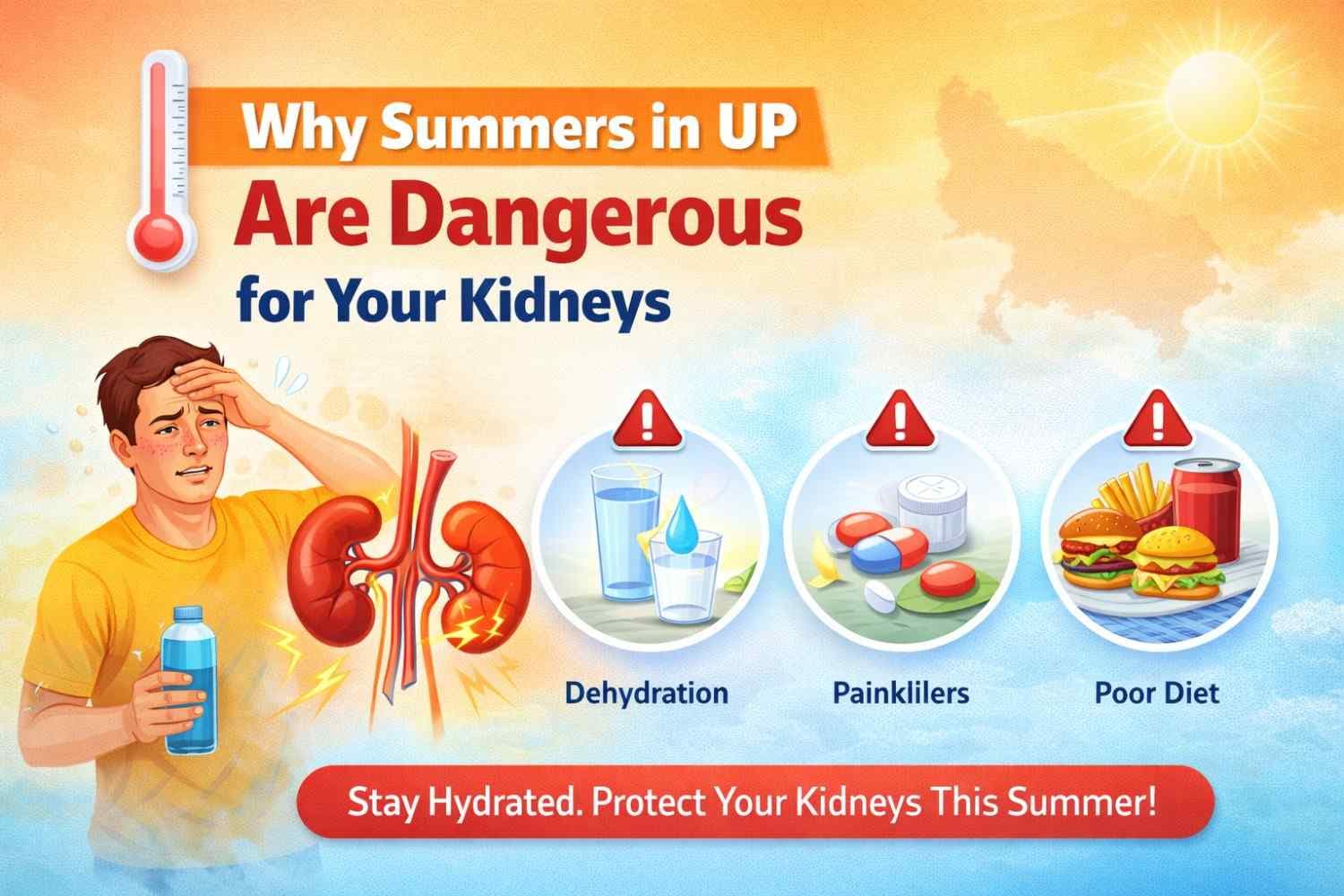
Why Summers in UP Are Dangerous for Your Kidneys
UP summers can silently damage your kidneys. Jigyasa Hospital Moradabad explains the hidden risks, warning signs, and how to protect your kidneys this season. Call 7900903333.