

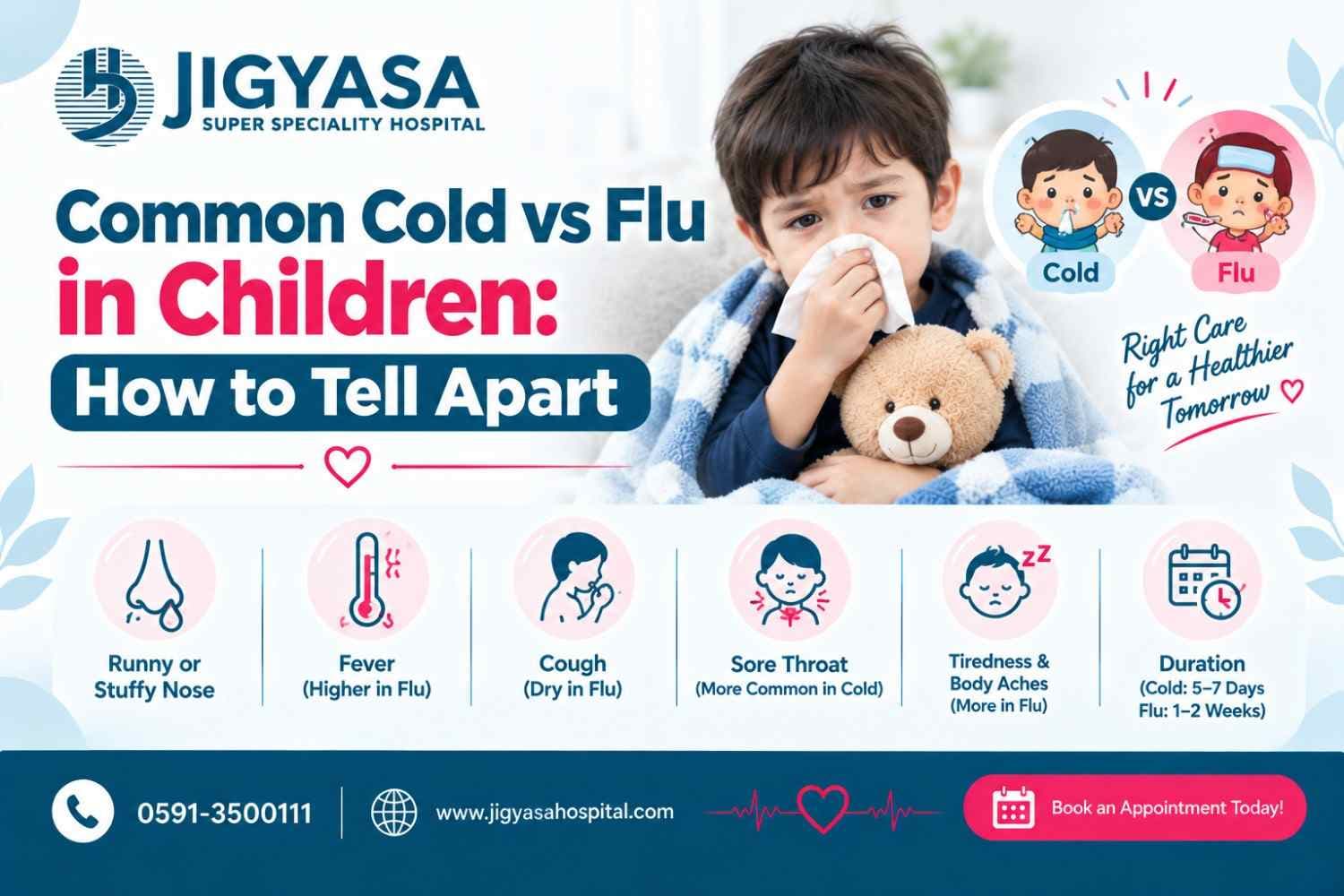
Common Cold vs Flu in Children: How to Tell Apart
Runny nose, cough, or high fever? Learn the key differences between cold and flu in children and when to seek medical care — guidance from Jigyasa Hospital, Moradabad.
Every parent knows the feeling: your child wakes up with a runny nose, a cough, and low energy, and the immediate question is whether this is just a common cold that will pass in a few days, or something more significant like the flu that might need medical attention. Since both conditions share several overlapping symptoms — a stuffy nose, cough, and general unwellness — it can genuinely be difficult to tell them apart just by looking at your child. Understanding the key differences, along with knowing which warning signs matter regardless of the specific diagnosis, can help parents respond appropriately without unnecessary worry or, conversely, without missing something that needs prompt attention. At Jigyasa Hospital, Moradabad, our pediatric care team regularly helps parents navigate exactly this question during the cold and flu season.
Understanding the Two Conditions
The Common Cold
The common cold is caused by any of numerous viruses, and is one of the most frequent illnesses in childhood, with young children often catching several colds throughout the year, particularly during school and daycare exposure. Colds are generally mild and self-limiting, resolving on their own within about a week to ten days.
Influenza (Flu)
The flu is caused by influenza viruses and tends to be more sudden in onset and generally more severe than a common cold. While most children recover from the flu without complications, it carries a higher risk of complications compared to a typical cold, particularly in very young children or those with underlying health conditions.
Key Differences: Onset
Common Cold
Symptoms typically develop gradually over a day or two, starting with mild throat irritation or a stuffy nose before progressing to more noticeable congestion and cough.
Flu
Symptoms tend to appear suddenly and quite abruptly, often within a matter of hours — a child who seemed fine can develop a high fever, body aches, and significant fatigue quite rapidly.
Key Differences: Fever
Common Cold
Fever is either absent or generally low-grade when present, and doesn't usually dominate the symptom picture.
Flu
A high fever — often 101°F (38.3°C) or higher — is a very common and prominent feature of the flu, frequently one of the first noticeable symptoms.
Key Differences: Body Aches and Fatigue
Common Cold
Mild tiredness may be present, but significant body aches are uncommon with a typical cold.
Flu
Noticeable body aches, muscle pain, headache, and pronounced fatigue are hallmark features of the flu, often leaving the child wanting to lie down and rest far more than usual.
Key Differences: Respiratory Symptoms
Common Cold
Runny or stuffy nose and sneezing are often the most prominent symptoms, sometimes accompanied by a mild sore throat and cough that tends to develop a bit later in the illness.
Flu
While a cough and sometimes a sore throat are present with flu as well, these tend to be accompanied by the more systemic symptoms — fever, body aches, and fatigue — rather than being the dominant complaint on their own.
Key Differences: Overall Severity and Course
Common Cold
Generally mild throughout its course, with the child often remaining reasonably active and interested in normal activities, even while symptomatic.
Flu
Tends to make the child noticeably more unwell — more likely to want to rest, less interested in play or usual activities, and generally appearing more affected by the illness compared to a typical cold.
Comparison Table: Cold vs Flu in Children
| Feature | Common Cold | Flu |
|---|---|---|
| Onset | Gradual | Sudden |
| Fever | Rare or mild | High, prominent |
| Body aches | Uncommon | Common, often significant |
| Fatigue | Mild | Pronounced |
| Runny/stuffy nose | Very common, prominent | Present but less dominant |
| Cough | Common, often later | Common |
| Overall severity | Generally mild | Generally more severe |
| Typical duration | About 7–10 days | About 5–7 days for main symptoms, fatigue can linger longer |
Why Children Are More Susceptible to Both
Children, particularly younger ones, are more prone to frequent colds and flu compared to adults, largely because their immune systems are still developing and gaining exposure to the many viruses circulating in their environment — especially in group settings like schools and daycare centers, where close contact makes viral spread easy.
When to Seek Medical Attention Regardless of Diagnosis
While most colds and even many flu cases in children can be managed at home with supportive care, certain warning signs should prompt medical evaluation regardless of whether the illness seems more cold-like or flu-like:
- •Difficulty breathing, rapid breathing, or visible effort with each breath
- •High fever that doesn't respond to appropriate fever-reducing measures, or fever persisting beyond 3–4 days
- •Signs of dehydration — significantly reduced urination, dry mouth, or unusual lethargy
- •Severe or worsening ear pain, which could indicate a secondary ear infection
- •Persistent vomiting preventing adequate fluid intake
- •Symptoms that initially improve and then suddenly worsen again
- •Bluish tint to the lips or face
- •Unusual drowsiness, difficulty waking, or significant change in alertness
- •Any fever in an infant under 3 months old, which should always be evaluated promptly
- •Underlying chronic health conditions, such as asthma, which can make respiratory illnesses more concerning and warrant a lower threshold for seeking care
Managing Cold and Flu Symptoms at Home
For milder cases without warning signs, supportive care at home is generally appropriate:
- •Adequate rest, allowing the child's body to recover
- •Plenty of fluids to prevent dehydration, particularly important if fever or reduced appetite is present
- •Age-appropriate fever management, using medication as advised by a doctor, along with light clothing rather than overbundling
- •Saline nasal drops to help ease nasal congestion, particularly helpful for younger children who can't blow their nose effectively
- •Humidified air, which can help ease congestion and cough
- •Honey (for children over 1 year old), which can help soothe cough, though it should never be given to infants under 12 months due to the risk of botulism
Why Antibiotics Generally Aren't the Answer
Both the common cold and flu are caused by viruses, meaning antibiotics — which only work against bacterial infections — are not effective treatments for either condition. Antibiotics are only considered if a secondary bacterial infection develops as a complication, such as an ear infection or bacterial pneumonia, which would be identified through proper medical evaluation rather than assumed based on symptoms alone.
Prevention Strategies
- •Regular and thorough handwashing, both for children and caregivers
- •Avoiding close contact with others who are visibly ill, when possible
- •Teaching children to cover coughs and sneezes properly
- •Keeping frequently touched surfaces and toys clean, particularly during peak cold and flu seasons
- •Annual flu vaccination, which is recommended for children above a certain age and can reduce both the likelihood and severity of flu illness
- •Maintaining overall good nutrition and adequate sleep, which support a well-functioning immune system
Why Getting It Right Matters
While the treatment for both mild colds and mild flu at home is largely similar — rest, fluids, and symptom management — recognizing when symptoms suggest flu, or when either illness is showing warning signs of a more serious course, helps parents know when home care is appropriate and when medical evaluation is genuinely needed. This distinction matters most not for choosing a specific treatment path at home, but for recognizing when a child's illness has crossed into territory that needs professional assessment.
Pediatric Care at Jigyasa Hospital, Moradabad
- •Expert pediatric evaluation for cold, flu, and respiratory illnesses in children
- •24/7 emergency care for severe symptoms and warning signs
- •Flu vaccination and preventive care guidance for families
- •Management of complications like ear infections and pneumonia
Book an Appointment: 7900903333
Address: Near Miglani Cinema, Rampur Road, Moradabad – 244001
Online Appointments: jigyasahospital.com
Pediatric Care | Flu Vaccination | Child Emergency Services | Respiratory Illness | Ayushman Bharat Accepted
Key Takeaways
- •Cold symptoms develop gradually over 1-2 days; flu symptoms appear suddenly within hours.
- •Fever is rare/mild with colds; high fever (101°F+) is common and prominent with flu.
- •Body aches and pronounced fatigue are hallmarks of flu; colds typically cause mild tiredness only.
- •Seek medical care for difficulty breathing, persistent high fever, dehydration, ear pain, or unusual drowsiness.
- •Antibiotics don't work for viral colds or flu — they're only used for bacterial complications like ear infections.
Frequently Asked Questions
Can my child get the flu even if they've had a flu vaccine this year?
Yes, the flu vaccine reduces the likelihood and typically the severity of flu illness, but it doesn't guarantee complete protection, since multiple flu strains circulate and vaccine effectiveness can vary by season.
How can I tell if my child's cold has turned into an ear infection?
Signs such as new or worsening ear pain, pulling at the ear (in younger children who can't verbalize pain), new fever after initial improvement, or fluid drainage from the ear should prompt evaluation for a possible ear infection.
Is it normal for a cough to last for two or three weeks after a cold?
A lingering cough after other cold symptoms have resolved is fairly common and can take a few weeks to fully settle. However, if the cough worsens, is accompanied by breathing difficulty, or is associated with new fever, it should be evaluated.
Should I keep my child home from school with a cold or flu?
Yes, keeping a child home while they have fever or are significantly unwell helps them rest and reduces the spread of illness to classmates, generally until fever has resolved without medication for at least 24 hours and the child feels well enough to participate in normal activities.
Can a child get the flu and a cold at the same time?
While less common, it is possible to have overlapping viral infections, which can make symptoms more pronounced or prolonged than either illness alone — this is one more reason to monitor closely and seek evaluation if symptoms seem unusually severe or prolonged.
Related Articles

Heart Attack Warning Signs You Must Never Ignore
Recognizing heart attack symptoms early can save your life. Learn the critical warning signs from Dr. Amit Kumar Singh, Senior Interventional Cardiologist at Jigyasa Hospital, Moradabad. Call 7900903333.

5 Early Morning Habits That Prevent Diabetes Naturally
Discover 5 powerful morning habits that naturally prevent diabetes. Expert advice from Dr. C.P. Singh, Senior Consultant Physician at Jigyasa Hospital, Moradabad. Call 7900903333.
Why Summers in UP Are Dangerous for Your Kidneys
UP summers can silently damage your kidneys. Jigyasa Hospital Moradabad explains the hidden risks, warning signs, and how to protect your kidneys this season. Call 7900903333.