

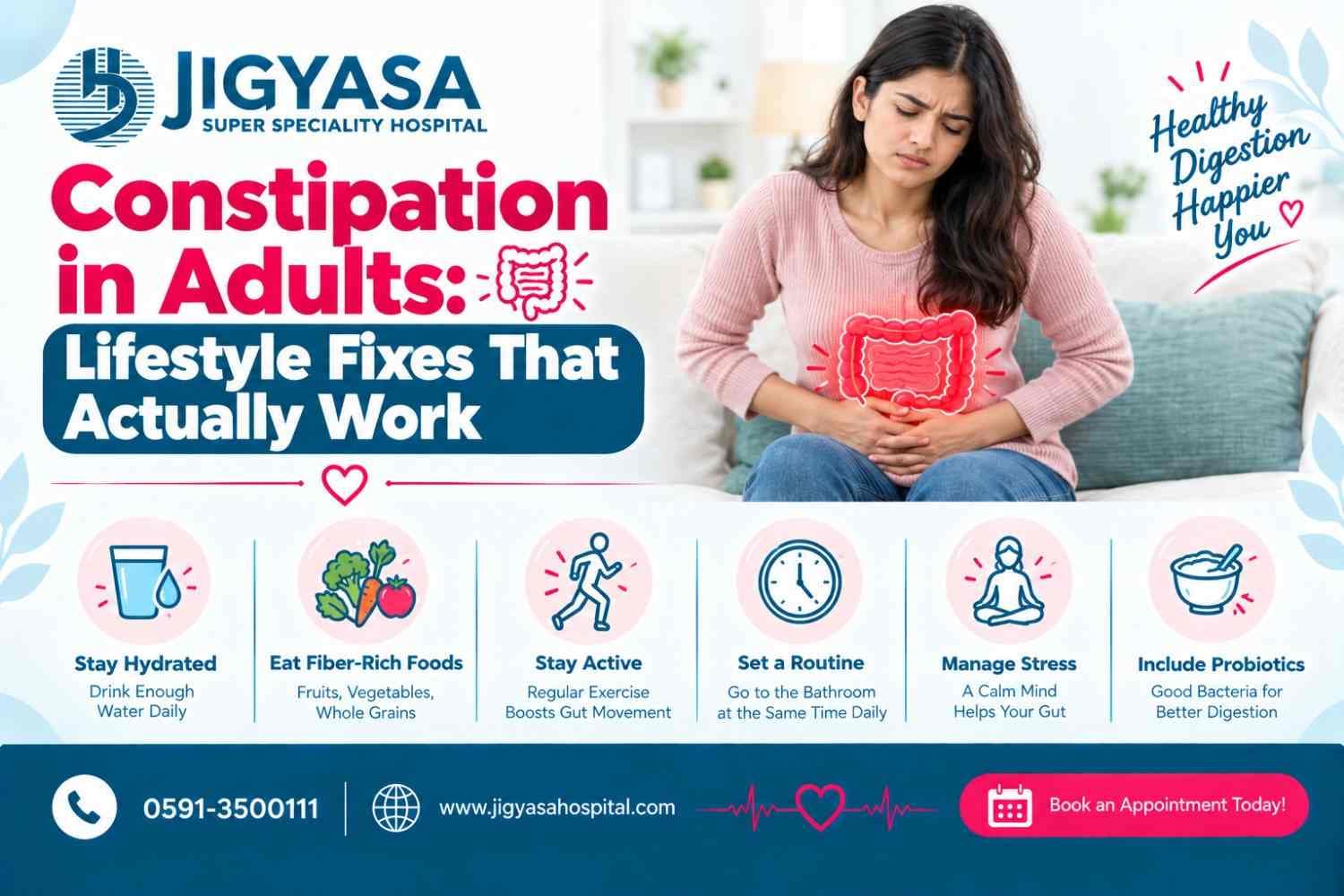
Constipation Relief: Lifestyle Fixes That Work
Struggling with constipation? Learn practical, evidence-based lifestyle changes — diet, hydration, exercise, and daily habits — from Dr. Pabitra Sahu, Jigyasa Hospital, Moradabad.
Constipation is one of those conditions almost everyone experiences at some point, yet many people quietly struggle with it for months or years, relying on the occasional over-the-counter remedy rather than addressing the everyday habits that are actually driving the problem. While some cases of constipation do require medical evaluation and treatment, a substantial number of cases improve significantly — sometimes completely — through consistent, practical lifestyle changes. At Jigyasa Hospital, Moradabad, Dr. Pabitra Sahu, our specialist in Gastroenterology and Hepatology, regularly guides patients through exactly which lifestyle changes genuinely make a difference, as opposed to the many home remedies that sound reasonable but don't have much real impact.
Why Lifestyle Matters So Much in Constipation
For a large proportion of adults with constipation — particularly the common, non-medication-related, non-disease-related type — the underlying issue often comes down to a combination of inadequate fiber intake, insufficient fluid intake, low physical activity, and inconsistent bowel habits. Addressing these fundamentals often produces more meaningful, sustainable improvement than relying on laxatives alone, which can lead to dependency and don't address the root cause.
Fix #1: Get Fiber Intake Right — Not Just More, But the Right Kind
Increasing fiber is the most commonly given advice for constipation, but the details matter more than most people realize.
Soluble fiber (found in oats, apples, carrots, and psyllium husk) absorbs water and forms a gel-like consistency, which helps soften stool and makes it easier to pass.
Insoluble fiber (found in whole wheat, vegetable skins, and bran) adds bulk to stool and helps speed up its movement through the intestines.
Practical steps:
- •Gradually increase fiber intake over several days to weeks rather than all at once, since a sudden large increase can actually cause bloating and discomfort
- •Include a mix of both fiber types — whole grains, fruits with skin on (where appropriate), vegetables, and legumes
- •Consider psyllium husk (isabgol), a well-studied and effective source of soluble fiber that's also widely available and commonly used in Indian households
- •Aim for consistent daily intake rather than occasional high-fiber days followed by low-fiber days
Fix #2: Fix Hydration — Fiber Doesn't Work Without It
Increasing fiber without adequate fluid intake can actually worsen constipation, since fiber needs water to form the soft, bulky stool it's meant to create. Without enough fluid, increased fiber intake can lead to harder, more difficult-to-pass stool instead.
Practical steps:
- •Aim for consistent water intake throughout the day, rather than large amounts infrequently
- •Warm water, particularly first thing in the morning, is a commonly recommended practice that can help stimulate bowel activity for some people
- •Reduce excessive tea and coffee intake if it's replacing water intake, since caffeine has a mild diuretic effect
- •Pay particular attention to hydration during hot weather or increased physical activity, when fluid needs increase
Fix #3: Move Your Body Regularly
Physical activity helps stimulate the natural muscular contractions of the intestines (peristalsis) that move stool through the digestive tract. A sedentary lifestyle is a well-recognized contributor to constipation.
Practical steps:
- •Aim for regular, moderate physical activity most days of the week — even a brisk 20-30 minute walk can make a meaningful difference
- •Avoid prolonged periods of sitting; take short movement breaks if you have a desk job
- •Simple activities like yoga, particularly certain poses that involve gentle abdominal twisting or compression, are commonly recommended and may help stimulate bowel activity for some people
Fix #4: Don't Ignore the Urge
One of the most underappreciated contributors to chronic constipation is the habit of ignoring or delaying the urge to have a bowel movement — often due to a busy schedule, discomfort with using unfamiliar bathrooms, or simply not prioritizing it. Repeatedly ignoring this signal can, over time, reduce the body's natural sensitivity to it, making constipation worse.
Practical steps:
- •Respond to the urge to defecate promptly rather than delaying it repeatedly
- •Try to establish a consistent time each day, often shortly after waking or after a meal, when the urge is naturally strongest for many people, and allow adequate unhurried time
- •Avoid rushing through bowel movements or straining excessively
Fix #5: Consider Your Toilet Posture
This is a less commonly discussed but genuinely useful practical tip: the angle of the body during a bowel movement affects how easily stool passes. A squatting position (rather than sitting fully upright) straightens the angle of the rectum, making elimination easier and requiring less straining.
Practical steps:
- •Using a small footstool to elevate the feet while sitting on a Western-style toilet can help mimic a more natural squatting angle
- •This simple adjustment can make a noticeable difference for some people, particularly those who strain frequently
Fix #6: Establish a Consistent Daily Routine
The digestive system responds well to routine. Irregular eating times, skipped meals, and inconsistent daily schedules can all contribute to irregular bowel patterns.
Practical steps:
- •Try to eat meals at roughly consistent times each day
- •Avoid skipping breakfast, since eating after an overnight fast often triggers a natural bowel stimulation response (the gastrocolic reflex)
- •Maintain consistent sleep patterns, since poor or irregular sleep can also affect digestive regularity
Fix #7: Be Mindful of Certain Dietary Habits
- •Excessive processed and low-fiber foods — refined grains, processed snacks, and low-fiber convenience foods contribute little to bowel regularity and often displace more fiber-rich alternatives
- •Excessive dairy in some individuals — while not a universal trigger, some people notice increased constipation with high dairy intake and may benefit from moderating it
- •Fermented and probiotic foods — foods like yogurt (dahi) and other fermented preparations may support a healthy gut microbiome, which can play a role in regular bowel function for some individuals
Fix #8: Manage Stress
Chronic stress can affect digestive function, including bowel regularity, through the well-established connection between the gut and nervous system.
Practical steps:
- •Incorporate stress-reduction practices such as deep breathing, meditation, or regular physical activity
- •Prioritize adequate, quality sleep, since poor sleep and stress often compound each other's effects on digestion
When Lifestyle Changes Aren't Enough
While the above measures help a significant number of people, it's important to recognize when constipation needs proper medical evaluation rather than continued self-management:
- •Constipation lasting more than a few weeks despite consistent lifestyle changes
- •Blood in the stool
- •Unintentional weight loss
- •Severe or worsening abdominal pain
- •New constipation starting after age 50, particularly without an obvious cause
- •Constipation alternating with episodes of diarrhea
- •A family history of colon cancer or inflammatory bowel disease
- •Constipation significantly affecting quality of life despite reasonable efforts at management
These situations warrant proper evaluation to rule out an underlying medical cause rather than continued reliance on lifestyle measures or over-the-counter remedies alone.
Why Relying Only on Laxatives Isn't the Best Long-Term Strategy
While over-the-counter laxatives can provide short-term relief, particularly for occasional constipation, relying on them repeatedly without addressing underlying lifestyle factors can, in some cases, lead to dependency, where the bowel becomes less responsive to its own natural signals over time. Building sustainable habits — adequate fiber, hydration, activity, and consistent routine — tends to provide more durable improvement, with medication used as a supplement when genuinely needed rather than as the primary long-term solution.
How Jigyasa Hospital Approaches Constipation Management
At Jigyasa Hospital, Dr. Pabitra Sahu's approach typically starts with a thorough review of dietary habits, hydration, activity levels, and daily routines, identifying specific, practical changes tailored to the individual's actual lifestyle rather than generic advice. When lifestyle measures alone aren't sufficient, or when warning signs suggest an underlying cause, further evaluation and appropriate medical treatment are recommended alongside continued lifestyle support.
Gastroenterology Care at Jigyasa Hospital, Moradabad
- •Expert evaluation and management of chronic constipation
- •Personalized lifestyle and dietary guidance from Dr. Pabitra Sahu, Gastroenterologist
- •Comprehensive assessment to rule out underlying medical causes
- •Evidence-based treatment combining lifestyle changes with medical therapy when needed
Book an Appointment: 7900903333
Address: Near Miglani Cinema, Rampur Road, Moradabad – 244001
Online Appointments: jigyasahospital.com
Gastroenterology | Constipation Management | Digestive Health | Lifestyle Medicine | Ayushman Bharat Accepted
Key Takeaways
- •Constipation often stems from inadequate fiber, insufficient fluids, low activity, and inconsistent bowel habits — not just a medical problem.
- •8 lifestyle fixes: increase fiber gradually (soluble + insoluble), hydrate well, exercise regularly, don't ignore the urge, use footstool for better posture, maintain routine, limit processed foods/dairy, manage stress.
- •Fiber needs water to work — increasing fiber without adequate hydration can worsen constipation.
- •Warning signs needing evaluation: blood in stool, weight loss, severe pain, new constipation after 50, family history of colon cancer/IBD.
- •Laxatives provide short-term relief but building sustainable habits (fiber, hydration, activity, routine) offers durable long-term improvement.
Frequently Asked Questions
How quickly should I expect lifestyle changes to improve my constipation?
Some improvements, particularly with hydration and not delaying the urge to go, can be noticed within days, while the full benefit of increased fiber intake and regular exercise often takes a few weeks of consistent practice to become clearly apparent.
Is it true that increasing fiber can sometimes make constipation worse initially?
Yes, a sudden, large increase in fiber, especially without adequate fluid intake, can cause bloating and discomfort initially. Gradually increasing fiber alongside adequate hydration generally produces better results.
Are probiotic foods or supplements helpful for constipation?
Some people find benefit from fermented foods or probiotics for supporting regular bowel function, though responses vary between individuals, and they work best as part of a broader approach rather than as a standalone solution.
Is it okay to use a footstool while using the toilet, or is that unnecessary?
This simple adjustment, which helps achieve a more natural squatting angle, is a genuinely useful and low-effort strategy that can make elimination easier for many people, particularly those who tend to strain.
When should I stop trying lifestyle fixes and see a doctor instead?
If constipation persists beyond a few weeks despite consistent lifestyle changes, or if you notice any warning signs like blood in the stool, unintentional weight loss, or significant abdominal pain, it's time to see a doctor rather than continuing to rely on home measures alone.
Related Articles

Heart Attack Warning Signs You Must Never Ignore
Recognizing heart attack symptoms early can save your life. Learn the critical warning signs from Dr. Amit Kumar Singh, Senior Interventional Cardiologist at Jigyasa Hospital, Moradabad. Call 7900903333.

5 Early Morning Habits That Prevent Diabetes Naturally
Discover 5 powerful morning habits that naturally prevent diabetes. Expert advice from Dr. C.P. Singh, Senior Consultant Physician at Jigyasa Hospital, Moradabad. Call 7900903333.

Why Summers in UP Are Dangerous for Your Kidneys
UP summers can silently damage your kidneys. Jigyasa Hospital Moradabad explains the hidden risks, warning signs, and how to protect your kidneys this season. Call 7900903333.