
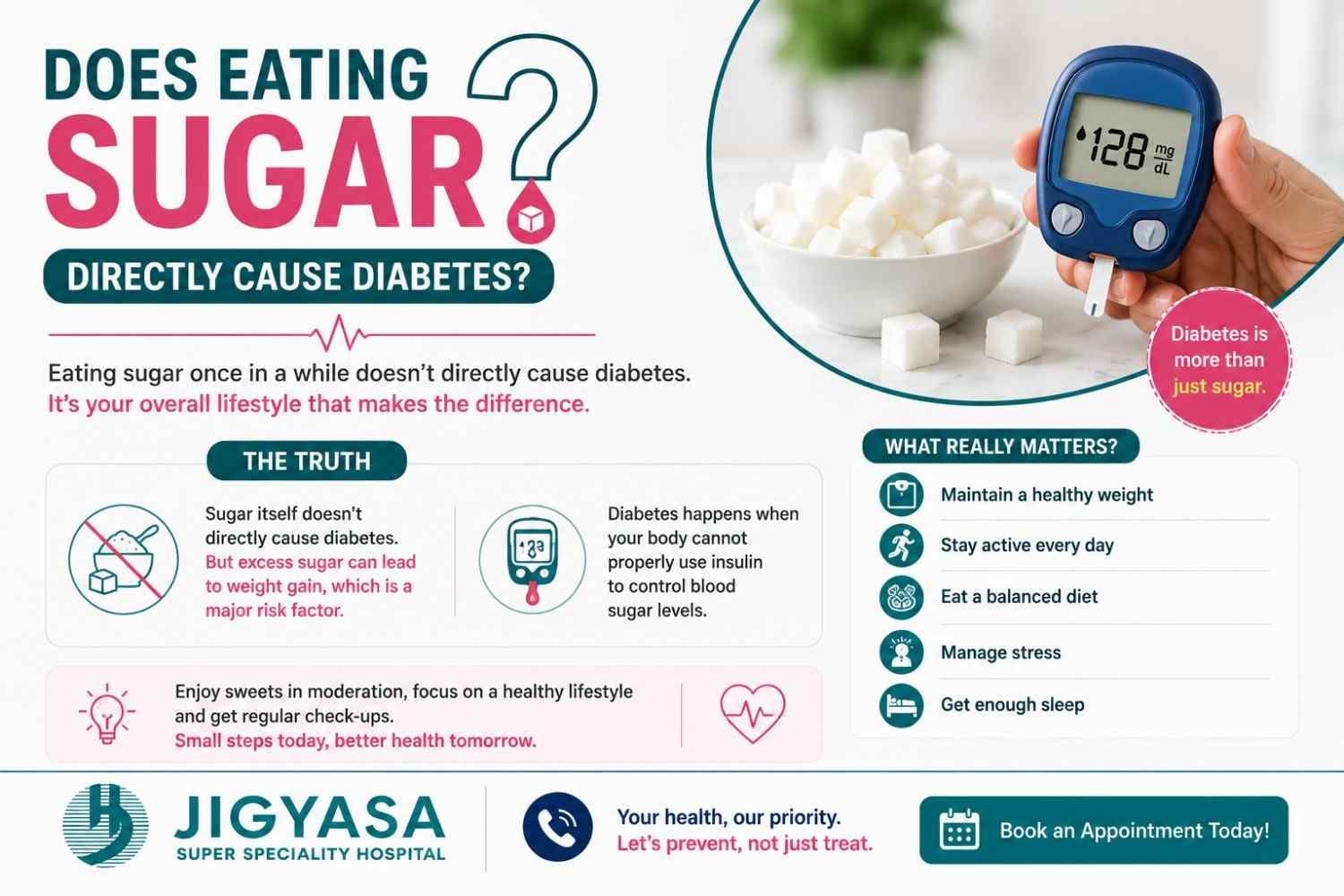
Does Eating Sugar Directly Cause Diabetes?
Itna Meetha Mat Khao — Diabetes Ho Jayegi. But Is That Actually True? Jigyasa Hospital Moradabad's Doctors Separate Sugar Myth from Medical Fact — and Explain What Really Causes Diabetes.
Itna meetha mat khao — diabetes ho jayegi. This warning has been delivered across millions of Indian dining tables — by mothers, grandmothers, aunts, and well-meaning relatives — for generations. It is so deeply embedded in Indian health consciousness that most people accept it as biological fact without question. But is it actually true? Does eating sugar directly cause diabetes? The honest medical answer is: not exactly — and the full truth is far more important to understand than the myth. Believing the oversimplified 'sugar causes diabetes' story leads people to make the wrong dietary choices, ignore the real risk factors, and remain falsely reassured when they avoid sweets while continuing habits that genuinely drive India's diabetes epidemic. India currently has 101 million people living with diabetes — the second highest number in the world. Getting the science right is not a trivial matter. At Jigyasa Hospital, Moradabad, our general medicine and endocrinology teams help patients understand — and actually address — the real causes of diabetes.
What Actually Causes Type 2 Diabetes?
There are two main types of diabetes. Type 1 diabetes is an autoimmune condition where the immune system destroys insulin-producing cells in the pancreas — it is not caused by diet or lifestyle at all. Type 2 diabetes — which accounts for over 90% of all diabetes cases in India — is what this conversation is about.
Type 2 diabetes develops through a specific biological sequence:
- •The body's cells gradually become resistant to insulin — the hormone that allows glucose (blood sugar) to enter cells for energy.
- •To compensate, the pancreas produces more and more insulin to force glucose into resistant cells.
- •Over time — typically years to decades — the pancreas exhausts itself trying to keep up.
- •Blood glucose levels rise permanently — and Type 2 diabetes is diagnosed.
The core driver of this process is insulin resistance — and insulin resistance is caused by a cluster of factors, of which sugar consumption is only one indirect contributor.
So What Role Does Sugar Actually Play?
Sugar does not directly damage the pancreas or trigger an autoimmune response. Sugar's actual role in diabetes risk is indirect — but real.
Excess Sugar Contributes to Weight Gain — and Obesity Drives Insulin Resistance: When you consume more calories than your body burns — whether from sugar, refined carbohydrates, fat, or protein — the excess is stored as body fat. Accumulation of fat, particularly visceral fat (around the abdomen and organs), is the single strongest lifestyle driver of insulin resistance. Sugary drinks, mithai, packaged sweets, and refined carbohydrates (maida-based foods) are calorie-dense and easy to overconsume — making them significant contributors to weight gain and therefore to diabetes risk. But the sugar itself is not the problem — the excess caloric intake and resulting obesity is.
Liquid Sugar Is Particularly Dangerous: Sugary beverages — cold drinks, packaged fruit juices, energy drinks, sweetened chai, and flavoured milk — are uniquely harmful because they deliver large amounts of sugar and calories rapidly without triggering the same satiety signals that solid food does, cause sharp rapid spikes in blood glucose stressing the insulin response repeatedly, and are often consumed in addition to meals making caloric overconsumption almost inevitable. Studies consistently show that daily consumption of sugary drinks is one of the strongest dietary predictors of Type 2 diabetes — more so than equivalent sugar consumed in solid food form.
High Sugar Diets Drive Fatty Liver — a Key Precursor to Diabetes: Excess fructose (the sugar found in table sugar, high-fructose corn syrup, and fruit juices) is metabolised almost exclusively by the liver. Chronic excess fructose intake leads to Non-Alcoholic Fatty Liver Disease (NAFLD) — and fatty liver is now recognised as a major independent driver of insulin resistance and Type 2 diabetes. NAFLD affects an estimated 1 in 3 urban Indians — and most are unaware of it.
What Actually Causes Type 2 Diabetes — The Complete Picture
Sugar consumption is one piece of a complex puzzle. The real risk factors for Type 2 diabetes in India are:
- •Genetics and Family History: Having a parent or sibling with Type 2 diabetes doubles to quadruples your lifetime risk — regardless of your diet. Indians have a genetic predisposition to insulin resistance that manifests at lower body weights and younger ages than in Western populations — which is why lean Indians can and do develop diabetes while avoiding sweets entirely.
- •Central Obesity (Abdominal Fat): Indians are disproportionately prone to accumulating fat around the abdomen and within organs — even at relatively normal overall body weights. A waist circumference above 80 cm in women and above 90 cm in men is a significant diabetes risk marker in the Indian context — more predictive than BMI alone.
- •Physical Inactivity: Skeletal muscle is the body's largest consumer of glucose. Physically active muscles are dramatically more insulin-sensitive than sedentary ones. India's rapid urbanisation has produced a generation of people who sit for 8–10 hours a day — and this sedentary lifestyle is among the most powerful drivers of insulin resistance.
- •Chronic Stress and Poor Sleep: Cortisol — the body's primary stress hormone — directly raises blood glucose levels and promotes insulin resistance. Chronic stress from work, financial pressure, and family demands — and the resulting poor sleep — creates a hormonal environment that is profoundly pro-diabetic. Sleep deprivation of even one week measurably reduces insulin sensitivity in otherwise healthy adults.
- •Refined Carbohydrates Beyond Sugar: White rice, white bread, maida rotis, biscuits, and other highly refined carbohydrates raise blood glucose as rapidly and significantly as sugar — in some cases more so. The person who avoids ladoos but eats white rice three times a day and maida parathas for breakfast is not as protected as they think.
- •Age: The risk of Type 2 diabetes rises significantly after age 35 in Indians — earlier than the Western benchmark of 45 — because of genetic susceptibility. Annual blood sugar screening from age 30 is recommended for all Indians, regardless of diet or weight.
The Real Numbers: What Sugar Consumption Does to Your Blood Sugar
A healthy body with functioning insulin regulation can handle moderate sugar consumption without developing diabetes — the blood glucose rises after a sweet intake and returns to normal within 1–2 hours. Diabetes develops when this regulation breaks down — not when sugar is consumed by a healthy, active person with no genetic predisposition.
The quantity and context of sugar consumption matters enormously. A small piece of dark chocolate after a balanced meal in an active, healthy person is a very different risk profile from a 600ml cold drink on an empty stomach in a sedentary person with a family history of diabetes and a 36-inch waist. Same ingredient. Entirely different risk calculation.
What Actually Prevents Type 2 Diabetes
- •Maintain a healthy weight — particularly abdominal fat reduction. Even a 5–7% reduction in body weight in pre-diabetic individuals reduces diabetes progression risk by over 50%.
- •Move your body daily — 30 minutes of brisk walking 5 days a week significantly improves insulin sensitivity. This single habit is more protective than any dietary restriction.
- •Reduce refined carbohydrates, not just sugar — whole grains, dal, and vegetables over maida, white rice, and packaged food.
- •Stop or dramatically reduce sugary beverages — this is the one sugar-specific recommendation with the strongest scientific backing.
- •Sleep 7–8 hours consistently — not negotiable for metabolic health.
- •Manage stress — yoga, regular meals, rest, and social connection all reduce cortisol-driven insulin resistance.
- •Screen annually after age 30 — pre-diabetes is symptomless and fully reversible; diabetes caught early is far more manageable.
Diabetes Screening and Management at Jigyasa Hospital, Moradabad
- •A simple fasting blood sugar and HbA1c test can tell you exactly where you stand — and our general medicine team can interpret results, assess your risk profile, and advise personalised prevention or management.
- •If you have been diagnosed with pre-diabetes or diabetes, our team provides comprehensive management — diet counselling, medication, and regular monitoring — to prevent complications and maintain quality of life.
- •Do not wait for symptoms. Diabetes has none — until complications begin.
Book a Diabetes Screening: 7900903333
Address: Near Miglani Cinema, Rampur Road, Moradabad – 244001
Online Appointments: jigyasahospital.com
Fasting Blood Sugar | HbA1c Test | Pre-Diabetes Assessment | Diabetes Diet Counselling | Endocrinology OPD | Ayushman Bharat Accepted
Key Takeaways
- •Sugar does not directly cause diabetes — but excess sugar intake contributes to obesity, fatty liver, and insulin resistance, which do.
- •The real drivers of Type 2 diabetes are genetics, central obesity, physical inactivity, refined carbohydrates (not just sugar), chronic stress, poor sleep, and age.
- •Lean Indians who avoid sugar can and do develop diabetes — because of genetic predisposition and the broader dietary and lifestyle picture.
- •Sugary beverages are the single sugar-specific food most strongly linked to diabetes risk — and the one worth eliminating first.
- •Annual blood sugar screening from age 30 is the most important protective step every Indian adult can take — because pre-diabetes is silent, reversible, and the last exit before diagnosis.
Frequently Asked Questions
Can I get diabetes even if I never eat sweets?
Yes — absolutely. Genetics, physical inactivity, central obesity, refined carbohydrate intake, chronic stress, and poor sleep all cause Type 2 diabetes independently of sweet consumption. Thin, non-sweet-eating Indians develop diabetes regularly.
If I already have diabetes, should I completely avoid sugar?
Not necessarily eliminate — but significantly limit. Diabetics need to manage their total carbohydrate intake carefully, with sugar being one component. Small amounts of sugar within a balanced, low-glycaemic meal plan are manageable. Your doctor and dietitian will provide a personalised plan.
Is jaggery (gud) or honey safer than sugar for diabetics?
No. Jaggery, honey, and coconut sugar all raise blood glucose in the same way as white sugar — they are not meaningfully safer for diabetics. They may contain trace minerals, but their glycaemic effect is nearly identical. This is one of the most persistent nutrition myths in India.
What is pre-diabetes and can it be reversed?
Pre-diabetes is a state where blood sugar is higher than normal but not yet at diabetic levels. It is fully reversible with lifestyle changes — weight loss, increased physical activity, and dietary modification. Without intervention, 15–30% of pre-diabetics develop Type 2 diabetes within 5 years.
Is Type 1 diabetes caused by eating too much sugar?
No — not at all. Type 1 diabetes is an autoimmune condition where the immune system attacks insulin-producing cells. It is not caused by diet, sugar consumption, or lifestyle — it is a genetic autoimmune disease that typically develops in childhood or young adulthood.
How often should I check my blood sugar if I have a family history of diabetes?
Once a year from age 30 — fasting blood sugar and HbA1c. If you are overweight, physically inactive, or have other risk factors, discuss a more frequent screening schedule with your doctor.
Related Articles
Heart Attack Warning Signs You Must Never Ignore
Recognizing heart attack symptoms early can save your life. Learn the critical warning signs from Dr. Amit Kumar Singh, Senior Interventional Cardiologist at Jigyasa Hospital, Moradabad. Call 7900903333.
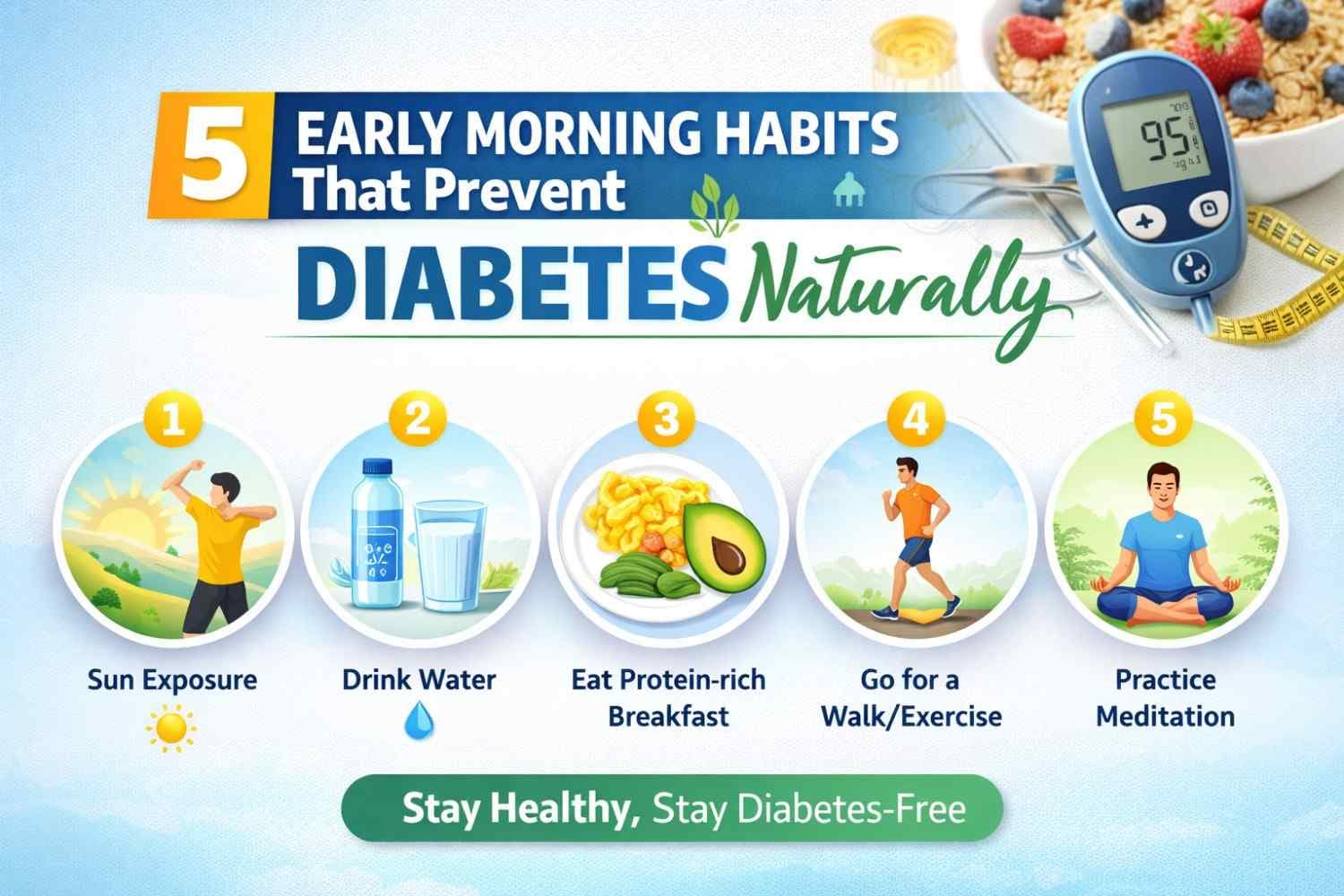
5 Early Morning Habits That Prevent Diabetes Naturally
Discover 5 powerful morning habits that naturally prevent diabetes. Expert advice from Dr. C.P. Singh, Senior Consultant Physician at Jigyasa Hospital, Moradabad. Call 7900903333.
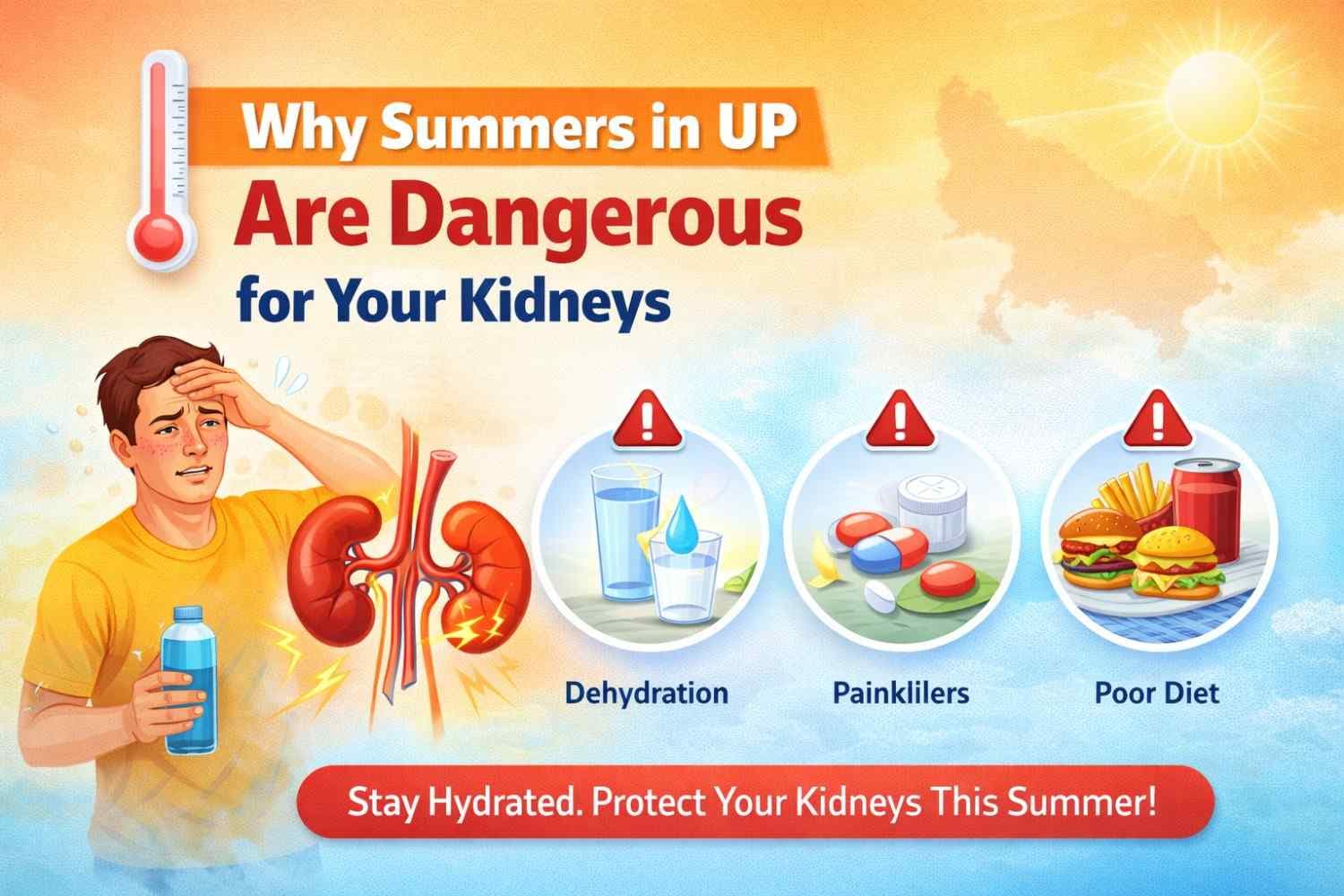
Why Summers in UP Are Dangerous for Your Kidneys
UP summers can silently damage your kidneys. Jigyasa Hospital Moradabad explains the hidden risks, warning signs, and how to protect your kidneys this season. Call 7900903333.