

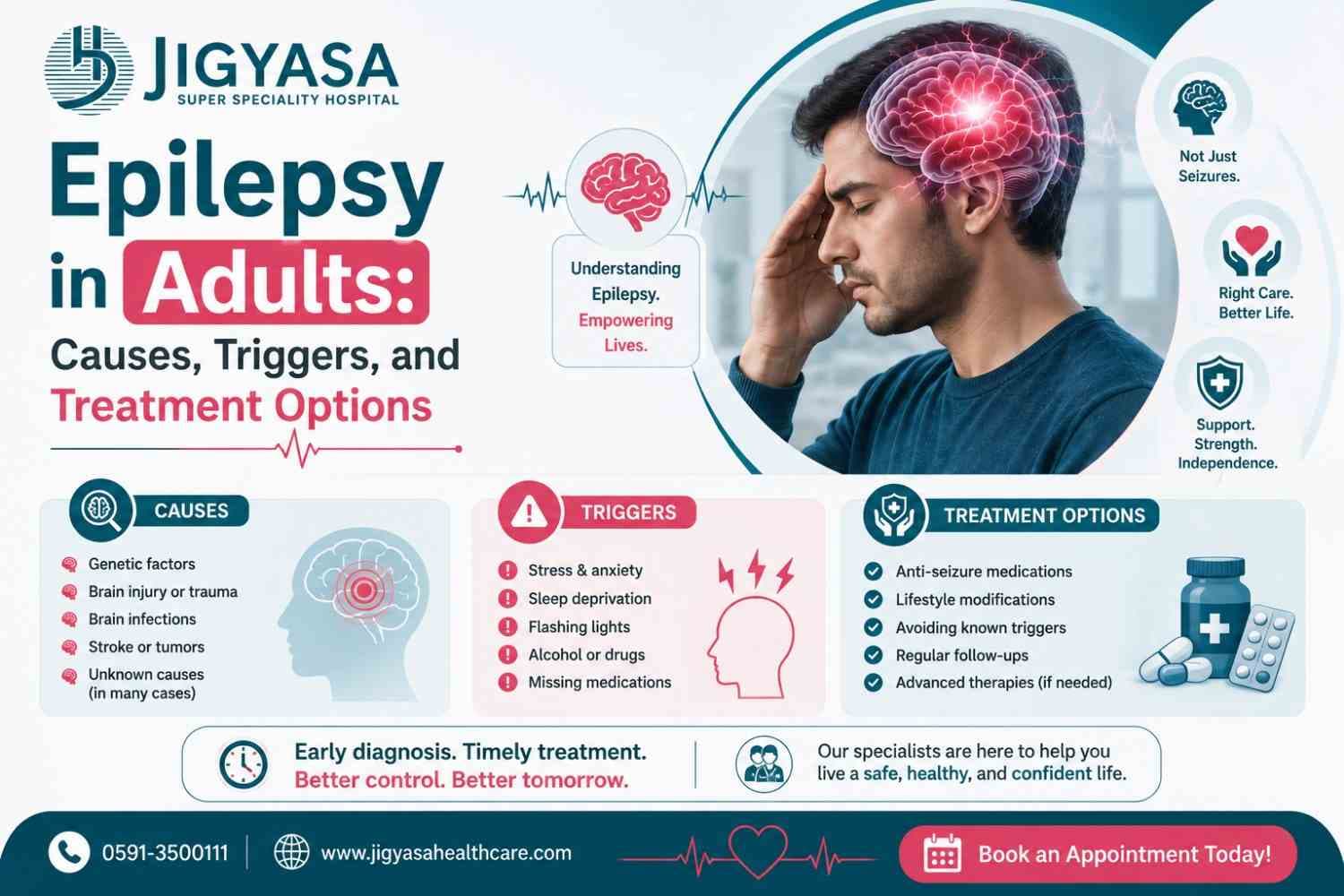
Epilepsy in Adults: Causes, Triggers, and Treatment Options
Adult-onset seizures and epilepsy explained — causes, common triggers, and treatment options from Dr. C.P. Singh, Jigyasa Hospital, Moradabad.
Many people associate epilepsy with childhood, imagining it as a condition that's usually diagnosed early in life and often outgrown. In reality, epilepsy can begin at any age, and adult-onset epilepsy is more common than most people realize — sometimes emerging after a head injury, a stroke, or even with no identifiable cause at all. Because a first seizure in adulthood can be frightening and confusing, both for the patient and their family, understanding what epilepsy actually is, what triggers seizures, and how it's treated can make a significant difference in how quickly and effectively it's managed. At Jigyasa Hospital, Moradabad, Dr. C.P. Singh, Founder and Chairman, evaluates adult patients presenting with seizures to determine the underlying cause and guide appropriate long-term treatment.
What Is Epilepsy?
Epilepsy is a neurological condition characterized by a tendency to have recurrent, unprovoked seizures. A seizure occurs when there is a sudden burst of abnormal electrical activity in the brain, which can temporarily affect movement, sensation, awareness, or behavior, depending on which part of the brain is involved.
It's important to understand that having a single seizure doesn't necessarily mean someone has epilepsy. Epilepsy is generally diagnosed when a person has had two or more unprovoked seizures, or in some cases, a single seizure combined with a high likelihood of recurrence based on brain imaging or other findings.
Types of Seizures
Seizures are broadly categorized based on how and where they start in the brain:
Focal Seizures These begin in one specific area of the brain and may or may not affect consciousness. Symptoms can include unusual sensations, brief confusion, repetitive movements, or localized twitching, depending on the brain region involved.
Generalized Seizures These involve both sides of the brain from the onset and can present in several ways:
- •Tonic-clonic seizures — involving stiffening of the body followed by rhythmic jerking movements, often what people picture when they think of a seizure
- •Absence seizures — brief lapses in awareness, sometimes appearing as staring spells
- •Myoclonic seizures — sudden, brief muscle jerks
- •Atonic seizures — sudden loss of muscle tone, which can cause falls
Some patients experience more than one seizure type, and identifying the specific pattern helps guide diagnosis and treatment.
Common Causes of Adult-Onset Epilepsy
Unlike childhood epilepsy, which is often linked to genetic or developmental factors, adult-onset epilepsy frequently has an identifiable structural or acquired cause:
1. Stroke
Stroke is one of the leading causes of new-onset epilepsy in older adults. Scar tissue or damage from a stroke can create an area of abnormal electrical activity in the brain, sometimes leading to seizures months or even years after the stroke itself.
2. Head Injury
Traumatic brain injury, particularly moderate to severe injuries, can result in seizures developing weeks, months, or years after the initial trauma, as the brain tissue heals with scarring.
3. Brain Tumors
Both benign and malignant brain tumors can trigger seizures by disrupting normal electrical activity in surrounding brain tissue, making new-onset seizures in adults an important reason for thorough brain imaging.
4. Infections of the Brain
Past or current infections affecting the brain or its coverings, such as meningitis or encephalitis, can lead to seizure disorders, sometimes as a long-term consequence even after the infection has resolved.
5. Metabolic and Electrolyte Imbalances
Significant imbalances in blood sugar, sodium, calcium, or other electrolytes can provoke seizures, and in some cases, correcting the underlying imbalance can prevent recurrence.
Common Seizure Triggers
For individuals already diagnosed with epilepsy, certain factors can lower the seizure threshold and provoke breakthrough seizures, even when the underlying condition is otherwise being managed:
- •Missed or inconsistent medication doses — one of the most common and preventable triggers
- •Sleep deprivation, which significantly increases seizure susceptibility
- •Alcohol consumption or withdrawal
- •High stress and anxiety
- •Flashing or flickering lights, in a subset of patients with photosensitive epilepsy
- •Fever or illness, which can lower seizure threshold temporarily
Identifying and managing personal triggers is often an important part of long-term seizure control, alongside medication.
Recognizing a Seizure
- •Sudden stiffening or jerking movements of the body
- •Brief loss of awareness or staring spells that don't respond to voice or touch
- •Sudden falls without an apparent cause
- •Confusion or unusual behavior lasting from seconds to several minutes
- •Loss of bladder or bowel control during the episode
- •A period of confusion, tiredness, or headache following the seizure (postictal state)
- •In focal seizures, unusual sensations, repetitive movements, or brief altered awareness without full loss of consciousness
How Epilepsy Is Diagnosed at Jigyasa Hospital
A thorough evaluation is essential, both to confirm the diagnosis and to identify any underlying, treatable cause. At Jigyasa Hospital, Dr. C.P. Singh's evaluation typically includes:
1. Detailed Clinical History
Understanding exactly what happened before, during, and after the episode — often with input from a witness, since the patient themselves may not recall the event clearly — is one of the most valuable diagnostic tools.
2. Neurological Examination
Assessing overall neurological function to detect any signs pointing toward an underlying structural or systemic cause.
3. Blood Tests
Checking blood sugar, electrolytes, kidney and liver function, and other relevant markers to rule out metabolic causes of seizures.
4. Brain Imaging
CT or MRI scans of the brain help identify structural causes such as prior stroke, tumors, or scarring, particularly important in new-onset adult seizures.
5. Electroencephalogram (EEG)
This test records the brain's electrical activity and can help identify abnormal patterns associated with epilepsy, supporting diagnosis and helping classify seizure type.
6. Referral for Specialized Care
Where a structural cause, complex seizure pattern, or treatment-resistant epilepsy is identified, coordination with specialized neurology care is arranged as part of comprehensive management.
Living with Epilepsy: What Patients Should Know
With appropriate treatment, a large proportion of people with epilepsy achieve good seizure control and are able to lead full, active lives. Success depends heavily on:
- •Consistent medication adherence, even once seizures have stopped
- •Regular follow-up to fine-tune treatment over time
- •Open communication with family and workplace about the condition, where appropriate, to ensure safety and support
- •Awareness of personal triggers and proactive lifestyle adjustments
What to Do If Someone Has a Seizure
- •Stay calm and stay with the person
- •Gently guide them away from anything that could cause injury, such as sharp objects or furniture
- •Do not restrain their movements or put anything in their mouth
- •Turn them onto their side once jerking movements stop, to help keep their airway clear
- •Time the seizure — if it lasts longer than five minutes, or another seizure follows without full recovery in between, seek emergency medical help immediately
- •Stay with them until they are fully alert, as confusion is common immediately afterward
Neurology Care at Jigyasa Hospital, Moradabad
- •Comprehensive epilepsy evaluation with EEG, CT/MRI brain imaging
- •Expert diagnosis and management by Dr. C.P. Singh and neurology team
- •Personalized seizure management plans and medication optimization
- •Long-term follow-up and lifestyle guidance for epilepsy patients
Book an Appointment: 7900903333
Address: Near Miglani Cinema, Rampur Road, Moradabad – 244001
Online Appointments: jigyasahospital.com
EEG | CT/MRI Brain Imaging | Epilepsy Management | Seizure Disorder Treatment | Neurology Services | Ayushman Bharat Accepted
Key Takeaways
- •Epilepsy can begin at any age — adult-onset epilepsy is common and often has identifiable causes like stroke, head injury, or tumors.
- •Seizures vary widely — from tonic-clonic convulsions to brief staring spells or focal symptoms.
- •Common triggers include missed medications, sleep deprivation, stress, alcohol, and flashing lights.
- •Diagnosis requires detailed history, neurological exam, blood tests, brain imaging (CT/MRI), and EEG.
- •With proper treatment and lifestyle management, most epilepsy patients achieve good seizure control and lead normal lives.
Frequently Asked Questions
Does having one seizure mean I have epilepsy?
Not necessarily. A single seizure can sometimes occur due to a temporary trigger, such as high fever, extreme sleep deprivation, or a metabolic imbalance, without indicating epilepsy. Evaluation helps determine the likelihood of recurrence and whether treatment is needed.
Can epilepsy develop for the first time in adulthood without any injury or illness?
Yes. While many adult cases have an identifiable cause, some adults develop epilepsy without any clear underlying trigger despite thorough evaluation.
Will I need to take anti-seizure medication for the rest of my life?
Not necessarily. Depending on the cause, seizure type, and how well the condition responds to treatment, some patients may eventually be able to reduce or, in select cases, discontinue medication under close medical supervision — though this decision is made carefully and individually.
Can stress alone cause a seizure in someone without epilepsy?
It's uncommon for stress alone to cause a seizure in someone with no predisposition, but in individuals with epilepsy, high stress can act as a trigger for breakthrough seizures.
Is it safe for someone with well-controlled epilepsy to drive or work normally?
Many people with well-controlled epilepsy can drive and work normally, though this depends on the duration of seizure freedom, local regulations, and the nature of the job, and should be discussed individually with the treating doctor.
Related Articles

Heart Attack Warning Signs You Must Never Ignore
Recognizing heart attack symptoms early can save your life. Learn the critical warning signs from Dr. Amit Kumar Singh, Senior Interventional Cardiologist at Jigyasa Hospital, Moradabad. Call 7900903333.

5 Early Morning Habits That Prevent Diabetes Naturally
Discover 5 powerful morning habits that naturally prevent diabetes. Expert advice from Dr. C.P. Singh, Senior Consultant Physician at Jigyasa Hospital, Moradabad. Call 7900903333.

Why Summers in UP Are Dangerous for Your Kidneys
UP summers can silently damage your kidneys. Jigyasa Hospital Moradabad explains the hidden risks, warning signs, and how to protect your kidneys this season. Call 7900903333.