
Fever in Infants: When to Rush to the Hospital
Not all infant fevers are equal. Learn which fever symptoms in babies need emergency care and which can wait — guidance from Jigyasa Hospital, Moradabad.
Few things cause more immediate panic for new parents than discovering their baby feels warm or the thermometer shows a fever. Unlike older children and adults, infants — especially those under three months old — can't tell you how they're feeling, and their bodies respond to illness very differently. A fever that would be minor in an older child can, in a very young infant, sometimes be a sign of a more serious underlying infection. At Jigyasa Hospital, Moradabad, our 24/7 emergency care team regularly evaluates infants brought in with fever, helping parents understand which situations genuinely require urgent attention and which can be safely managed with monitoring and simple care at home.
What Counts as a Fever in an Infant?
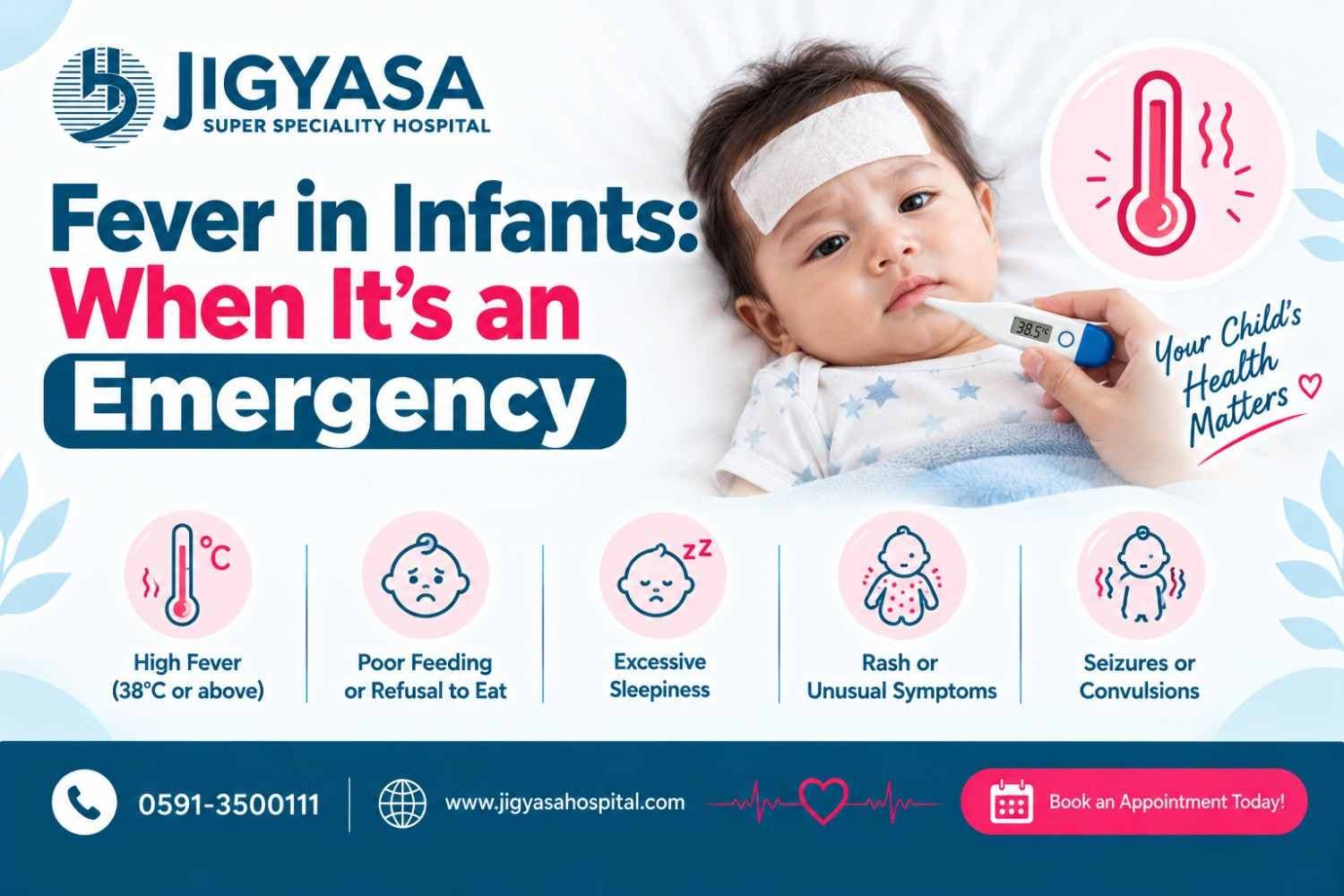
A fever in infants is generally defined as a body temperature of 100.4°F (38°C) or higher, when measured rectally, which is considered the most accurate method for young infants. Forehead or ear thermometers can sometimes give less reliable readings in very young babies, so when in doubt, a rectal reading — though understandably uncomfortable for parents to perform — gives the most accurate picture.
Why Fever in Young Infants Is Treated Differently
The way fever is approached changes significantly based on the baby's age, primarily because of how the infant immune system functions at different stages:
Under 3 Months Old
An infant's immune system is still immature at this stage, making it harder for the body to fight off infections effectively and harder for doctors to distinguish a minor viral illness from a more serious bacterial infection based on the baby's appearance alone. For this reason, any fever in an infant under 3 months old is considered a medical emergency and requires prompt evaluation, regardless of how well the baby otherwise appears to be behaving.
3 to 6 Months Old
The immune system is still developing, and while the urgency is somewhat less absolute than in the youngest infants, fever in this age group still warrants prompt medical evaluation, particularly if the baby appears unwell, feeding poorly, or the fever is high.
Above 6 Months
While still requiring appropriate attention, babies in this age range generally have a more mature immune response, and fever is often evaluated alongside how the baby is behaving and feeding, rather than treated as an automatic emergency in every case.
Signs That Make an Infant Fever a True Emergency
Regardless of the baby's exact age, certain features alongside fever should prompt immediate emergency evaluation:
- •1. Age Under 3 Months with Any Fever — As noted above, this alone warrants immediate medical evaluation, even if the baby seems otherwise fine.
- •2. Fever Above 104°F (40°C) — A very high fever, regardless of the infant's age, needs prompt evaluation.
- •3. Difficulty Breathing — Rapid breathing, grunting sounds, flaring of the nostrils, or visible effort with each breath are serious warning signs requiring immediate attention.
- •4. Unusual Drowsiness or Difficulty Waking — A baby who is unusually difficult to wake, extremely lethargic, or doesn't respond normally to being held or comforted needs urgent evaluation.
- •5. Persistent, Inconsolable Crying — Crying that continues for an extended period despite normal comforting attempts, or a cry that sounds different or weaker than usual, can be a warning sign.
- •6. Refusal to Feed — A baby who consistently refuses to feed, or feeds significantly less than usual over several attempts, especially combined with fever, needs prompt evaluation.
- •7. Signs of Dehydration — Fewer wet diapers than usual, a dry mouth, no tears when crying, or a sunken soft spot on the head (fontanelle) are signs of dehydration that need urgent attention.
- •8. Rash Accompanying Fever — Any new rash appearing alongside fever, particularly one that doesn't fade when gently pressed, or looks like small purple or red spots, requires immediate evaluation, as this combination can be associated with serious infections.
- •9. Seizures — A febrile seizure — jerking movements, stiffening, or loss of consciousness associated with fever — always requires emergency evaluation, even though many febrile seizures in older infants and toddlers are not dangerous in themselves.
- •10. Bulging Soft Spot — A soft spot on the baby's head that appears to bulge outward, rather than being flat or slightly sunken, is a warning sign that needs prompt medical attention.
- •11. Persistent Vomiting — Repeated vomiting that prevents the baby from keeping down fluids, especially alongside fever, raises concern for dehydration and needs evaluation.
- •12. Bluish Tint to Lips, Face, or Skin — This is a sign of inadequate oxygen and always requires emergency care.
- •13. Fever Lasting More Than 24 Hours in Infants Under 2 Years, or More Than 3 Days in Older Children — Persistent fever beyond this timeframe, even without other alarming features, generally warrants medical evaluation to identify the underlying cause.
When Fever Can Typically Be Managed at Home (With Monitoring)
For infants older than 6 months who have a mild fever, are feeding well, remain alert and interactive, and don't show any of the warning signs above, home monitoring with simple measures is often appropriate:
- •Dressing the baby in light clothing, avoiding overbundling
- •Ensuring adequate fluid intake, whether breast milk, formula, or age-appropriate fluids
- •Monitoring temperature periodically rather than constantly, which can add unnecessary parental stress
- •Watching closely for any of the warning signs listed above, which would prompt seeking care
Even in these situations, if a parent feels something isn't right despite the fever seeming otherwise mild, that instinct is worth taking seriously and discussing with a doctor.
What NOT to Do When an Infant Has a Fever
- •Do not give any fever-reducing medication to an infant under 3 months without first consulting a doctor
- •Do not use ice baths or alcohol rubs to try to bring down fever quickly, as these methods can be harmful
- •Do not overbundle the baby in an attempt to "sweat out" the fever, which can actually worsen the situation
- •Do not wait excessively to seek care in a young infant simply because the fever seems to respond temporarily to medication, since this doesn't rule out a more serious underlying infection
How Fever Is Evaluated in the Emergency Department
At Jigyasa Hospital, when an infant is brought in with fever, evaluation typically includes:
1. Detailed History
Understanding the exact temperature, duration, feeding pattern, behavior, and any associated symptoms parents have noticed.
2. Physical Examination
A thorough assessment of the baby's overall appearance, breathing, hydration status, and any signs pointing toward a specific source of infection.
3. Assessment Based on Age
Given the different risk levels at different ages, the approach to further testing and monitoring is tailored specifically to how old the infant is, with younger infants generally undergoing more thorough evaluation as a safety measure.
4. Further Testing, When Indicated
Depending on the infant's age, appearance, and examination findings, blood tests, urine tests, or other investigations may be recommended to identify the source of fever and guide appropriate treatment.
Why Parents Shouldn't Feel Guilty About "Overreacting"
One of the most important messages for new parents is that seeking emergency evaluation for a feverish infant — even if it later turns out to be a minor illness — is never something to feel embarrassed about. Given how difficult it can be to distinguish a serious infection from a mild one in very young infants based on appearance alone, healthcare providers expect and welcome cautious parents bringing in feverish babies for evaluation, particularly in the youngest age groups.
Practical Tips for Taking an Infant's Temperature
- •Rectal thermometers provide the most accurate reading in young infants, despite being less convenient
- •Ensure the thermometer is clean and used correctly for accurate results
- •Avoid taking temperature immediately after bathing or heavy bundling, as this can give a falsely elevated reading
- •Keep a simple record of temperature readings and timing if fever persists, which can be helpful information for the treating doctor
Pediatric Emergency Care at Jigyasa Hospital, Moradabad
- •24/7 pediatric emergency care for infants and children with fever
- •Expert evaluation by experienced pediatric and emergency care team
- •Age-specific fever assessment protocols for newborns, infants, and older children
- •Comprehensive diagnostic testing and treatment for infant fever
Book an Appointment: 7900903333
Address: Near Miglani Cinema, Rampur Road, Moradabad – 244001
Online Appointments: jigyasahospital.com
Pediatric Emergency | Infant Fever Care | 24/7 Emergency Services | Child Health | Ayushman Bharat Accepted
Key Takeaways
- •Fever in infants is 100.4°F (38°C) or higher (rectal temperature is most accurate for young babies).
- •Any fever in babies under 3 months is a medical emergency — seek immediate evaluation regardless of appearance.
- •Emergency signs: difficulty breathing, unusual drowsiness, dehydration, rash, seizures, bulging soft spot, persistent vomiting, bluish skin.
- •Home care is appropriate only for infants 6+ months with mild fever, good feeding, and no warning signs.
- •Never give fever medication to infants under 3 months without doctor consultation; don't use ice baths or alcohol rubs.
Frequently Asked Questions
My 2-month-old has a mild fever but seems to be feeding and behaving normally — do I still need to go to the hospital?
Yes. Any fever in an infant under 3 months old should be evaluated promptly, regardless of how well the baby otherwise appears, since young infants can have a serious underlying infection without obvious signs of being unwell.
Can teething cause a high fever in babies?
Teething can sometimes cause a very mild temperature elevation, but it generally doesn't cause a true high fever. If a baby has a significant fever, it's safer to assume it may be due to an infection rather than attributing it to teething alone.
Is it safe to give paracetamol to a feverish baby at home before coming to the hospital?
For infants under 3 months, any medication should only be given after consulting a doctor. For older infants, age-appropriate dosing guided by a doctor or pharmacist is important, as incorrect dosing can be harmful.
How high does a fever need to be before it's dangerous?
While very high fevers (above 104°F/40°C) warrant prompt evaluation at any age, the specific danger of a fever depends heavily on the baby's age and associated symptoms — which is why age under 3 months makes even a lower-grade fever significant, while an older, well-appearing infant with a similar temperature may be less urgent.
Should I wake my sleeping baby to check their temperature if I'm worried they have a fever?
If your baby feels warm or you're concerned, it's reasonable to check their temperature even if they're sleeping, particularly for young infants, since early identification of significant fever allows for timely evaluation.
Related Articles
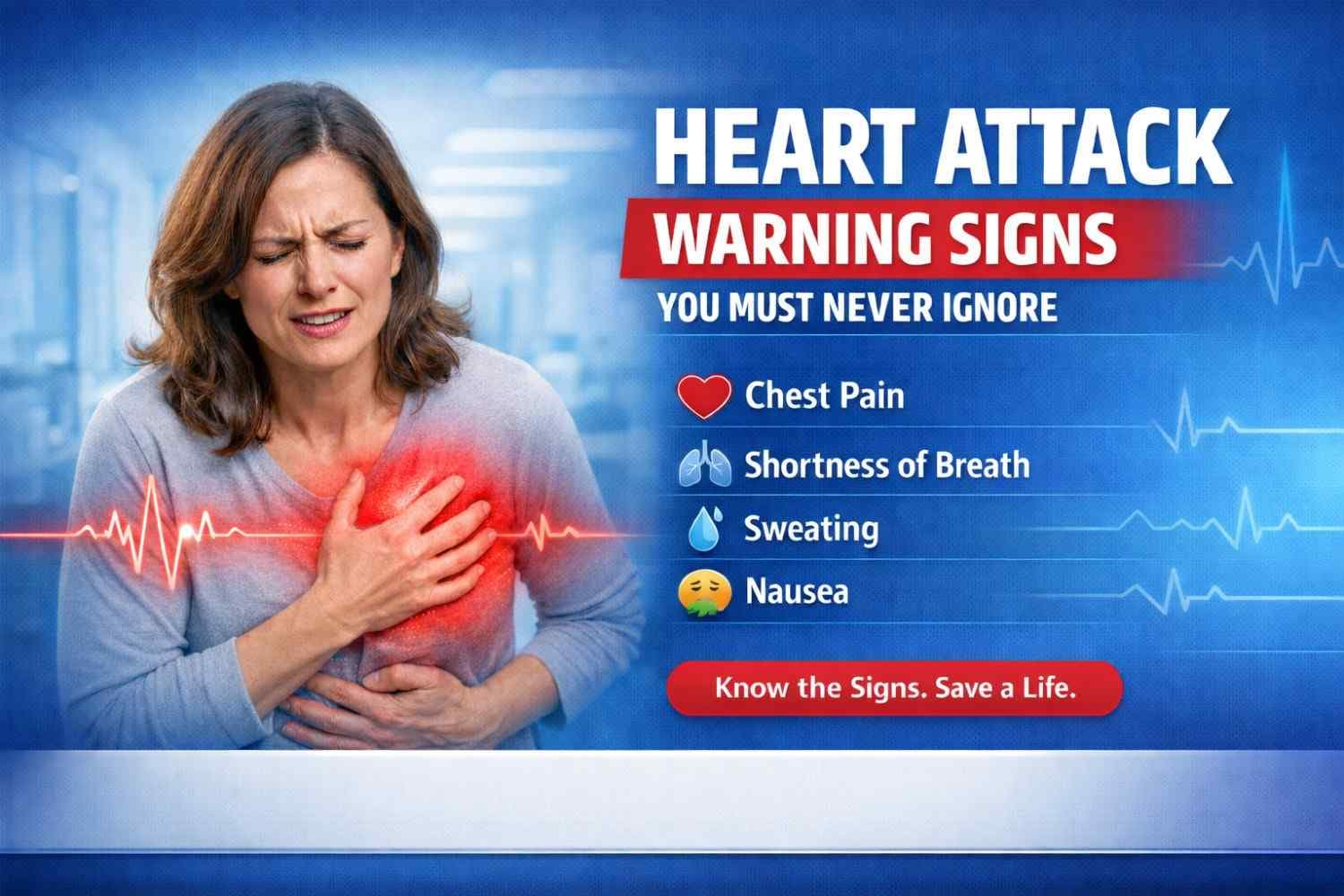
Heart Attack Warning Signs You Must Never Ignore
Recognizing heart attack symptoms early can save your life. Learn the critical warning signs from Dr. Amit Kumar Singh, Senior Interventional Cardiologist at Jigyasa Hospital, Moradabad. Call 7900903333.
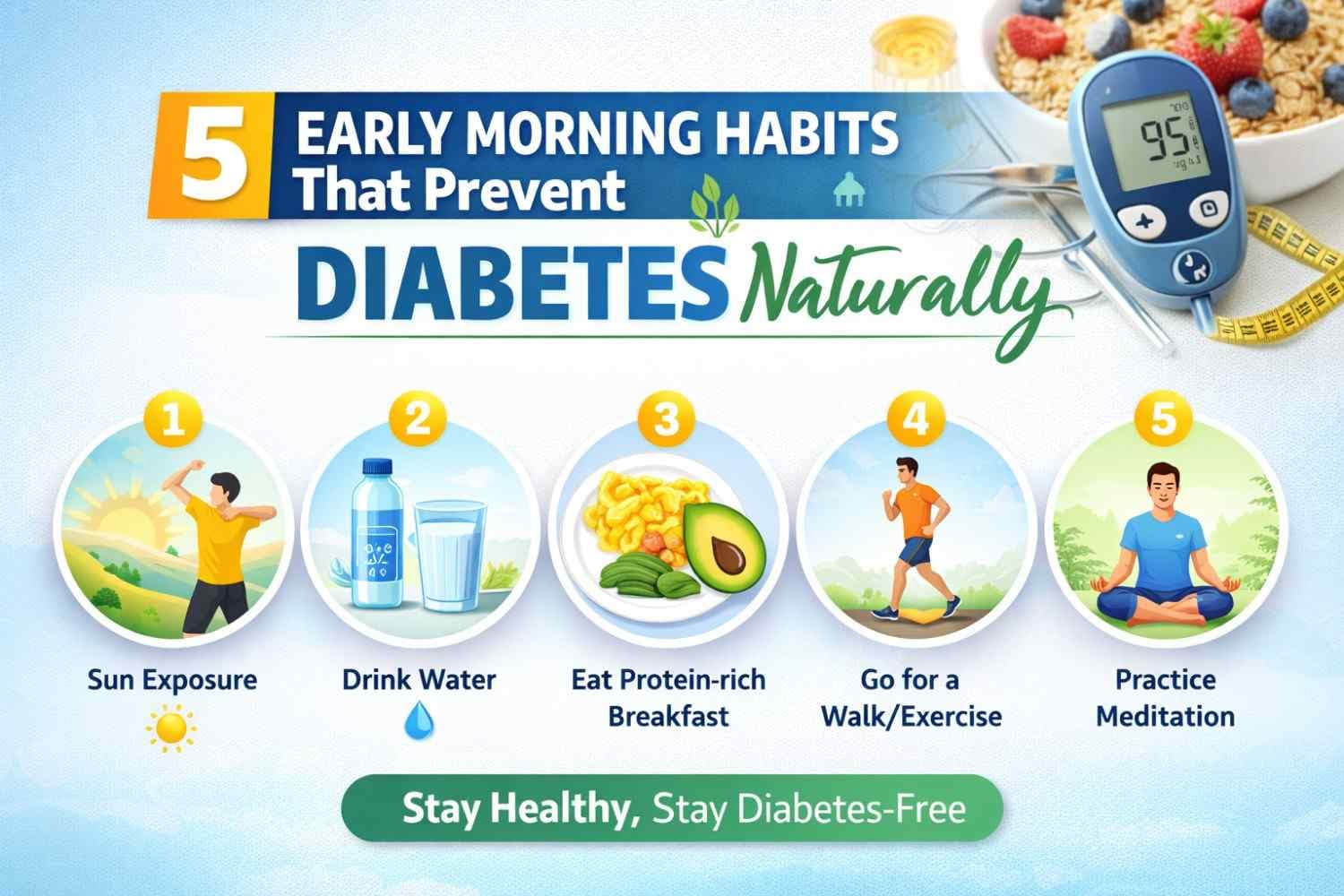
5 Early Morning Habits That Prevent Diabetes Naturally
Discover 5 powerful morning habits that naturally prevent diabetes. Expert advice from Dr. C.P. Singh, Senior Consultant Physician at Jigyasa Hospital, Moradabad. Call 7900903333.
Why Summers in UP Are Dangerous for Your Kidneys
UP summers can silently damage your kidneys. Jigyasa Hospital Moradabad explains the hidden risks, warning signs, and how to protect your kidneys this season. Call 7900903333.