

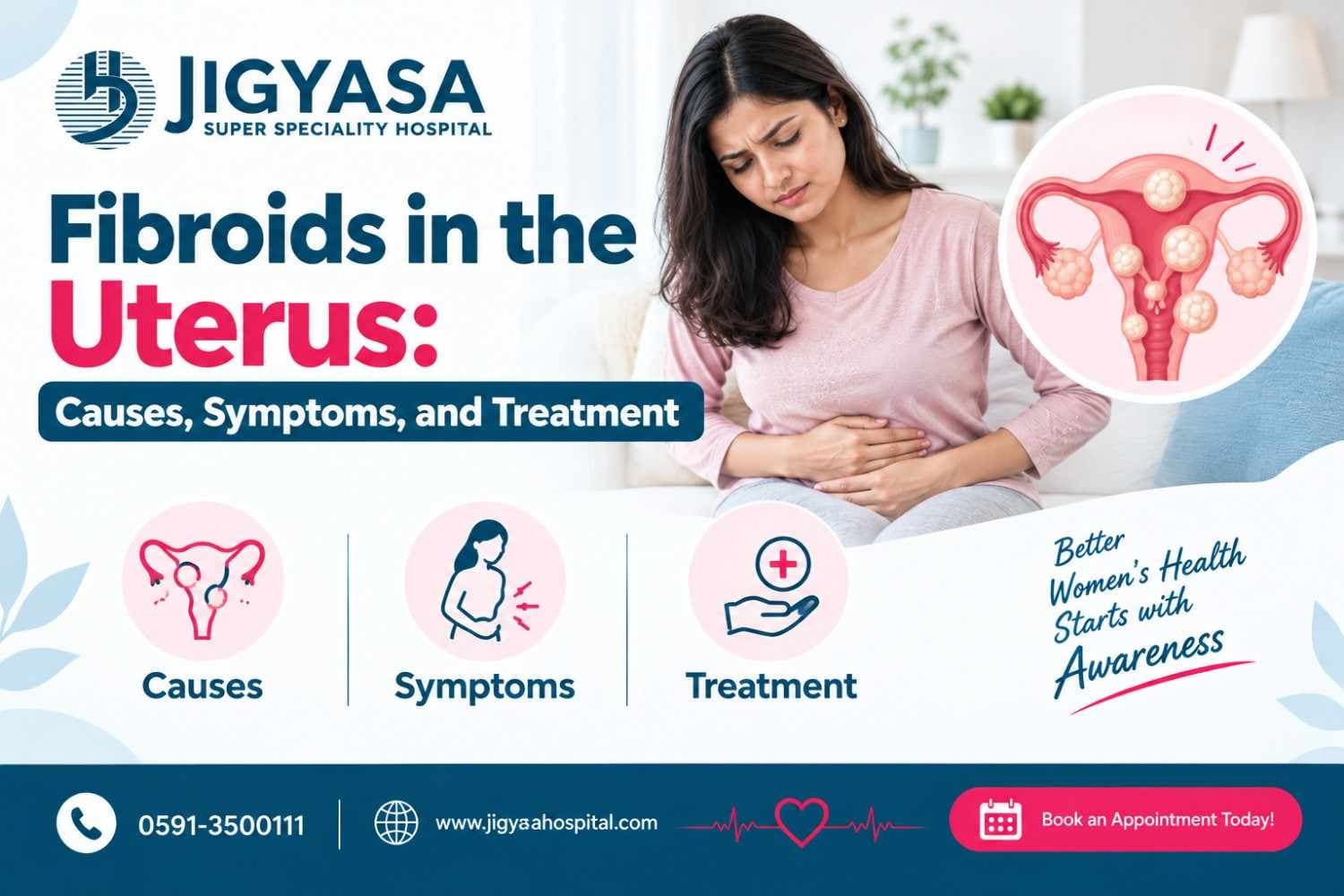
Fibroids in the Uterus: Causes, Symptoms, and Treatment
Heavy periods or pelvic pressure could be uterine fibroids. Learn the causes, symptoms, and treatment options — guidance from Dr. Karishma Singh, Gynecologist, Jigyasa Hospital, Moradabad.
Uterine fibroids are one of the most common gynecological conditions affecting women, yet many women live with symptoms for years — heavy periods, pelvic pressure, or persistent lower back pain — without realizing these are connected to a treatable, well-understood condition. Others discover fibroids incidentally during a routine ultrasound and are understandably alarmed by the term, unsure whether it requires immediate action or simply monitoring. At Jigyasa Hospital, Moradabad, Dr. Karishma Singh, our specialist in Gynecology, Obstetrics, and IVF, regularly evaluates and manages women with fibroids, helping them understand their specific situation and the most appropriate path forward.
What Are Uterine Fibroids?
Fibroids, medically known as leiomyomas or myomas, are non-cancerous growths that develop in or around the uterus. They're made up of muscle and fibrous tissue and can vary enormously in size — from as small as a seed to large enough to noticeably enlarge the abdomen in more significant cases. A woman can have a single fibroid or multiple fibroids at once, and they can grow in different locations within or around the uterine wall.
Importantly, fibroids are almost always benign (non-cancerous), and while they can cause significant symptoms and discomfort, they don't typically pose a serious health threat on their own.
Types of Fibroids Based on Location
- •Intramural fibroids — grow within the muscular wall of the uterus, the most common type
- •Submucosal fibroids — grow just beneath the inner lining of the uterus, projecting into the uterine cavity; these are more likely to cause heavy bleeding and fertility-related issues despite sometimes being smaller in size
- •Subserosal fibroids — grow on the outer surface of the uterus, and can sometimes press on nearby organs like the bladder or bowel as they enlarge
- •Pedunculated fibroids — attached to the uterus by a thin stalk, either on the inside or outside surface
The location of a fibroid often influences the type and severity of symptoms more than its size alone.
What Causes Fibroids?
The exact cause of fibroids isn't fully understood, but several factors are known to contribute to their development and growth:
- •Hormonal influence — estrogen and progesterone, the hormones that regulate the menstrual cycle, appear to promote fibroid growth, which is why fibroids often grow during reproductive years and tend to shrink after menopause when hormone levels decline
- •Genetic factors — a family history of fibroids increases the likelihood of developing them
- •Age — fibroids become more common as women approach their forties, though they can develop at younger ages as well
- •Obesity — associated with a higher risk of fibroid development, likely related to its effect on hormone levels
- •Early onset of menstruation — starting periods at a younger age has been associated with increased fibroid risk
- •Dietary factors — some studies suggest certain dietary patterns may influence fibroid risk, though this connection is less clearly established than other factors
- •Vitamin D deficiency — increasingly recognized as a potential contributing factor to fibroid development
Common Symptoms of Uterine Fibroids
Many fibroids, particularly smaller ones, cause no symptoms at all and are discovered incidentally. When symptoms do occur, they often include:
1. Heavy or Prolonged Menstrual Bleeding
One of the most common symptoms, sometimes severe enough to cause anemia over time due to significant blood loss.
2. Pelvic Pain or Pressure
A sense of heaviness, fullness, or pressure in the lower abdomen or pelvis, which can range from mild to significantly uncomfortable depending on fibroid size and location.
3. Frequent Urination
Fibroids pressing against the bladder can cause a need to urinate more frequently, or a sense of incomplete bladder emptying.
4. Constipation or Bowel Pressure
Larger fibroids pressing on the bowel can cause constipation or a sense of rectal pressure.
5. Lower Back Pain
Fibroids located toward the back of the uterus can press on nearby nerves or structures, contributing to persistent lower back discomfort.
6. Pain During Intercourse
Depending on fibroid size and location, some women experience discomfort or pain during sexual intercourse.
7. Abdominal Swelling or Enlargement
In cases of larger fibroids, the lower abdomen may appear visibly enlarged, sometimes mistaken for weight gain or, in significant cases, resembling early pregnancy in appearance.
8. Fertility Difficulties or Pregnancy Complications
Certain fibroids, particularly those distorting the uterine cavity, can be associated with difficulty conceiving or an increased risk of certain pregnancy complications.
When Symptoms Warrant Prompt Evaluation
- •Bleeding heavy enough to require changing protection every hour or passing large clots
- •Signs of significant anemia, such as persistent fatigue, dizziness, or paleness, alongside heavy bleeding
- •Sudden, severe pelvic pain, which can occasionally occur if a fibroid outgrows its blood supply
- •Rapid increase in abdominal size
- •Difficulty conceiving after a reasonable period of trying, particularly with known fibroids
How Fibroids Are Diagnosed at Jigyasa Hospital
At Jigyasa Hospital, Dr. Karishma Singh's evaluation for suspected fibroids typically includes:
1. Detailed Clinical History
Understanding menstrual patterns, symptom severity, and their impact on daily life, along with relevant family history and reproductive plans.
2. Pelvic Examination
A physical examination can often detect an enlarged or irregularly shaped uterus, which may suggest the presence of fibroids.
3. Ultrasound Imaging
The primary tool for diagnosing fibroids, providing information about their number, size, and location within or around the uterus.
4. Additional Imaging, When Needed
In certain cases, more detailed imaging such as MRI may be used, particularly when planning specific treatment approaches or when fibroid characteristics need further clarification.
5. Blood Tests
Checking for anemia in women with heavy menstrual bleeding, which helps guide both diagnosis and treatment urgency.
Treatment Approaches for Fibroids
Treatment is highly individualized, depending on fibroid size, location, symptom severity, age, and whether future fertility is a consideration.
Watchful Waiting
For fibroids that are small and not causing significant symptoms, particularly in women approaching menopause, monitoring with periodic examinations and ultrasounds may be all that's needed, since fibroids often shrink after menopause.
Medical Management
- •Medications to help manage heavy bleeding and regulate the menstrual cycle
- •Hormonal treatments that can help reduce fibroid-related symptoms and, in some cases, temporarily shrink fibroid size
- •Iron supplementation for women with anemia related to heavy bleeding
Minimally Invasive and Surgical Options
- •Myomectomy — surgical removal of fibroids while preserving the uterus, an important option for women who wish to maintain fertility
- •Hysterectomy — surgical removal of the uterus, considered for women with severe symptoms who have completed their family or don't wish to preserve fertility, and who haven't responded adequately to other treatments
- •Uterine artery embolization — a minimally invasive procedure that reduces blood flow to fibroids, causing them to shrink, an option for select patients based on fibroid characteristics and individual circumstances
The choice between these options depends heavily on the patient's specific fibroid pattern, symptom severity, fertility goals, and overall health, and is discussed in detail as part of individualized care planning.
Fibroids and Fertility: What Women Trying to Conceive Should Know
Not all fibroids affect fertility — many women with fibroids conceive and carry pregnancies without complications. However, fibroids that distort the uterine cavity, particularly submucosal fibroids, are more likely to be associated with fertility challenges or an increased risk of miscarriage in some cases. For women planning pregnancy who have known fibroids, a thorough evaluation helps determine whether the fibroids are likely to affect fertility and whether treatment before attempting conception would be beneficial.
Can Fibroids Turn Into Cancer?
This is a common and understandable concern, but it's important to know that fibroids are overwhelmingly benign, and the transformation of a fibroid into a cancerous growth (called leiomyosarcoma) is extremely rare. This concern shouldn't be a source of major anxiety for most women diagnosed with typical fibroids, though any fibroid with unusual growth patterns or characteristics would be evaluated more closely as a standard precaution.
Living with Fibroids: Practical Considerations
- •Regular follow-up with ultrasound monitoring, particularly for fibroids being watched rather than actively treated
- •Attention to symptoms of anemia if experiencing heavy periods, and appropriate iron supplementation if needed
- •Open discussion of fertility plans with your gynecologist, since this significantly influences treatment recommendations
- •Awareness that fibroid symptoms often improve after menopause as hormone levels decline
Gynecology Care at Jigyasa Hospital, Moradabad
- •Comprehensive fibroid evaluation with pelvic examination and ultrasound
- •Expert diagnosis and treatment by Dr. Karishma Singh, Gynecologist & IVF Specialist
- •Medical management, myomectomy, hysterectomy, and uterine artery embolization options
- •Fertility-focused counseling for women planning pregnancy with fibroids
Book an Appointment: 7900903333
Address: Near Miglani Cinema, Rampur Road, Moradabad – 244001
Online Appointments: jigyasahospital.com
Fibroid Treatment | Myomectomy | Hysterectomy | Ultrasound | Gynecology Services | Ayushman Bharat Accepted
Key Takeaways
- •Uterine fibroids are non-cancerous growths — very common and rarely dangerous, but can cause significant symptoms.
- •Symptoms include heavy periods, pelvic pressure, frequent urination, constipation, back pain, and fertility issues.
- •Treatment ranges from watchful waiting to medications, myomectomy, hysterectomy, or uterine artery embolization.
- •Fibroids often shrink after menopause; fertility-focused treatment preserves the uterus for women planning pregnancy.
- •Fibroids turning cancerous is extremely rare — regular monitoring is sufficient for most cases.
Frequently Asked Questions
Do all fibroids need to be treated?
No, many fibroids, particularly smaller ones without significant symptoms, can simply be monitored rather than actively treated, especially if they aren't affecting quality of life or fertility plans.
Can fibroids come back after treatment?
After a myomectomy, new fibroids can potentially develop over time, since the underlying tendency to form fibroids isn't eliminated by removing existing ones. A hysterectomy, since it removes the uterus entirely, eliminates the possibility of fibroid recurrence.
Will fibroids affect my ability to have a normal delivery?
This depends on the size, number, and location of fibroids. Many women with fibroids have normal pregnancies and deliveries, though your obstetrician will monitor your specific situation throughout pregnancy to guide the safest delivery approach.
Do fibroids always cause heavy periods?
Not necessarily — some fibroids, particularly those not affecting the uterine cavity, may cause minimal or no bleeding-related symptoms, while others, especially submucosal fibroids, are more strongly associated with heavy bleeding.
Is it true that fibroids shrink after menopause?
Yes, since fibroid growth is largely hormone-dependent, the natural decline in estrogen and progesterone after menopause often causes fibroids to gradually shrink and symptoms to improve.
Related Articles

Heart Attack Warning Signs You Must Never Ignore
Recognizing heart attack symptoms early can save your life. Learn the critical warning signs from Dr. Amit Kumar Singh, Senior Interventional Cardiologist at Jigyasa Hospital, Moradabad. Call 7900903333.

5 Early Morning Habits That Prevent Diabetes Naturally
Discover 5 powerful morning habits that naturally prevent diabetes. Expert advice from Dr. C.P. Singh, Senior Consultant Physician at Jigyasa Hospital, Moradabad. Call 7900903333.

Why Summers in UP Are Dangerous for Your Kidneys
UP summers can silently damage your kidneys. Jigyasa Hospital Moradabad explains the hidden risks, warning signs, and how to protect your kidneys this season. Call 7900903333.