

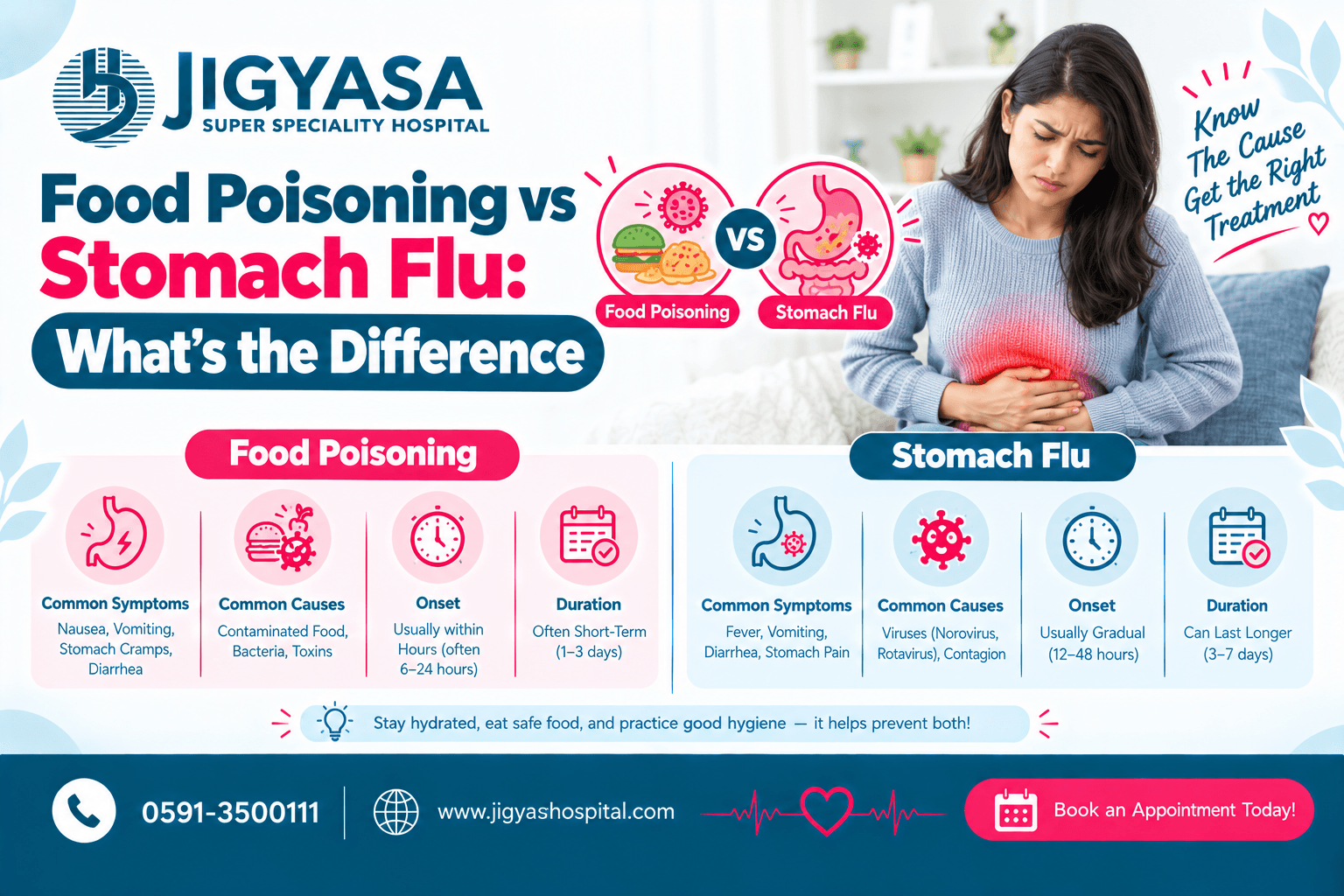
Food Poisoning vs Stomach Flu: What's the Difference
Sudden vomiting and diarrhea — is it food poisoning or stomach flu? Learn the key differences, causes, and when to seek care — guidance from Dr. Pabitra Sahu, Jigyasa Hospital, Moradabad.
Sudden nausea, vomiting, diarrhea, and stomach cramps can strike with little warning, leaving many people wondering whether they've eaten something that didn't agree with them or simply caught a stomach bug going around. Food poisoning and stomach flu (medically known as viral gastroenteritis) share a remarkably similar set of symptoms, which is why the two are so often confused with one another. Yet understanding which one you're actually dealing with can meaningfully affect how you manage the illness, how long it's likely to last, and whether others around you need to take precautions. At Jigyasa Hospital, Moradabad, Dr. Pabitra Sahu, our specialist in Gastroenterology and Hepatology, regularly helps patients make sense of these overlapping conditions and guides appropriate treatment based on the specific cause.
What Is Food Poisoning?
Food poisoning occurs when you consume food or water contaminated with harmful bacteria, viruses, parasites, or toxins produced by these organisms. The contamination typically happens due to improper food handling, inadequate cooking, poor storage, or contaminated water used in food preparation.
Common causes of food poisoning:
- •Bacteria such as Salmonella, E. coli, and Staphylococcus aureus
- •Toxins produced by certain bacteria, which can cause illness even if the bacteria themselves are no longer active by the time the food is eaten
- •Parasites, in less common cases, often associated with contaminated water or undercooked food
- •Improperly stored or reheated food, particularly rice, dairy, and meat dishes
What Is Stomach Flu (Viral Gastroenteritis)?
Despite its name, stomach flu has nothing to do with the influenza virus that causes respiratory flu. It's an infection of the stomach and intestines caused by various viruses, and it spreads easily from person to person, particularly in close-contact settings like households, schools, and workplaces.
Common causes of stomach flu:
- •Norovirus, one of the most common causes, known for spreading rapidly in close-contact environments
- •Rotavirus, which particularly affects young children, though it can occur in adults as well
- •Other viruses that specifically target the digestive tract
Unlike food poisoning, stomach flu is primarily spread through person-to-person contact, contaminated surfaces, or occasionally contaminated food and water that carries the virus rather than bacteria or toxins.
Key Differences: Onset of Symptoms
Food Poisoning
Symptoms typically appear relatively quickly after consuming contaminated food — anywhere from a few hours to about a day, depending on the specific contaminant involved. Some toxin-related food poisoning can cause symptoms within just a few hours of eating.
Stomach Flu
Symptoms generally take slightly longer to develop after exposure, often appearing one to three days after contact with the virus, since it needs time to establish infection in the digestive tract.
Key Differences: Associated Symptoms
Food Poisoning
- •Nausea and vomiting, often prominent
- •Watery or sometimes bloody diarrhea, depending on the specific cause
- •Abdominal cramps, which can be quite severe
- •Fever, which may or may not be present depending on the cause
- •Symptoms are often more intense but tend to resolve relatively quickly once the contaminated food has been cleared from the system
Stomach Flu
- •Watery diarrhea, typically without blood
- •Vomiting, often accompanying the diarrhea
- •Low-grade fever is common
- •Body aches and headache, which are more characteristic of viral illness
- •Symptoms often develop more gradually and can last slightly longer than typical food poisoning
Key Differences: Pattern Among Groups of People
Food Poisoning
A distinctive clue for food poisoning is when multiple people who shared the same meal become ill around the same time, often within a similar timeframe after eating. This pattern — several people falling sick after a shared meal, function, or restaurant visit — strongly points toward a food-related cause.
Stomach Flu
Since it spreads from person to person, stomach flu often shows a different pattern — illness spreading sequentially through a household or close-contact group over several days, rather than everyone falling sick at once from a single shared source.
Key Differences: Duration
Food Poisoning
Many cases resolve within 24 to 48 hours once the body clears the contaminant, though some bacterial causes can last longer, particularly without appropriate treatment.
Stomach Flu
Typically lasts about one to three days for the most intense symptoms, though some lingering fatigue or mild digestive sensitivity can persist for a few days longer.
Comparison Table: Food Poisoning vs Stomach Flu
| Feature | Food Poisoning | Stomach Flu (Viral Gastroenteritis) |
|---|---|---|
| Cause | Bacteria, toxins, parasites from contaminated food | Viruses (norovirus, rotavirus) spread person-to-person |
| Onset | Few hours to 1 day after eating | 1-3 days after exposure to virus |
| Key symptoms | Nausea, vomiting, diarrhea (may be bloody), severe cramps | Watery diarrhea, vomiting, low-grade fever, body aches, headache |
| Pattern in groups | Multiple people sick at once after shared meal | Spreads sequentially through household over days |
| Duration | 24-48 hours typically | 1-3 days intense symptoms, may linger longer |
| Contagious | Generally no (from food, not person-to-person) | Yes, highly contagious |
Warning Signs That Need Medical Attention, Regardless of Cause
Whether the cause is food poisoning or stomach flu, certain symptoms warrant prompt medical evaluation rather than continued home management:
- •Signs of significant dehydration — reduced urination, excessive thirst, dizziness, or dry mouth
- •High fever (above 101-102°F)
- •Blood in vomit or stool
- •Severe abdominal pain that doesn't improve
- •Vomiting so persistent that you can't keep down fluids
- •Diarrhea lasting more than three days without improvement
- •Symptoms in young children, elderly individuals, pregnant women, or those with underlying health conditions, who are more vulnerable to complications from dehydration
- •Signs of neurological involvement, such as blurred vision, difficulty speaking, or muscle weakness, which can indicate certain rarer but serious forms of food poisoning
How Food Poisoning and Stomach Flu Are Evaluated at Jigyasa Hospital
At Jigyasa Hospital, Dr. Pabitra Sahu's evaluation for persistent or severe cases of suspected food poisoning or stomach flu typically includes:
1. Detailed History
Understanding the timeline of symptoms, recent food intake, any shared meals with others who became ill, and recent contact with sick individuals.
2. Assessment of Dehydration
Checking for signs of dehydration, which is often the most important factor determining whether more intensive treatment, such as intravenous fluids, is needed.
3. Stool Testing, When Indicated
For more severe, prolonged, or unusual cases, stool testing can help identify the specific bacterial, viral, or parasitic cause, guiding more targeted treatment when needed.
4. Blood Tests
In more significant cases, blood tests may be used to assess the degree of dehydration or check for signs of more widespread infection.
Treatment Approaches
General Supportive Care (Applicable to Both)
- •Rehydration — replacing lost fluids and electrolytes is the most important aspect of treatment for both conditions, using oral rehydration solutions particularly for more significant fluid loss
- •Rest — allowing the body to recover
- •Gradual return to normal diet — starting with bland, easily digestible foods as symptoms improve, rather than resuming a full normal diet immediately
- •Avoiding certain foods temporarily — dairy, caffeine, alcohol, and spicy or fatty foods, which can aggravate an already irritated digestive system
Specific Treatment When Needed
- •Antibiotics — reserved for specific bacterial causes of food poisoning identified through testing, and not used for viral stomach flu, where they provide no benefit
- •Intravenous fluids — for more significant dehydration that can't be adequately managed with oral fluids alone
- •Anti-nausea or anti-diarrheal medication — used selectively and cautiously, since these can sometimes prolong certain infections if used inappropriately
Prevention Strategies
For Food Poisoning:
- •Proper food storage, particularly refrigeration of perishable items
- •Thorough cooking of meat, poultry, and eggs
- •Washing fruits and vegetables properly before consumption
- •Avoiding street food or food from sources with questionable hygiene practices
- •Being cautious with buffet-style food left out for extended periods
For Stomach Flu:
- •Frequent, thorough handwashing, particularly after using the restroom and before eating
- •Avoiding close contact with individuals who are currently ill
- •Disinfecting frequently touched surfaces, especially in households with an infected member
- •Avoiding sharing utensils, cups, or towels with someone who is sick
Gastroenterology Care at Jigyasa Hospital, Moradabad
- •Expert diagnosis and treatment of food poisoning and viral gastroenteritis
- •Comprehensive evaluation including stool testing and dehydration assessment
- •IV fluid therapy for severe dehydration when needed
- •Personalized care by Dr. Pabitra Sahu, Gastroenterologist & Hepatologist
Book an Appointment: 7900903333
Address: Near Miglani Cinema, Rampur Road, Moradabad – 244001
Online Appointments: jigyasahospital.com
Gastroenterology | Food Poisoning Treatment | Viral Gastroenteritis | IV Fluid Therapy | Ayushman Bharat Accepted
Key Takeaways
- •Food poisoning = contaminated food (bacteria, toxins, parasites); Stomach flu = viral infection (norovirus, rotavirus) spread person-to-person.
- •Onset: Food poisoning symptoms appear within hours to 1 day after eating; stomach flu takes 1-3 days after exposure.
- •Key differences: Food poisoning often causes bloody diarrhea, severe cramps; stomach flu causes watery diarrhea, body aches, headache.
- •Pattern: Multiple people sick at once after shared meal = food poisoning; illness spreading through household over days = stomach flu.
- •Treatment for both: rehydration (ORS), rest, bland diet. Antibiotics only for specific bacterial food poisoning, not viral stomach flu.
Frequently Asked Questions
Can food poisoning spread from person to person like stomach flu?
Generally, no — food poisoning typically results from consuming contaminated food directly, rather than spreading between people, though in some cases, poor hygiene after illness can occasionally lead to secondary spread of certain bacterial causes.
Do I need antibiotics for food poisoning?
Not always — many cases of food poisoning resolve with supportive care alone, and antibiotics are reserved for specific bacterial causes identified through testing, particularly in more severe or prolonged cases.
How can I tell if I'm dehydrated from vomiting and diarrhea?
Signs of dehydration include reduced urination, dark urine, excessive thirst, dry mouth, dizziness, and fatigue — if these occur, it's important to focus on rehydration and seek medical attention if fluids can't be kept down.
Is it safe to take anti-diarrheal medication for stomach flu or food poisoning?
This should generally be guided by a doctor, since in certain situations, particularly with specific bacterial infections, stopping diarrhea too quickly can sometimes prolong the underlying infection rather than help recovery.
How long should I stay away from work or school with stomach flu?
Since stomach flu is contagious, it's generally advisable to stay away from work, school, or food preparation duties until at least 24-48 hours after symptoms have fully resolved, to avoid spreading the illness to others.
Related Articles
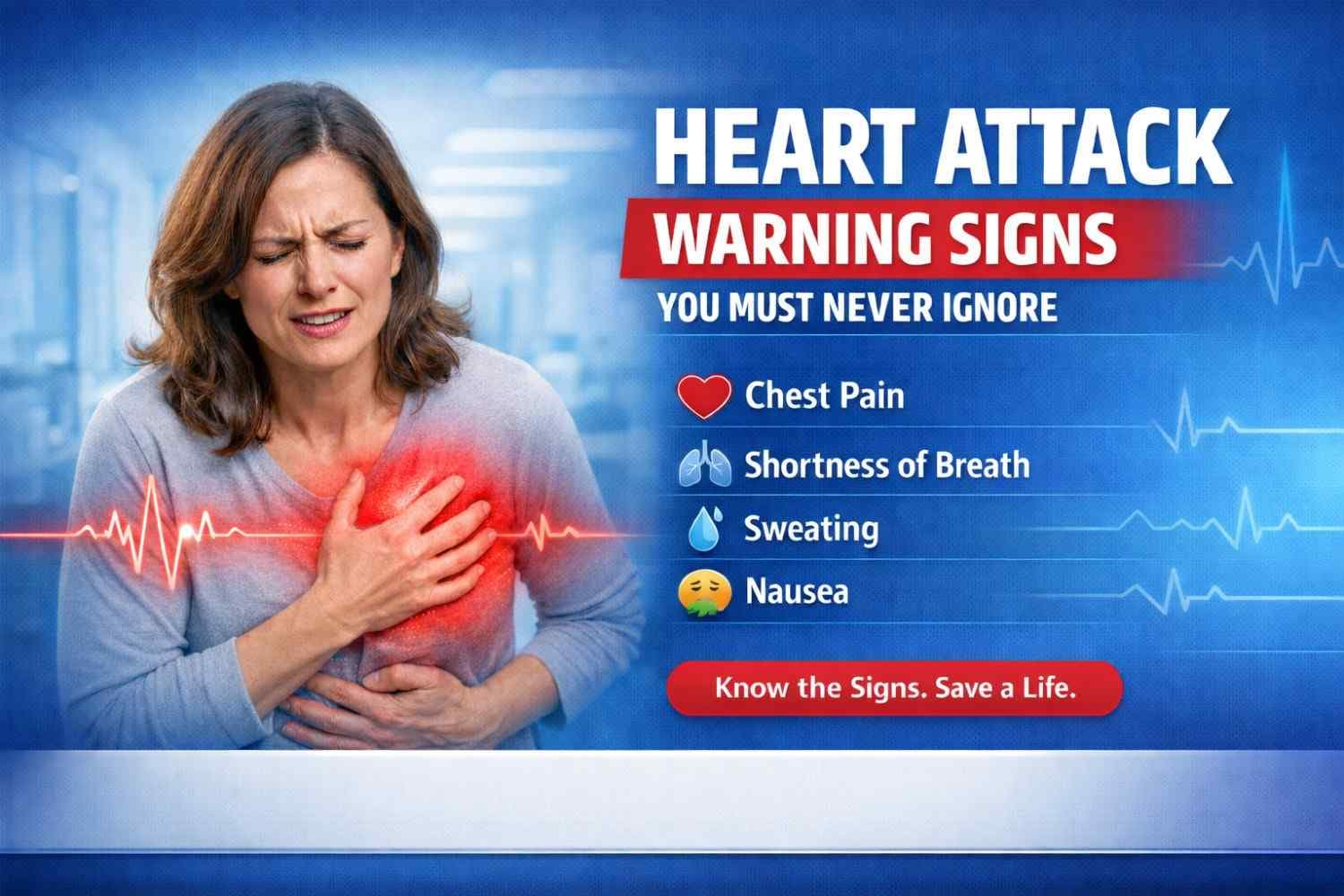
Heart Attack Warning Signs You Must Never Ignore
Recognizing heart attack symptoms early can save your life. Learn the critical warning signs from Dr. Amit Kumar Singh, Senior Interventional Cardiologist at Jigyasa Hospital, Moradabad. Call 7900903333.

5 Early Morning Habits That Prevent Diabetes Naturally
Discover 5 powerful morning habits that naturally prevent diabetes. Expert advice from Dr. C.P. Singh, Senior Consultant Physician at Jigyasa Hospital, Moradabad. Call 7900903333.
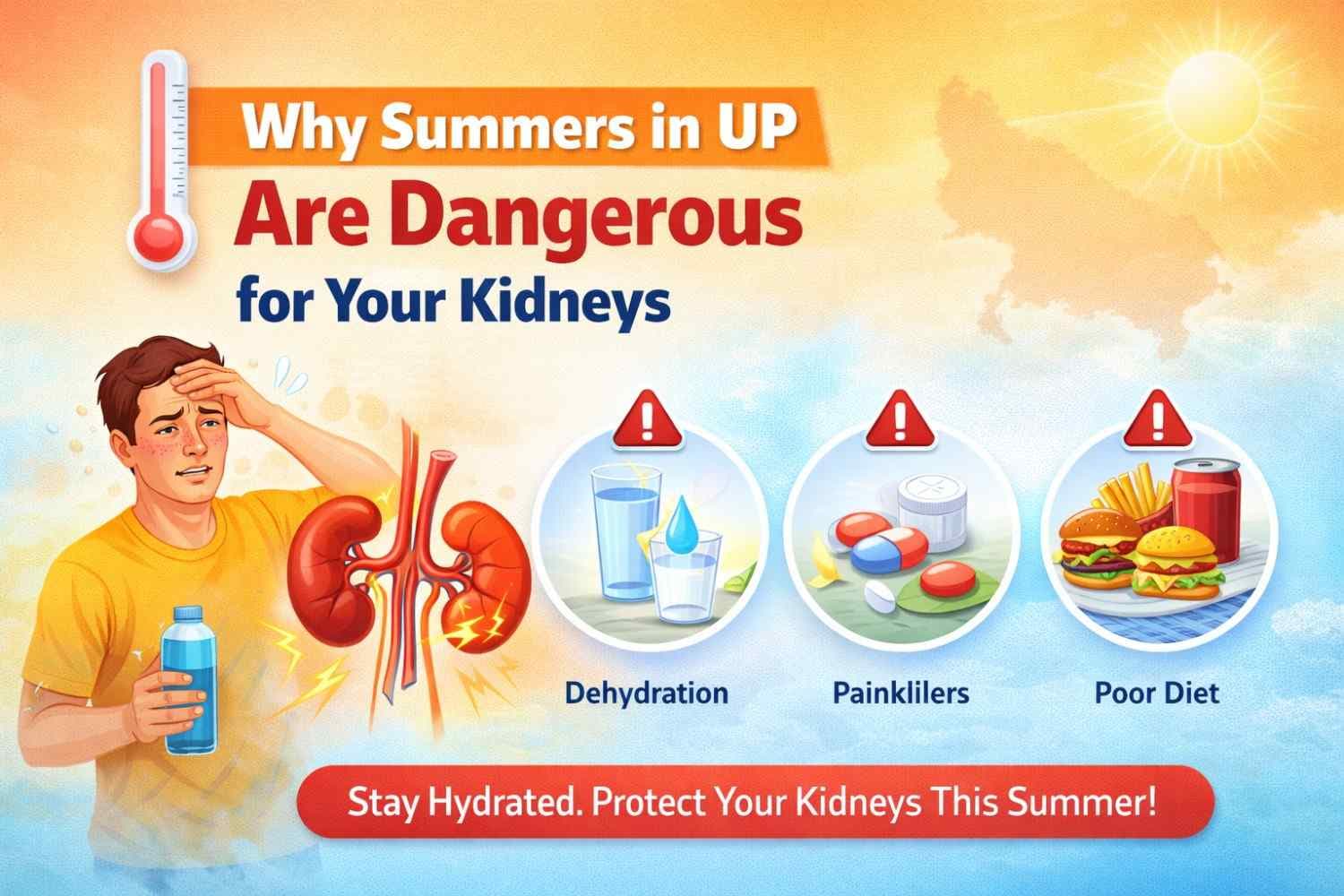
Why Summers in UP Are Dangerous for Your Kidneys
UP summers can silently damage your kidneys. Jigyasa Hospital Moradabad explains the hidden risks, warning signs, and how to protect your kidneys this season. Call 7900903333.