

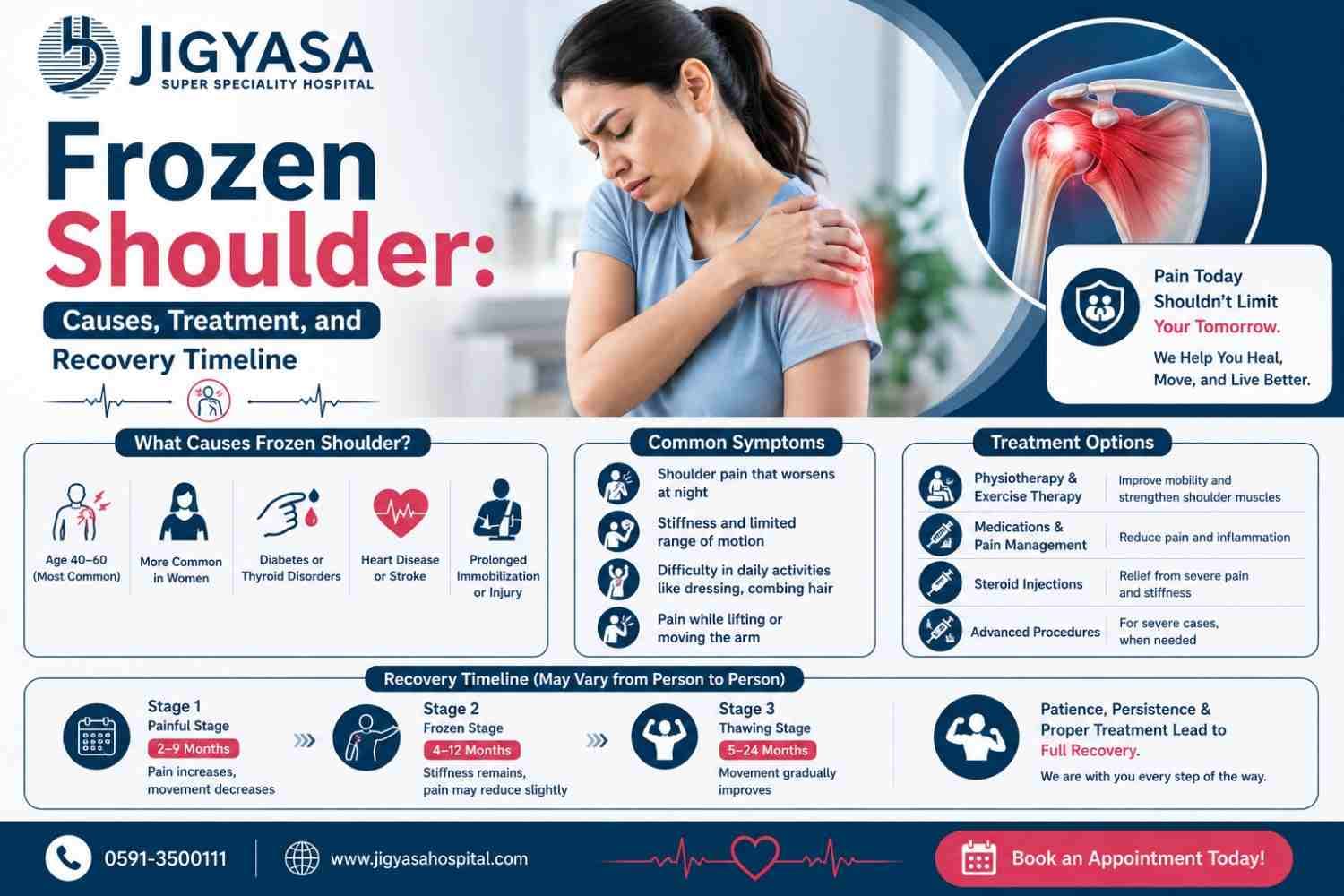
Frozen Shoulder: Causes, Treatment, and Recovery Timeline
Struggling with stiff, painful shoulder movement? Learn the causes, stages, and realistic recovery timeline for frozen shoulder.
Frozen shoulder occurs when the capsule of connective tissue surrounding the shoulder joint becomes thickened, inflamed, and tight, restricting the joint's normal range of motion. As the condition progresses, the capsule can also develop bands of scar-like tissue (adhesions), further limiting movement. The exact underlying trigger for this process isn't always clear, but the result is a shoulder that becomes progressively stiffer and more painful, often significantly affecting daily activities. Frozen shoulder is somewhat unique among musculoskeletal conditions in that it typically follows a predictable, self-limiting course through distinct stages — though the total duration can be considerably longer than most people expect.
Who Is at Risk?
- •Age and gender: Most common between ages 40 and 60, and more frequent in women
- •Diabetes: One of the strongest risk factors — people with diabetes are significantly more likely to develop frozen shoulder, and their cases often take longer to resolve
- •Thyroid disorders: Both overactive and underactive thyroid conditions are associated with increased risk
- •Prolonged shoulder immobilization: Following surgery, injury, or a period of reduced shoulder movement, such as after a stroke or a fracture requiring a sling
- •Cardiac conditions and Parkinson's disease: Associated with somewhat higher risk, for reasons not fully understood
- •Prior frozen shoulder in the other arm: Having experienced it once increases the likelihood, in a smaller proportion of patients, of developing it in the opposite shoulder as well
The Three Stages of Frozen Shoulder
Understanding these stages helps set realistic expectations, since frozen shoulder doesn't follow a quick, linear recovery — it typically moves through three fairly distinct phases.
Stage 1: Freezing Stage (Painful Stage)
This initial stage is characterized by gradually increasing shoulder pain, which is often worse at night and can interfere with sleep. As pain increases, the shoulder's range of motion starts to become noticeably restricted, as movement becomes increasingly uncomfortable.
Typical duration: Roughly 2 to 9 months
Key feature: Pain is usually the dominant symptom, often out of proportion to how much stiffness has developed so far
Stage 2: Frozen Stage (Stiffening Stage)
During this stage, pain may actually begin to gradually decrease, but stiffness becomes the primary problem. The shoulder becomes significantly restricted in movement, making everyday tasks — reaching overhead, behind the back, or to the side — noticeably difficult.
Typical duration: Roughly 4 to 12 months
Key feature: Stiffness dominates, with pain present mainly at the extremes of the restricted movement
Stage 3: Thawing Stage (Recovery Stage)
This final stage involves a gradual, often slow return of shoulder range of motion. Movement improves progressively, though the pace of recovery can vary considerably between individuals.
Typical duration: Roughly 6 months to 2 years
Key feature: Slow, steady improvement in range of motion until near-normal or normal movement returns
Total timeline: Altogether, frozen shoulder can take anywhere from about 1 to 3 years to fully resolve without treatment, though appropriate treatment can help manage symptoms and, in some cases, potentially shorten the overall course.
Common Symptoms Throughout the Condition
- •Deep, dull ache in the shoulder that can radiate to the upper arm
- •Pain that worsens with movement, particularly reaching overhead or behind the back
- •Significant difficulty with everyday tasks — dressing, reaching for objects, driving, or sleeping on the affected side
- •Progressive stiffness that limits both active movement (moving the arm yourself) and passive movement (someone else moving your arm)
- •Pain that's often worse at night, particularly during the freezing stage
- •Gradual improvement in movement during the thawing stage, though full recovery can take considerable time
Why the Diagnosis Isn't Always Straightforward
Frozen shoulder can sometimes be mistaken for other shoulder conditions, such as rotator cuff injuries or shoulder arthritis, since some symptoms overlap. However, a key distinguishing feature of true frozen shoulder is the significant restriction in passive range of motion — meaning even when someone else gently moves the arm for the patient, movement remains restricted, which isn't typically the case with several other shoulder conditions. This distinction is an important part of accurate diagnosis.
How Frozen Shoulder Is Diagnosed at Jigyasa Hospital
At Jigyasa Hospital, Dr. Kriti Kishore's evaluation typically includes:
1. Detailed Clinical History
Understanding the pattern of pain onset, progression, and any relevant risk factors such as diabetes, thyroid issues, or a recent period of shoulder immobilization.
2. Physical Examination
Assessing both active and passive range of motion in the shoulder is central to diagnosis, since the characteristic restriction in passive movement helps distinguish frozen shoulder from other shoulder conditions.
3. Imaging Studies
X-rays may be used to rule out other causes of shoulder stiffness, such as arthritis. In some cases, ultrasound or MRI may be recommended if the diagnosis is uncertain or to rule out associated conditions like rotator cuff tears.
4. Blood Tests
Since diabetes and thyroid disorders are significant risk factors, screening for these conditions is often part of a thorough evaluation, particularly if not already known.
Treatment Approaches
While frozen shoulder often improves on its own over time, treatment focuses on managing pain, preserving as much movement as possible, and potentially shortening the overall duration.
During the Painful (Freezing) Stage
- •Anti-inflammatory medication to help manage pain
- •Gentle, pain-free range-of-motion exercises, avoiding aggressive stretching that can worsen inflammation during this acute phase
- •Corticosteroid injections into the shoulder joint, which can be particularly helpful for reducing pain and inflammation early in the course of the condition
- •Ice or heat application for symptomatic relief
During the Stiffening (Frozen) Stage
- •Physical therapy focusing on gradually restoring range of motion through structured stretching exercises
- •Continued pain management as needed for movement-related discomfort
- •Patience and consistency with prescribed home exercises, since progress during this stage can feel slow
During the Thawing (Recovery) Stage
- •Continued physical therapy to support the ongoing, gradual return of movement
- •Progressive strengthening exercises as range of motion improves
- •Regular follow-up to monitor progress and adjust the exercise program accordingly
For Cases That Don't Improve with Conservative Treatment
In a smaller number of patients whose symptoms don't adequately improve with the above measures, additional options such as manipulation under anesthesia or arthroscopic procedures to release tightened tissue may be considered, typically after a thorough trial of conservative treatment.
Managing Expectations: Why Patience Matters
One of the most important aspects of frozen shoulder management is understanding that this is a gradual, self-limiting condition — meaning it does eventually resolve, but typically over a period of months to a couple of years, not weeks. Patients who understand this timeline tend to engage more consistently with their exercise programs and experience less frustration during the slower stiffening stage, compared to those expecting a quick resolution.
Tips for Managing Daily Life During Recovery
- •Modify daily activities to avoid unnecessary strain on the affected shoulder, without avoiding movement altogether
- •Perform prescribed home exercises consistently, even when progress feels slow
- •Use supportive pillows to find a comfortable sleeping position, particularly during the painful stage
- •Keep diabetes and thyroid conditions well controlled, since this can influence the overall course
- •Stay engaged with follow-up appointments to track progress and adjust treatment as the condition moves through its stages
Rheumatology Care at Jigyasa Hospital, Moradabad
- •Comprehensive frozen shoulder evaluation with physical examination and imaging
- •Expert diagnosis and treatment by Dr. Kriti Kishore, Rheumatologist
- •Physical therapy, corticosteroid injections, and advanced interventions for adhesive capsulitis
- •Diabetes and thyroid screening as part of comprehensive risk factor management
Book an Appointment: 7900903333
Address: Near Miglani Cinema, Rampur Road, Moradabad – 244001
Online Appointments: jigyasahospital.com
Frozen Shoulder Treatment | Physical Therapy | Corticosteroid Injections | X-Ray & MRI | Rheumatology Services | Ayushman Bharat Accepted
Key Takeaways
- •Frozen shoulder progresses through three stages: freezing (painful), frozen (stiff), and thawing (recovery) — total duration 1-3 years.
- •Diabetes, thyroid disorders, and prolonged immobilization are major risk factors for developing frozen shoulder.
- •Key diagnostic feature: significant restriction in both active and passive shoulder movement.
- •Treatment focuses on pain management, gentle exercises, physical therapy, and sometimes corticosteroid injections.
- •Patience is essential — frozen shoulder is self-limiting but requires consistent treatment and exercise over months.
Frequently Asked Questions
Will frozen shoulder go away completely on its own without treatment?
In many cases, frozen shoulder does eventually resolve on its own, though this can take one to three years. Treatment doesn't necessarily change the ultimate outcome for everyone, but it helps manage pain and stiffness along the way and may help shorten the course for some patients.
Why is my shoulder pain improving but stiffness getting worse?
This pattern is actually typical — it reflects the transition from the painful freezing stage to the stiffening frozen stage, where pain decreases somewhat but restricted movement becomes the dominant issue.
Can frozen shoulder come back after it resolves?
It's uncommon for frozen shoulder to recur in the same shoulder once fully resolved, though a smaller proportion of people may develop it in the opposite shoulder at some point.
Does having diabetes make frozen shoulder harder to treat?
Diabetes is associated with a higher risk of developing frozen shoulder and can be linked to a longer overall recovery course, making good blood sugar control an important part of overall management.
Should I keep moving my shoulder even though it hurts?
Gentle, guided movement within pain-free limits is generally encouraged throughout the condition, as complete immobilization can worsen stiffness — though the specific exercises and intensity should be guided by your treating doctor or physical therapist based on which stage you're in.
Related Articles

Heart Attack Warning Signs You Must Never Ignore
Recognizing heart attack symptoms early can save your life. Learn the critical warning signs from Dr. Amit Kumar Singh, Senior Interventional Cardiologist at Jigyasa Hospital, Moradabad. Call 7900903333.
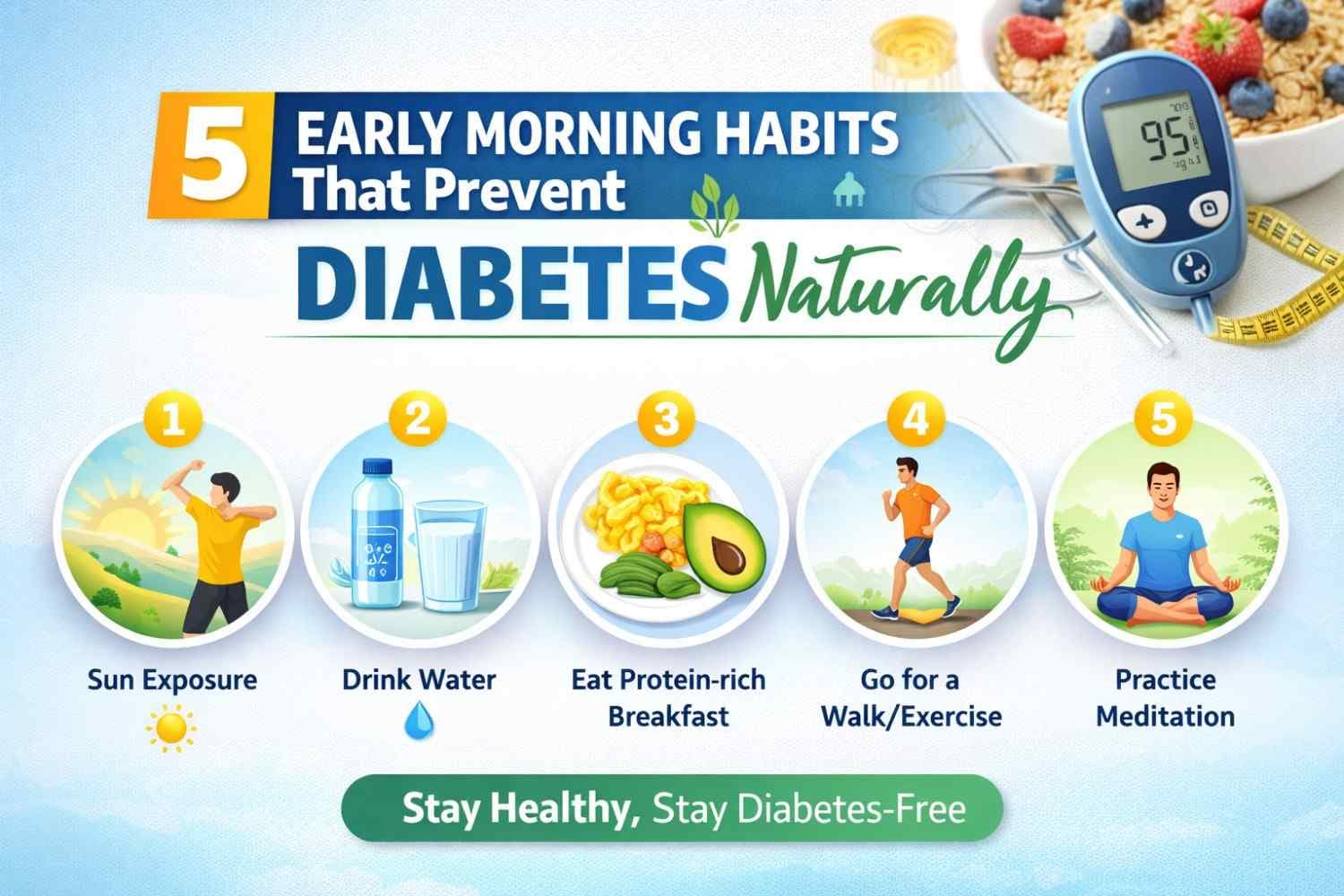
5 Early Morning Habits That Prevent Diabetes Naturally
Discover 5 powerful morning habits that naturally prevent diabetes. Expert advice from Dr. C.P. Singh, Senior Consultant Physician at Jigyasa Hospital, Moradabad. Call 7900903333.
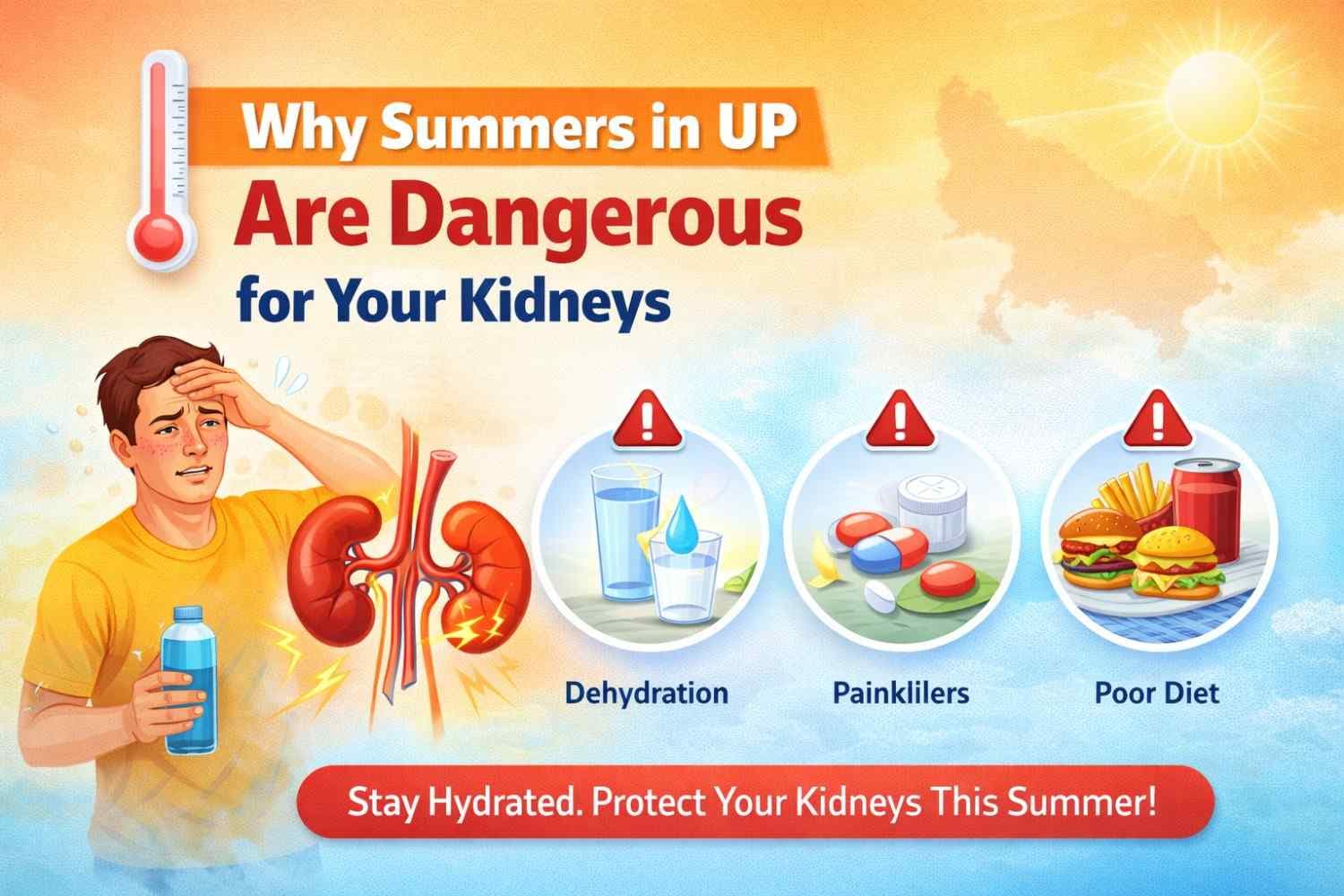
Why Summers in UP Are Dangerous for Your Kidneys
UP summers can silently damage your kidneys. Jigyasa Hospital Moradabad explains the hidden risks, warning signs, and how to protect your kidneys this season. Call 7900903333.