

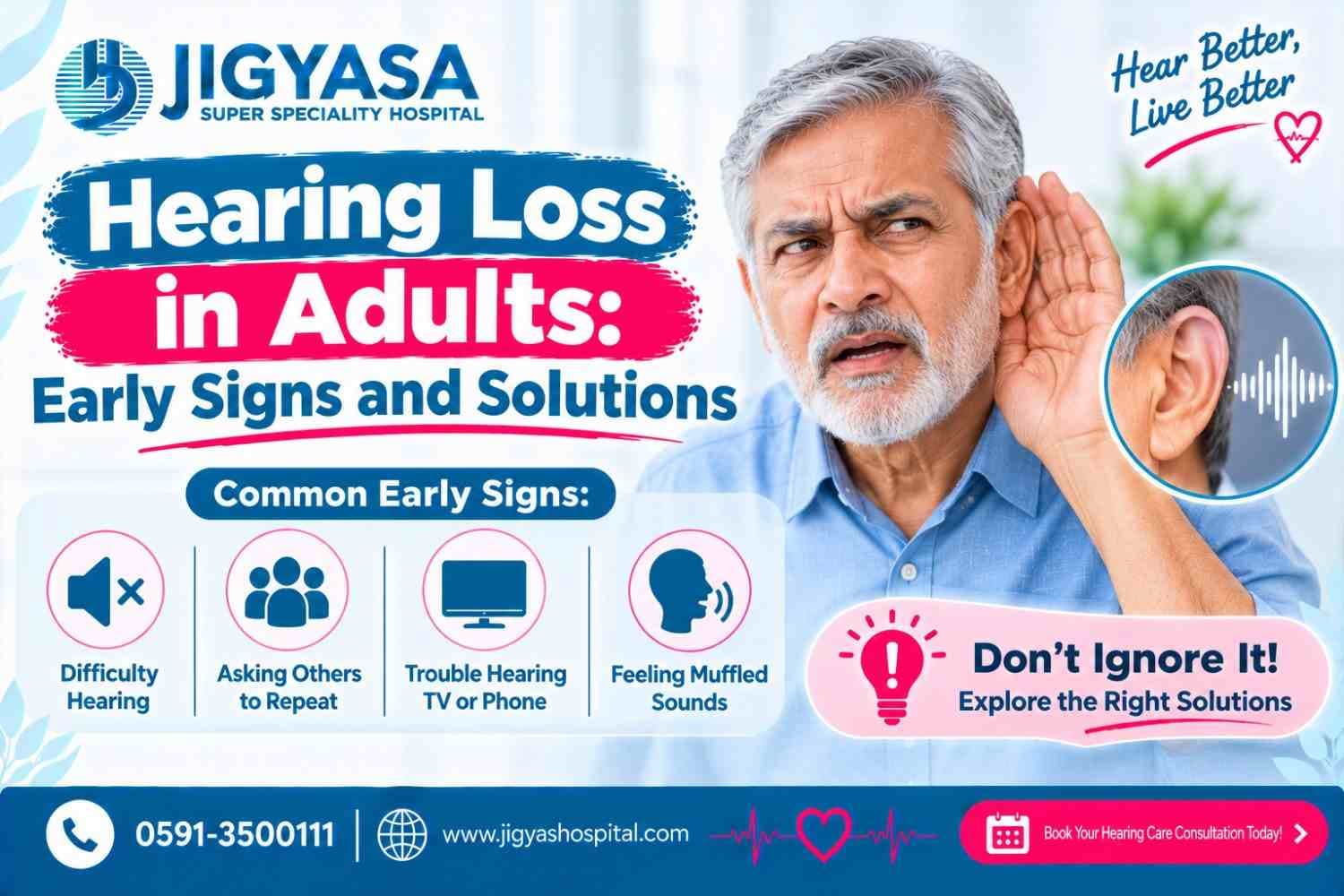
Hearing Loss in Adults: Early Signs and Solutions
Asking people to repeat themselves? Learn the early signs of hearing loss in adults, common causes, when it is an emergency, and what can help, with guidance from Dr. C.P. Singh, Jigyasa Hospital, Moradabad.
Hearing loss rarely announces itself. It creeps in over months or years: the television volume goes up a notch, conversations in a crowded room become tiring, and family members seem to mumble more than they used to. Many adults blame others, or accept it as part of ageing. But untreated hearing loss affects work, relationships, safety, and even long-term brain health, and some causes are treatable if caught early. At Jigyasa Hospital, Moradabad, Dr. C.P. Singh, Founder and Chairman, advises that a change in hearing deserves a check, just like a change in vision.
How Hearing Works, in Brief
Sound travels through the outer ear and ear canal to the eardrum, which vibrates and moves three tiny bones in the middle ear. These pass the vibration to the cochlea in the inner ear, where hair cells convert it into nerve signals that the brain interprets as sound. A problem anywhere along this path can reduce hearing.
Types of Hearing Loss
- •Conductive: Sound is blocked before reaching the inner ear, for example by wax, fluid, infection, a hole in the eardrum, or bone problems. Often treatable.
- •Sensorineural: Damage to the inner ear or hearing nerve, from ageing, noise, medicines, or illness. Usually permanent, but manageable.
- •Mixed: A combination of both.
Early Signs You Shouldn't Ignore
- •Asking people to repeat themselves, or often saying "what?"
- •Difficulty following conversations in noisy places such as markets, weddings, or restaurants
- •Feeling that people mumble, especially women's and children's voices
- •Turning the television or phone volume up higher than others prefer
- •Trouble hearing on the phone
- •Missing the doorbell, alarms, or a knock
- •Not hearing sounds clearly in one ear, or turning one ear toward the speaker
- •Ringing, buzzing, or hissing in the ears (tinnitus)
- •Feeling tired after social events from the effort of listening
- •Withdrawing from conversation, or being told you are "not listening"
- •Fullness or pressure in the ear
Common Causes in Adults
Age-Related Hearing Loss
Gradual loss of inner-ear hair cells, usually affecting both ears and high-pitched sounds first. It commonly begins after about 50, though earlier in some.
Noise Exposure
Prolonged loud noise from factories, traffic, machinery, generators, loud music, or earphones at high volume damages hair cells permanently. Many workers in industries around Moradabad are at risk.
Earwax
A very common and easily fixed cause of reduced hearing. Do not try to remove it with pins, sticks, or ear candles.
Ear Infections and Fluid
Long-standing or repeated infections, a perforated eardrum, or fluid behind the eardrum can reduce hearing. Persistent ear discharge needs medical care.
Medicines That Can Affect Hearing
Some antibiotics, certain cancer drugs, high doses of aspirin or some painkillers, and some diuretics can harm the ear. Never stop a prescribed medicine yourself. Tell your doctor if you notice ringing or hearing changes.
Medical Conditions
Diabetes, high blood pressure, heart disease, kidney disease, and thyroid problems are linked with hearing loss. Good control of these conditions protects the ears.
Head Injury and Other Causes
Head trauma, a sudden pressure change, certain viral infections, Ménière's disease, and, rarely, growths on the hearing nerve.
Smoking and Lifestyle
Smoking and poor general health increase the risk of hearing loss.
Sudden Hearing Loss Is an Emergency
Losing hearing in one or both ears over hours to a couple of days, sometimes noticed on waking, is a medical emergency. Treatment started within the first days gives the best chance of recovery. Seek care the same day if you have:
- •Sudden loss of hearing, even if partial
- •Sudden hearing loss with dizziness, vertigo, or ringing
- •Hearing loss after a head injury or loud blast
- •Ear pain with discharge, fever, or facial weakness
- •Hearing loss with weakness, double vision, or slurred speech, which may point to a neurological cause
Do not wait to see if it settles on its own. Our 24/7 emergency care at Jigyasa Hospital is available at any hour.
Why Treating Hearing Loss Matters
- •Communication and relationships: Misunderstandings and isolation strain family life
- •Safety: Not hearing horns, alarms, or warnings raises accident risk
- •Work: Missed instructions and fatigue affect performance
- •Mental health: Untreated hearing loss is linked with loneliness, low mood, and anxiety
- •Brain health: Research links untreated hearing loss with faster decline in thinking and memory, and treating it may help
- •Falls: Hearing and balance are connected
How Hearing Concerns Are Evaluated
At Jigyasa Hospital, Dr. C.P. Singh's evaluation typically includes:
1. History
Onset (sudden or gradual), one or both ears, ringing, dizziness, ear pain or discharge, noise exposure at work, medicines, past ear problems, diabetes, blood pressure, and family history.
2. Ear Examination
Looking into the ear canal and eardrum for wax, infection, perforation, or fluid.
3. Basic Checks
Blood pressure, blood sugar, thyroid, kidney function, and cholesterol when relevant, since these can be linked to hearing problems.
4. Formal Hearing Assessment
A hearing test, called audiometry, measures exactly how well you hear different pitches and is the key test for diagnosing the type and degree of loss. Patients who need audiometry or ENT assessment are guided to appropriate specialised care.
5. Further Evaluation When Needed
Imaging and other tests if a nerve or structural problem is suspected, or if hearing loss is sudden or one-sided.
Solutions and Treatment
Treat the Cause
- •Wax: Safe removal by a doctor, not by home tools
- •Infection: Treatment as prescribed, and keeping the ear dry
- •Fluid or eardrum problems: Medical treatment, or surgery in some cases, as advised by an ENT specialist
- •Medicine-related effects: Review of medicines with the prescribing doctor
- •Underlying conditions: Good control of diabetes, blood pressure, and thyroid
Hearing Aids
For permanent loss, hearing aids amplify sound and can greatly improve daily life. They need to be properly selected and fitted by a trained audiologist, and adjusted over time. Modern devices are small and effective. It often takes a few weeks to get used to them, so patience helps. Avoid buying devices without a hearing test.
Other Options
For severe or profound loss, other devices and implants may be considered after specialist assessment. Assistive devices such as amplified phones and TV listening systems can help.
Communication Strategies
- •Face the speaker and keep the room well lit so you can see lips and expressions
- •Reduce background noise when talking
- •Ask people to speak clearly, not shout
- •Tell family and colleagues about your hearing difficulty
Protecting Your Hearing
- •Limit loud noise: Use ear protection such as earplugs or earmuffs around machinery, generators, and loud events
- •Follow the 60-60 rule for earphones: no more than about 60% volume, for no more than 60 minutes at a time, and take breaks
- •Keep ears dry and clean: Do not put sticks, pins, or buds deep in the ear
- •Treat ear infections promptly
- •Control blood sugar, blood pressure, and cholesterol
- •Do not smoke
- •Review medicines with your doctor if you notice ringing or hearing change
- •Get hearing checked regularly after about age 50, or earlier if you work in noise
When to See a Doctor
- •You notice any persistent difficulty hearing or need to turn the volume up
- •Ringing or buzzing in the ears lasts more than a few days
- •One ear hears worse than the other
- •Ear discharge, pain, or a feeling of fullness persists
- •Family members suggest you may not be hearing well
- •You work in a noisy environment and have never had a hearing test
ENT & Hearing Care at Jigyasa Hospital, Moradabad
- •Comprehensive hearing evaluation with ear examination and audiometry referral
- •NABL-accredited laboratory for blood tests linked to hearing loss
- •ENT specialist referral for wax, infections, and complex cases
- •24/7 emergency care for sudden hearing loss
Book an Appointment: 7900903333
Address: Near Miglani Cinema, Rampur Road, Moradabad – 244001
Online Appointments: jigyasahospital.com
Hearing Care | Audiometry | Tinnitus Evaluation | ENT Referral | Ayushman Bharat Accepted
Key Takeaways
- •Hearing loss creeps in silently — turning up TV volume, asking 'what?', struggling in noisy places, and phone trouble are early signs, not just 'part of aging'.
- •Sudden hearing loss (over hours to days) is an EMERGENCY — treatment within the first days gives the best chance of recovery. Don't wait for it to settle.
- •Common causes: age, noise exposure (factories/earphones), earwax, infections, some medicines, diabetes/BP/thyroid. Conductive causes (wax, fluid) are often fully treatable.
- •Never use pins/sticks/ear candles for wax — get it removed by a doctor. Never stop prescribed medicines on your own if you notice hearing changes.
- •Untreated hearing loss affects relationships, work safety, mental health, and even brain health (faster memory decline). Hearing aids, properly fitted after a test, can greatly improve daily life. Follow the 60-60 rule for earphones.
Frequently Asked Questions
Is hearing loss a normal part of ageing?
Gradual hearing loss is common with age, but it is not something to simply accept. Hearing aids and other measures can make a big difference, and some causes are treatable.
Can earwax cause hearing loss?
Yes. Wax build-up is one of the commonest and easiest-to-fix causes. Get it removed by a doctor rather than using sharp objects.
Will hearing aids restore normal hearing?
They do not restore hearing to normal, but they make sounds clearer and speech easier to follow, and most users find a major improvement in daily life.
Is ringing in the ears dangerous?
Tinnitus is often linked to hearing loss, noise, or ear problems and is usually not dangerous, but persistent, one-sided, or sudden ringing should be checked, especially with hearing change or dizziness.
Can hearing loss be reversed?
Conductive causes such as wax or fluid can often be fully treated. Inner-ear damage is usually permanent, but treatment and devices can help, and early evaluation of sudden loss improves the chance of recovery.
Related Articles

Heart Attack Warning Signs You Must Never Ignore
Recognizing heart attack symptoms early can save your life. Learn the critical warning signs from Dr. Amit Kumar Singh, Senior Interventional Cardiologist at Jigyasa Hospital, Moradabad. Call 7900903333.

5 Early Morning Habits That Prevent Diabetes Naturally
Discover 5 powerful morning habits that naturally prevent diabetes. Expert advice from Dr. C.P. Singh, Senior Consultant Physician at Jigyasa Hospital, Moradabad. Call 7900903333.

Why Summers in UP Are Dangerous for Your Kidneys
UP summers can silently damage your kidneys. Jigyasa Hospital Moradabad explains the hidden risks, warning signs, and how to protect your kidneys this season. Call 7900903333.