

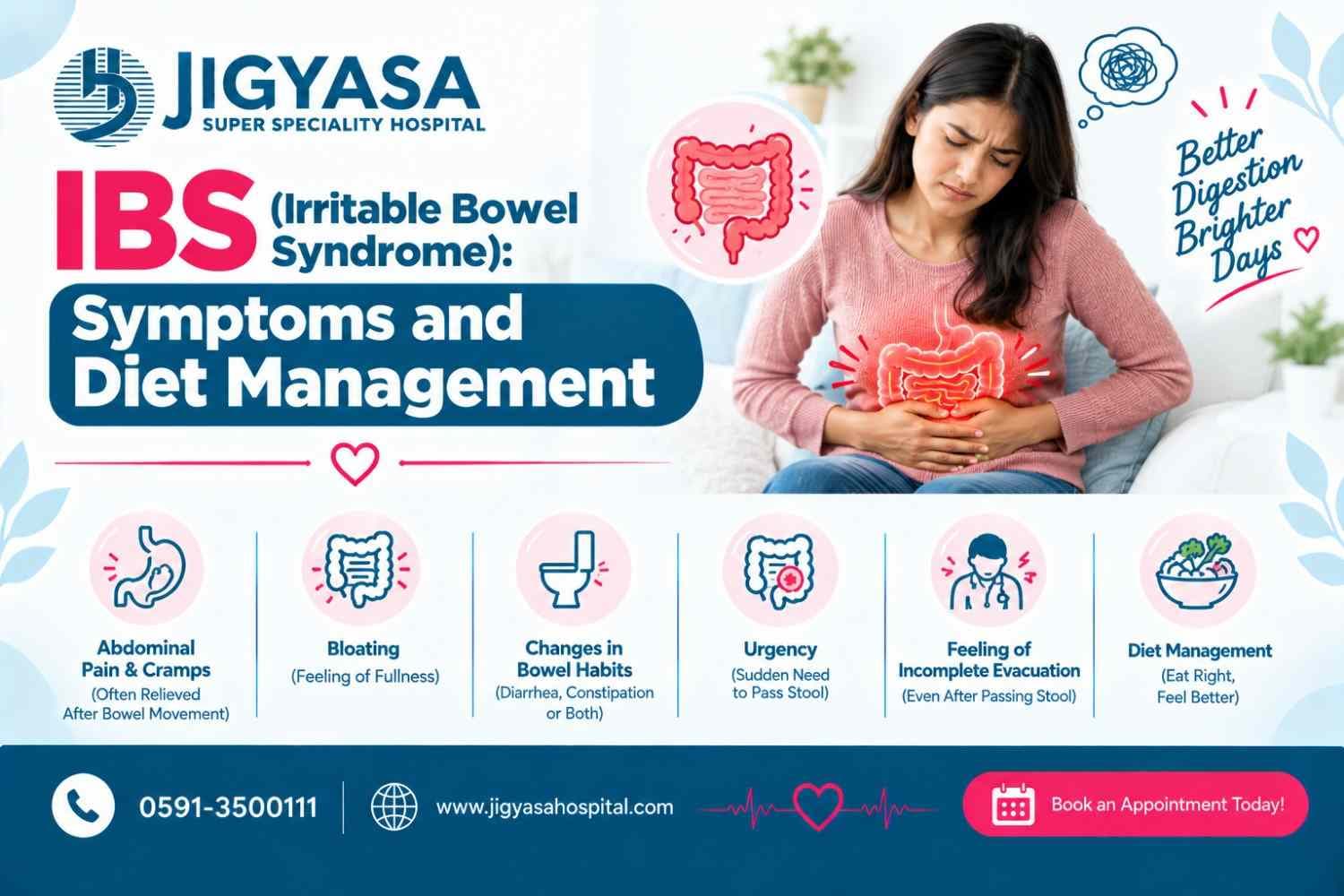
IBS (Irritable Bowel Syndrome): Symptoms and Diet Management
Managing IBS starts with understanding your triggers. Learn the key symptoms and a practical diet approach, including low-FODMAP guidance, from Dr. Pabitra Sahu, Jigyasa Hospital, Moradabad.
IBS is a chronic functional disorder affecting the large intestine, characterized by a combination of abdominal pain and altered bowel habits, without any identifiable structural disease on standard testing. It's classified into subtypes based on the predominant bowel pattern — IBS with constipation (IBS-C), IBS with diarrhea (IBS-D), or a mixed pattern (IBS-M) — and understanding which subtype applies is often an important part of tailoring the right dietary approach.
Core Symptoms of IBS
- •Recurrent abdominal pain or cramping, often related to bowel movements
- •Bloating and a sense of abdominal distension
- •Changes in bowel habits — diarrhea, constipation, or alternating between the two
- •A feeling of incomplete evacuation after a bowel movement
- •Mucus in the stool
- •Symptoms that tend to fluctuate, often worsening with certain foods, stress, or during specific times, such as before menstruation in some women
Because these symptoms overlap with several other digestive conditions, IBS is generally diagnosed after ruling out other causes through appropriate evaluation, rather than assumed based on symptoms alone.
Why Diet Plays Such a Central Role in IBS
Unlike some digestive conditions where diet is a supportive measure alongside medication, in IBS, dietary triggers are often directly responsible for symptom flares in a very immediate, cause-and-effect way. Certain types of carbohydrates and specific foods are poorly absorbed in some individuals with IBS, leading to fermentation in the gut that produces gas, bloating, and altered bowel movements. Identifying and managing these specific triggers can significantly reduce the frequency and severity of symptoms for many patients.
Understanding FODMAPs
One of the most well-researched and effective dietary approaches for IBS centers around FODMAPs — an acronym for Fermentable Oligosaccharides, Disaccharides, Monosaccharides, and Polyols. These are specific types of short-chain carbohydrates that are poorly absorbed in the small intestine for many people with IBS, and instead travel to the large intestine where gut bacteria ferment them, producing gas and drawing water into the bowel — both of which can trigger classic IBS symptoms.
Common high-FODMAP foods relevant to an Indian diet include:
- •Certain vegetables — onion, garlic, cauliflower, mushrooms
- •Certain fruits — apples, pears, mangoes, watermelon
- •Wheat-based products in large quantities, including many rotis, parathas, and bread
- •Legumes and pulses — rajma, chana, and certain dals in larger portions
- •Dairy products containing lactose — milk, some paneer preparations, certain sweets
- •Certain sweeteners, including honey and some sugar substitutes
Common low-FODMAP alternatives include:
- •Vegetables such as carrots, cucumbers, spinach, and bell peppers
- •Fruits such as bananas (ripe, in moderation), oranges, and grapes
- •Rice and rice-based dishes, which are generally well tolerated
- •Lactose-free dairy alternatives or smaller portions of hard cheeses
- •Certain smaller-portion pulses, prepared and introduced carefully
The Three-Phase Low-FODMAP Approach
The low-FODMAP diet is not meant to be followed strictly forever — it's structured as a temporary diagnostic and management tool, typically guided by a doctor or dietitian, involving three phases:
Phase 1: Elimination
High-FODMAP foods are significantly restricted for a limited period, typically a few weeks, to allow symptoms to settle and establish a clearer baseline.
Phase 2: Reintroduction
Specific FODMAP groups are reintroduced one at a time, in a structured way, to identify which specific types are actually triggering symptoms for that individual — since not everyone reacts to every FODMAP category.
Phase 3: Personalization
Based on what's identified during reintroduction, a more sustainable, personalized long-term diet is developed, avoiding only the specific triggers identified rather than maintaining unnecessary broad restriction indefinitely.
This structured approach is important because following a strict low-FODMAP diet indefinitely, without the reintroduction phase, can lead to unnecessary nutritional restriction and isn't usually necessary once individual triggers are identified.
Building a Practical IBS-Friendly Indian Meal Approach
Rather than eliminating entire categories of familiar foods, practical adjustments often work best:
- •Choosing rice over wheat-based staples during flare periods, if wheat is identified as a trigger
- •Using smaller quantities of onion and garlic, or asafoetida (hing) and the green parts of spring onions as flavor alternatives, which are generally lower in the specific FODMAP compounds
- •Opting for smaller portions of dal, well-cooked, rather than larger quantities at once
- •Choosing lactose-free milk or yogurt alternatives if dairy is identified as a trigger
- •Preparing vegetables like bottle gourd, carrots, and spinach, which tend to be better tolerated, more frequently
- •Being mindful of portion sizes for fruits like mango and watermelon during symptomatic periods
Beyond Diet: Other Factors That Influence IBS Symptoms
While diet is central, it's not the only factor at play:
- •Stress management — since the gut and brain are closely connected, stress can significantly influence IBS symptom severity, making stress reduction techniques a valuable complementary approach
- •Regular physical activity — can help regulate bowel function and reduce overall symptom burden
- •Adequate sleep — poor sleep has been associated with worsened IBS symptoms in several studies
- •Probiotics — certain probiotic strains may help some IBS patients, though responses vary considerably between individuals
Warning Signs That Need Evaluation Beyond Typical IBS Management
While IBS itself isn't dangerous, certain symptoms should prompt evaluation to rule out other conditions rather than being managed as typical IBS:
- •Unintentional weight loss
- •Blood in the stool
- •Symptoms starting for the first time after age 50
- •Fever accompanying digestive symptoms
- •Symptoms that wake you from sleep
- •A family history of inflammatory bowel disease, celiac disease, or colon cancer
Why Working with a Specialist Matters
Self-directed elimination diets, particularly overly restrictive ones followed without guidance, can lead to unnecessary nutritional gaps and unintended anxiety around eating. Working with a gastroenterologist ensures that:
- •IBS is properly diagnosed and other conditions are appropriately ruled out first
- •The elimination and reintroduction process is structured correctly, rather than resulting in permanent, unnecessarily broad restriction
- •Nutritional adequacy is maintained throughout the process
- •Medication is used appropriately alongside dietary changes when needed for symptom control
How IBS Is Managed at Jigyasa Hospital
At Jigyasa Hospital, Dr. Pabitra Sahu's approach to IBS management typically includes:
1. Confirming the Diagnosis
Ensuring symptoms genuinely fit the pattern of IBS and ruling out other conditions with overlapping symptoms through appropriate history, examination, and targeted testing where needed.
2. Individualized Dietary Guidance
Structuring a practical elimination and reintroduction approach tailored to the patient's usual diet, rather than a generic restrictive list.
3. Addressing the Predominant Symptom Pattern
Tailoring both dietary and medical management based on whether constipation, diarrhea, or a mixed pattern predominates.
4. Ongoing Follow-Up
Adjusting the approach based on how symptoms respond, since IBS management is often an evolving process rather than a one-time fix.
Gastroenterology Care at Jigyasa Hospital, Moradabad
- •Expert diagnosis and management of IBS and functional bowel disorders
- •Personalized low-FODMAP diet guidance with structured elimination and reintroduction
- •Comprehensive evaluation to rule out other digestive conditions
- •Ongoing follow-up and symptom management by Dr. Pabitra Sahu, Gastroenterologist
Book an Appointment: 7900903333
Address: Near Miglani Cinema, Rampur Road, Moradabad – 244001
Online Appointments: jigyasahospital.com
Gastroenterology | IBS Management | Low-FODMAP Diet | Digestive Health | Ayushman Bharat Accepted
Key Takeaways
- •IBS is a chronic functional disorder causing abdominal pain, bloating, and altered bowel habits (diarrhea, constipation, or mixed).
- •FODMAPs are fermentable carbs that trigger IBS — common high-FODMAP foods: onion, garlic, wheat, certain pulses, dairy, some fruits.
- •Low-FODMAP diet has 3 phases: elimination (2-6 weeks), reintroduction (identify triggers), personalization (long-term sustainable diet).
- •Indian IBS-friendly tips: rice over wheat, use hing instead of onion/garlic, smaller dal portions, lactose-free dairy, well-cooked vegetables.
- •Warning signs needing evaluation: weight loss, blood in stool, fever, symptoms after age 50, family history of IBD/colon cancer.
Frequently Asked Questions
Do I need to follow a low-FODMAP diet forever once I start it?
No, the strict elimination phase is meant to be temporary. After identifying specific triggers through structured reintroduction, most patients can return to a broader diet while avoiding only their specific problem foods.
Can IBS be cured completely through diet alone?
IBS is a chronic condition, and while diet can significantly reduce and often well-control symptoms for many patients, it's typically about ongoing management rather than a permanent cure, since triggers can sometimes shift over time.
Is dairy always a problem for people with IBS?
Not for everyone — dairy is a common trigger for some people with IBS, particularly if there's associated lactose intolerance, but others tolerate dairy without issue. This is exactly why individual identification of triggers, rather than blanket avoidance, matters.
Can stress alone cause IBS symptoms even if my diet is fine?
Yes, since the gut and nervous system are closely connected, stress can trigger or worsen IBS symptoms independently of diet, which is why a comprehensive approach addressing both diet and stress often works better than either alone.
Should I try a low-FODMAP diet on my own without seeing a doctor?
While general awareness of common trigger foods can be helpful, a properly structured elimination and reintroduction process is best guided by a specialist or dietitian, both to ensure nutritional adequacy and to correctly identify true individual triggers.
Related Articles

Heart Attack Warning Signs You Must Never Ignore
Recognizing heart attack symptoms early can save your life. Learn the critical warning signs from Dr. Amit Kumar Singh, Senior Interventional Cardiologist at Jigyasa Hospital, Moradabad. Call 7900903333.

5 Early Morning Habits That Prevent Diabetes Naturally
Discover 5 powerful morning habits that naturally prevent diabetes. Expert advice from Dr. C.P. Singh, Senior Consultant Physician at Jigyasa Hospital, Moradabad. Call 7900903333.

Why Summers in UP Are Dangerous for Your Kidneys
UP summers can silently damage your kidneys. Jigyasa Hospital Moradabad explains the hidden risks, warning signs, and how to protect your kidneys this season. Call 7900903333.