

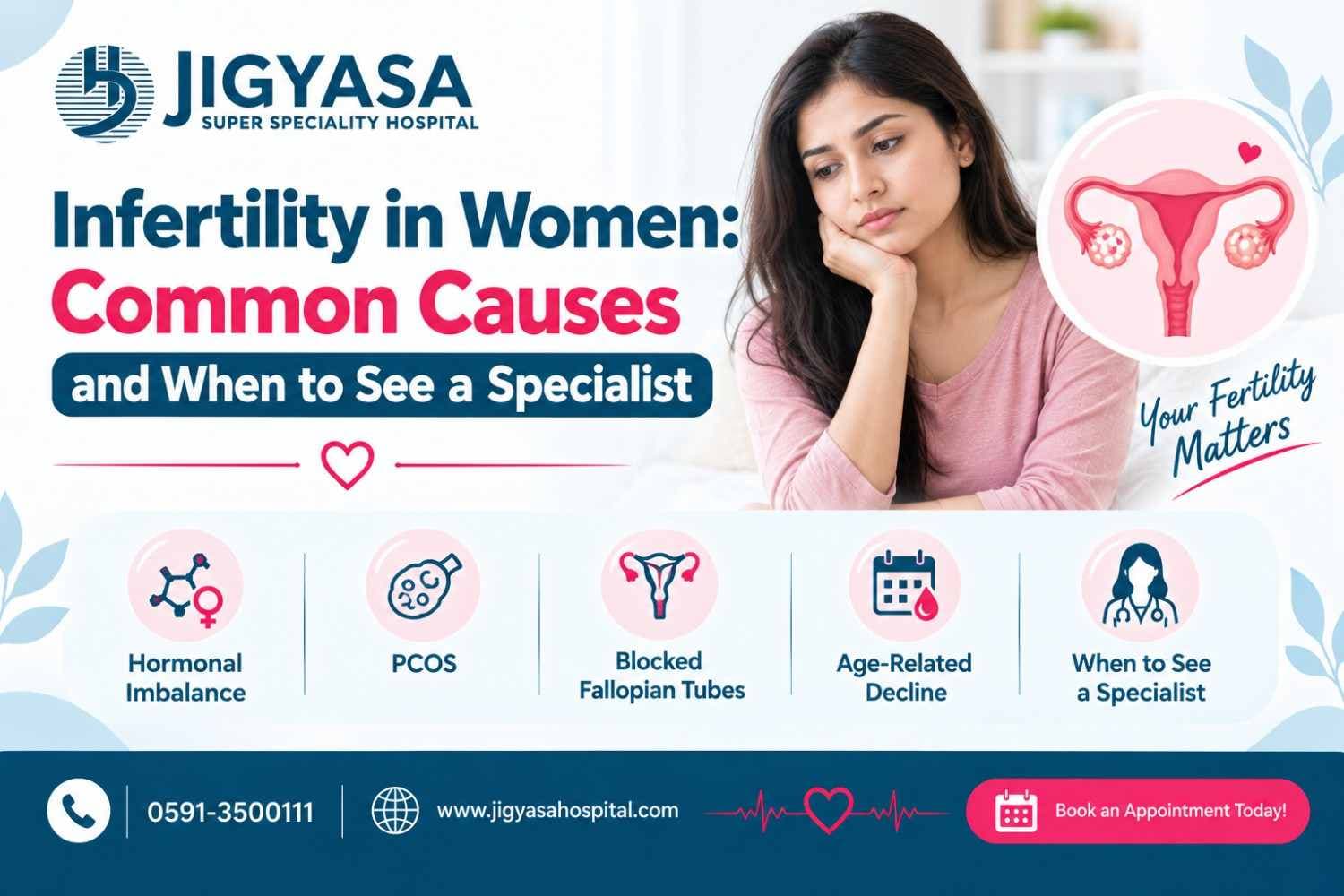
Infertility in Women: Common Causes and When to See a Specialist
Struggling to conceive? Learn the common causes of female infertility and when it's time to see a specialist — guidance from Dr. Karishma Singh, Gynecology & IVF, Jigyasa Hospital, Moradabad.
For many couples, the journey to parenthood doesn't go as smoothly or as quickly as expected, and this can bring a mix of confusion, frustration, and emotional strain — often compounded by well-meaning but unhelpful advice from family members to "just relax" or "give it more time." Infertility is far more common than most people realize, and importantly, it's a medical condition with identifiable causes and effective treatment options in many cases — not simply a matter of patience or luck. At Jigyasa Hospital, Moradabad, Dr. Karishma Singh, our specialist in Gynecology, Obstetrics, and IVF, regularly helps women and couples understand what might be contributing to their difficulty conceiving and guides them through appropriate evaluation and treatment.
What Is Considered Infertility?
Infertility is generally defined as the inability to conceive after one year of regular, unprotected intercourse for women under 35, or after six months for women 35 and older, since fertility naturally declines more noticeably with age past this point. It's worth noting that infertility can involve factors from either partner, or sometimes a combination of both, which is why a thorough evaluation often considers both individuals rather than assuming the cause lies with one person alone.
Common Causes of Female Infertility
1. Ovulation Disorders
Irregular or absent ovulation is one of the most common causes of female infertility. Without regular ovulation, there's no egg available for fertilization each cycle.
Common causes of ovulation problems include:
- •Polycystic Ovary Syndrome (PCOS), a hormonal condition affecting regular ovulation
- •Thyroid disorders, both underactive and overactive, which can disrupt the hormonal balance needed for regular ovulation
- •Significant weight fluctuations — both being underweight and overweight can affect ovulation
- •Excessive physical stress or very intense exercise, which can suppress normal hormonal signaling
- •Premature ovarian insufficiency, where the ovaries stop functioning normally at a younger age than expected
2. Blocked or Damaged Fallopian Tubes
The fallopian tubes are essential for allowing the egg and sperm to meet and for the fertilized egg to travel to the uterus. Blockage or damage can prevent this process entirely.
Common causes include:
- •Previous pelvic infections, including sexually transmitted infections that went untreated
- •Endometriosis, which can cause scarring and adhesions affecting the tubes
- •Previous abdominal or pelvic surgery, which can sometimes lead to scar tissue formation
- •Previous ectopic pregnancy, which can damage the affected tube
3. Uterine and Cervical Factors
Certain structural or functional issues within the uterus or cervix can interfere with implantation or the sperm's ability to reach the egg.
Common causes include:
- •Uterine fibroids, particularly those affecting the uterine cavity
- •Uterine polyps
- •Congenital abnormalities in the shape or structure of the uterus
- •Scar tissue within the uterus, sometimes resulting from previous procedures
- •Cervical factors affecting the quality or amount of cervical mucus needed for sperm to travel through
4. Endometriosis
This condition, where tissue similar to the uterine lining grows outside the uterus, is a significant and relatively common cause of infertility. It can affect fertility through several mechanisms, including scarring, inflammation, and its impact on egg quality and the pelvic environment.
5. Age-Related Decline in Egg Quantity and Quality
As women age, both the number and quality of remaining eggs naturally decline, particularly accelerating after the mid-thirties. This is one of the most significant factors affecting fertility, and unlike many other causes, it's a natural biological process rather than a disease process — though it's an important factor in the timing of fertility evaluation and treatment decisions.
6. Unexplained Infertility
In a notable proportion of cases, despite thorough evaluation, no specific cause is identified in either partner. This doesn't mean nothing can be done — many couples with unexplained infertility still conceive with appropriate treatment approaches.
7. Lifestyle and Environmental Factors
- •Smoking, which negatively affects both egg quality and overall fertility
- •Excessive alcohol consumption
- •Significant stress, which can affect hormonal balance and ovulation
- •Certain medical conditions, such as diabetes, that aren't well controlled
- •Exposure to certain environmental toxins, in some cases
When Should You See a Specialist?
Given the natural variation in how long conception can take even for healthy couples, timing matters when deciding when to seek evaluation:
General Guidelines:
- •Women under 35: Consider evaluation after 12 months of regular, unprotected intercourse without conception
- •Women 35 and older: Consider evaluation after 6 months, given the more significant impact of age on fertility in this range
- •Women over 40: Earlier evaluation, sometimes immediately upon deciding to conceive, is often recommended given the more rapid decline in fertility potential at this age
Situations That Warrant Earlier Evaluation, Regardless of Age:
- •Irregular or absent menstrual periods
- •Known or suspected endometriosis
- •History of pelvic infections or previous pelvic/abdominal surgery
- •Known uterine or tubal abnormalities
- •Two or more previous miscarriages
- •Known male factor infertility concerns in the partner
- •A strong personal desire for earlier evaluation and peace of mind, particularly given the emotional weight of trying to conceive
Why Early Evaluation Matters
Delaying evaluation, particularly for women closer to or past their mid-thirties, can mean losing valuable time when fertility potential is naturally declining. Additionally, some underlying causes of infertility — such as certain hormonal imbalances or structural issues — are more effectively treated the earlier they're identified. Seeking evaluation isn't a sign of impatience; it's a proactive step that can significantly improve the chances of successful treatment when needed.
How Female Infertility Is Evaluated at Jigyasa Hospital
At Jigyasa Hospital, Dr. Karishma Singh's evaluation for infertility typically includes:
1. Detailed Medical and Menstrual History
Understanding menstrual regularity, past pregnancies, previous surgeries, and any relevant medical conditions provides essential initial direction.
2. Physical and Pelvic Examination
To assess for any physical findings that might point toward a specific cause.
3. Ovulation Assessment
Tracking menstrual patterns and, when needed, hormonal blood tests to confirm whether regular ovulation is occurring.
4. Hormonal Blood Tests
Assessing thyroid function, and other relevant reproductive hormones to identify any imbalances affecting fertility.
5. Ultrasound Imaging
To evaluate the uterus and ovaries for structural abnormalities, fibroids, cysts, or signs of conditions like PCOS or endometriosis.
6. Tubal Assessment
Specific tests may be recommended to assess whether the fallopian tubes are open and functioning normally, particularly when tubal blockage is suspected based on history.
7. Partner Evaluation
Since male factors contribute to a significant proportion of infertility cases, evaluation of the male partner, including semen analysis, is an important part of a complete infertility workup.
Treatment Approaches Based on Cause
Treatment for female infertility is highly individualized based on the specific underlying cause identified:
- •Ovulation disorders — medications to stimulate regular ovulation, along with addressing underlying conditions like thyroid dysfunction or PCOS
- •Tubal blockage — depending on severity and location, options range from surgical correction to bypassing the tubes altogether through assisted reproductive techniques
- •Uterine or structural issues — surgical correction of fibroids, polyps, or other structural abnormalities affecting the uterine cavity
- •Endometriosis — a combination of medical and, when appropriate, surgical management, tailored to symptom severity and fertility goals
- •Age-related fertility decline — timely counseling on treatment options, including assisted reproductive technologies where appropriate, given the time-sensitive nature of this factor
- •Unexplained infertility — a stepwise approach, often starting with less invasive treatments and progressing based on response
- •Assisted reproductive technologies, including IVF, for couples who don't conceive with initial treatment approaches or who have specific indications that make these techniques the most appropriate first-line option
Emotional Aspects of Infertility
The experience of infertility often carries significant emotional weight — frustration, anxiety, and sometimes a sense of isolation, particularly when surrounded by well-meaning but unhelpful comments from others. Approaching infertility evaluation and treatment with support, patience, and open communication between partners, along with professional guidance, can make this process considerably more manageable.
IVF & Infertility Care at Jigyasa Hospital, Moradabad
- •Comprehensive infertility evaluation for both partners
- •Expert diagnosis and treatment by Dr. Karishma Singh, Gynecologist & IVF Specialist
- •Ovulation induction, IUI, IVF, and advanced reproductive technologies
- •Personalized treatment plans based on individual causes and fertility goals
Book an Appointment: 7900903333
Address: Near Miglani Cinema, Rampur Road, Moradabad – 244001
Online Appointments: jigyasahospital.com
Infertility Treatment | IVF Services | Ovulation Induction | IUI | Gynecology & IVF | Ayushman Bharat Accepted
Key Takeaways
- •Infertility is defined as inability to conceive after 12 months (under 35) or 6 months (35+) of regular unprotected intercourse.
- •Common causes include ovulation disorders (PCOS, thyroid), blocked tubes, endometriosis, fibroids, and age-related egg decline.
- •Both partners should be evaluated — male factors contribute to significant proportion of infertility cases.
- •Early evaluation improves treatment success, especially for women 35+ where fertility declines more rapidly.
- •Many causes of infertility are treatable — treatment ranges from medications to IVF based on specific cause.
Frequently Asked Questions
Does irregular periods always mean infertility?
Not necessarily infertility itself, but irregular periods often indicate irregular ovulation, which can make conceiving more difficult and should be evaluated, since addressing the underlying cause can improve the chances of regular ovulation and conception.
Is infertility always a permanent condition?
No, many causes of infertility are treatable, and a significant number of couples who seek evaluation and appropriate treatment do go on to conceive successfully.
Should both partners be evaluated, or just the woman?
Both partners should generally be evaluated, since male factors contribute to a substantial proportion of infertility cases, and a complete evaluation gives the most accurate picture of what's contributing to the difficulty conceiving.
How does age specifically affect female fertility?
Fertility potential gradually declines with age due to a natural reduction in both the number and quality of eggs, with this decline becoming more pronounced particularly after the mid-thirties, which is why age influences recommended evaluation timelines.
If I've had a miscarriage before, does that mean I have a fertility problem?
A single miscarriage is relatively common and doesn't necessarily indicate an underlying fertility issue. However, two or more consecutive miscarriages warrant a more thorough evaluation to look for a specific underlying cause.
Related Articles

Heart Attack Warning Signs You Must Never Ignore
Recognizing heart attack symptoms early can save your life. Learn the critical warning signs from Dr. Amit Kumar Singh, Senior Interventional Cardiologist at Jigyasa Hospital, Moradabad. Call 7900903333.

5 Early Morning Habits That Prevent Diabetes Naturally
Discover 5 powerful morning habits that naturally prevent diabetes. Expert advice from Dr. C.P. Singh, Senior Consultant Physician at Jigyasa Hospital, Moradabad. Call 7900903333.

Why Summers in UP Are Dangerous for Your Kidneys
UP summers can silently damage your kidneys. Jigyasa Hospital Moradabad explains the hidden risks, warning signs, and how to protect your kidneys this season. Call 7900903333.