
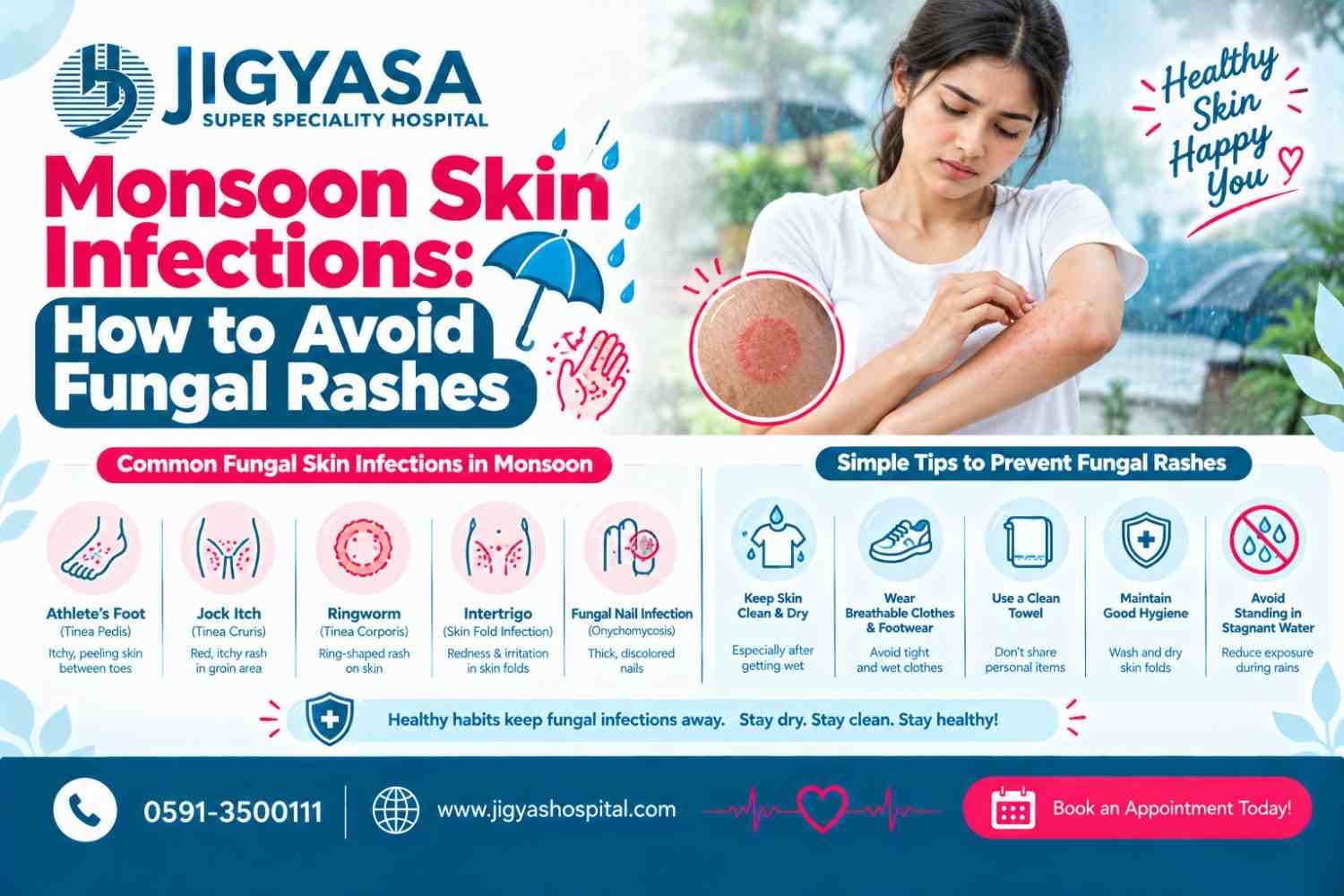
Monsoon Skin Infections: How to Avoid Fungal Rashes
Humid monsoon weather fuels fungal skin infections. Learn practical prevention steps, early signs, and when to see a doctor, with guidance from Dr. Abida, Dermatologist, Jigyasa Hospital, Moradabad.
When the monsoon arrives, the relief from summer heat comes with an unwelcome side effect: a sharp rise in itchy, red, ring-shaped rashes, particularly in the groin, underarms, thighs, and between the toes. Fungi thrive in warm, damp conditions, and the combination of high humidity, sweat that never quite dries, and clothes that stay slightly moist for days creates an ideal environment for them to multiply. At Jigyasa Hospital, Moradabad, Dr. Abida, our specialist in Dermatology, sees a noticeable seasonal increase in fungal skin infections every monsoon, many of which could have been prevented with a few consistent daily habits.
Why Monsoon Triggers Fungal Infections
Fungi that cause skin infections live naturally in the environment and sometimes on our own skin, usually without causing trouble. Monsoon conditions tip the balance in their favor:
- •High humidity keeps skin surfaces moist, which fungi need to grow
- •Heavy sweating that doesn't evaporate easily in damp air
- •Damp clothing, towels, and footwear that don't dry fully between uses
- •Wet feet from walking through rain and waterlogged streets
- •Tight, non-breathable clothing that traps moisture against skin folds
- •Reduced sunlight, which normally helps dry out clothes and bedding
Common Fungal Skin Problems in Monsoon
Ringworm (Tinea Corporis)
Despite the name, no worm is involved. It appears as red, scaly, ring-shaped patches with a clearer center and a raised, itchy border, commonly on the trunk, arms, and legs.
Jock Itch (Tinea Cruris)
A red, intensely itchy rash in the groin and inner thighs, often with a well-defined edge. It's especially common in people who sweat heavily or wear tight clothing.
Athlete's Foot (Tinea Pedis)
Itching, peeling, and cracking skin between the toes, sometimes with a foul smell and burning. Wet shoes and socks are the usual trigger.
Tinea Versicolor
Small patches of lighter or darker skin on the chest, back, and shoulders, with mild scaling. It tends to flare in humid weather and is often noticed more after the skin tans.
Fungal Nail Infection
Nails that turn thick, yellow, or brittle, usually developing slowly after repeated exposure to moisture.
Candida Skin Infections
Bright red, moist rashes in skin folds such as under the breasts, underarms, and groin, more common in people with diabetes or excess weight.
Early Signs You Shouldn't Ignore
- •Persistent itching in skin folds, groin, underarms, or between toes
- •Red patches with a scaly edge that slowly spread outward
- •Ring-shaped rashes that keep enlarging
- •Peeling, cracking, or whitish skin between the toes
- •Rash that worsens with sweating and improves a little when dry
- •A new rash in a family member after one person already has a fungal infection
Who Is at Higher Risk?
- •People who sweat heavily or work outdoors
- •Those with diabetes, since higher blood sugar encourages fungal growth
- •People who are overweight, with more skin folds that trap moisture
- •Individuals with weakened immunity
- •People who wear tight synthetic clothing or closed shoes for long hours
- •Those who share towels, combs, or clothing
- •Anyone who has had a fungal infection before, since recurrence is common
Practical Prevention: Your Monsoon Routine
1. Keep Skin Dry, Especially in Folds
After bathing, dry thoroughly between the toes, in the groin, under the arms, and under the breasts. Pat dry rather than rub, and give skin a minute or two to air-dry fully before dressing.
2. Choose the Right Clothing
- •Wear loose, breathable cotton clothing rather than tight synthetic fabrics
- •Change out of wet clothes as soon as possible after getting caught in rain
- •Avoid wearing the same slightly damp clothes a second day
3. Take Care of Your Feet
- •Dry feet completely after walking in rain or wet areas
- •Wear clean, dry socks daily and change them if they become damp
- •Rotate shoes so each pair dries fully before reuse
- •Open footwear or sandals are better during heavy rain, when practical
4. Wash and Dry Clothes Properly
- •Dry laundry fully, using sunlight when possible or an iron on damp-feeling items, since ironing helps kill fungal spores
- •Avoid storing clothes or towels that feel even slightly damp
- •Wash towels and bedsheets frequently during monsoon
5. Don't Share Personal Items
Towels, combs, clothes, and footwear can pass infection between family members, so keep personal items separate.
6. Bathe Daily and Maintain Hygiene
Bathe after heavy sweating or rain exposure, using a mild soap, and avoid leaving sweat on the skin for long periods.
7. Go Easy on Powders and Creams
Skin-drying powders can help in skin folds for some people, but heavy creams and oils on already moist skin can worsen fungal growth. Use only what your doctor recommends.
8. Control Underlying Conditions
Keeping blood sugar in a healthy range is especially important for diabetic patients, since fungal infections are more frequent and harder to clear when sugar is high.
Common Mistakes That Make Fungal Rashes Worse
- •Using steroid creams on an itchy rash without a diagnosis. This is one of the most common errors. Steroid creams can temporarily reduce redness and itching but allow the fungus to spread and change the rash's appearance, making it harder to diagnose and treat.
- •Stopping treatment as soon as itching improves, which often leads to relapse because the fungus hasn't fully cleared
- •Scratching, which spreads infection and can cause secondary bacterial infection
- •Reusing contaminated clothes during treatment, which causes reinfection
- •Self-treating repeatedly with leftover creams from previous episodes
When to See a Dermatologist
- •A rash that hasn't improved after about two weeks of basic care
- •Rapidly spreading or very widespread rashes
- •Recurrent infections that keep returning
- •Rash with pain, pus, swelling, or fever, which may suggest bacterial infection
- •Infection affecting the nails or scalp
- •Fungal infection in someone with diabetes or weakened immunity
- •Rash that has already been treated with steroid creams and looks unusual
How Fungal Skin Infections Are Evaluated at Jigyasa Hospital
At Jigyasa Hospital, Dr. Abida's evaluation typically includes:
1. Clinical Examination
Many fungal rashes can be identified by their appearance, distribution, and the patient's history.
2. Skin Scraping Test (KOH Examination)
When the diagnosis is uncertain or the rash has been altered by previous treatment, a small skin scraping examined under the microscope can confirm a fungal infection.
3. Review of Contributing Factors
Looking at sweating patterns, clothing habits, diabetes status, and previous treatments to address why the infection developed or keeps recurring.
Treatment Approaches
- •Topical antifungal creams or powders for limited rashes, used for the full duration advised, even after symptoms ease
- •Oral antifungal medication for extensive, stubborn, or recurrent infections, or when nails or scalp are involved, prescribed and monitored by a doctor
- •Treating associated factors, such as managing diabetes or addressing excess sweating
- •Hygiene and clothing measures as the foundation for preventing recurrence
Treatment duration varies with the type and location of infection. Stopping early is one of the main reasons fungal infections come back.
Dermatology Care at Jigyasa Hospital, Moradabad
- •Expert diagnosis and treatment of monsoon-related fungal skin infections
- •Clinical examination and KOH testing for accurate diagnosis
- •Personalized antifungal treatment plans and recurrence prevention
- •Specialized care for patients with diabetes or recurrent infections
Book an Appointment: 7900903333
Address: Near Miglani Cinema, Rampur Road, Moradabad – 244001
Online Appointments: jigyasahospital.com
Dermatology | Fungal Infection Treatment | Skin Care | KOH Testing | Ayushman Bharat Accepted
Key Takeaways
- •Monsoon humidity, sweat, damp clothing, and wet footwear create ideal conditions for fungal growth.
- •Common infections include ringworm, jock itch, athlete's foot, tinea versicolor, fungal nail infections, and candida rashes.
- •Prevent infection by keeping skin folds and feet dry, wearing breathable cotton, changing wet clothes, and not sharing towels or clothing.
- •Avoid steroid creams without a diagnosis and complete the full antifungal treatment course to reduce recurrence.
- •See a dermatologist for spreading, recurrent, painful, or persistent rashes, or if you have diabetes or weakened immunity.
Frequently Asked Questions
Are fungal skin infections contagious?
Yes, many are. They can spread through direct contact and shared items like towels, clothing, and combs, which is why personal hygiene and not sharing belongings matter.
Can I use an old antifungal cream from a previous infection?
It's better not to. Rashes can look similar but have different causes, and incomplete or incorrect treatment can lead to recurrence or a harder-to-treat infection.
Why does my fungal rash keep coming back every monsoon?
Recurrence usually happens when treatment is stopped too early, or when moisture, tight clothing, shared items, or conditions like diabetes aren't addressed. A proper full course and preventive habits help break the cycle.
Is it safe to use steroid-containing creams for an itchy rash?
Not without a doctor's advice. Steroid creams can worsen fungal infections and make them harder to identify.
Does ironing clothes really help against fungus?
Yes, ironing damp-feeling clothes helps dry them fully and can reduce fungal spores, which is a useful habit during monsoon when drying is difficult.
Related Articles

Heart Attack Warning Signs You Must Never Ignore
Recognizing heart attack symptoms early can save your life. Learn the critical warning signs from Dr. Amit Kumar Singh, Senior Interventional Cardiologist at Jigyasa Hospital, Moradabad. Call 7900903333.

5 Early Morning Habits That Prevent Diabetes Naturally
Discover 5 powerful morning habits that naturally prevent diabetes. Expert advice from Dr. C.P. Singh, Senior Consultant Physician at Jigyasa Hospital, Moradabad. Call 7900903333.

Why Summers in UP Are Dangerous for Your Kidneys
UP summers can silently damage your kidneys. Jigyasa Hospital Moradabad explains the hidden risks, warning signs, and how to protect your kidneys this season. Call 7900903333.