

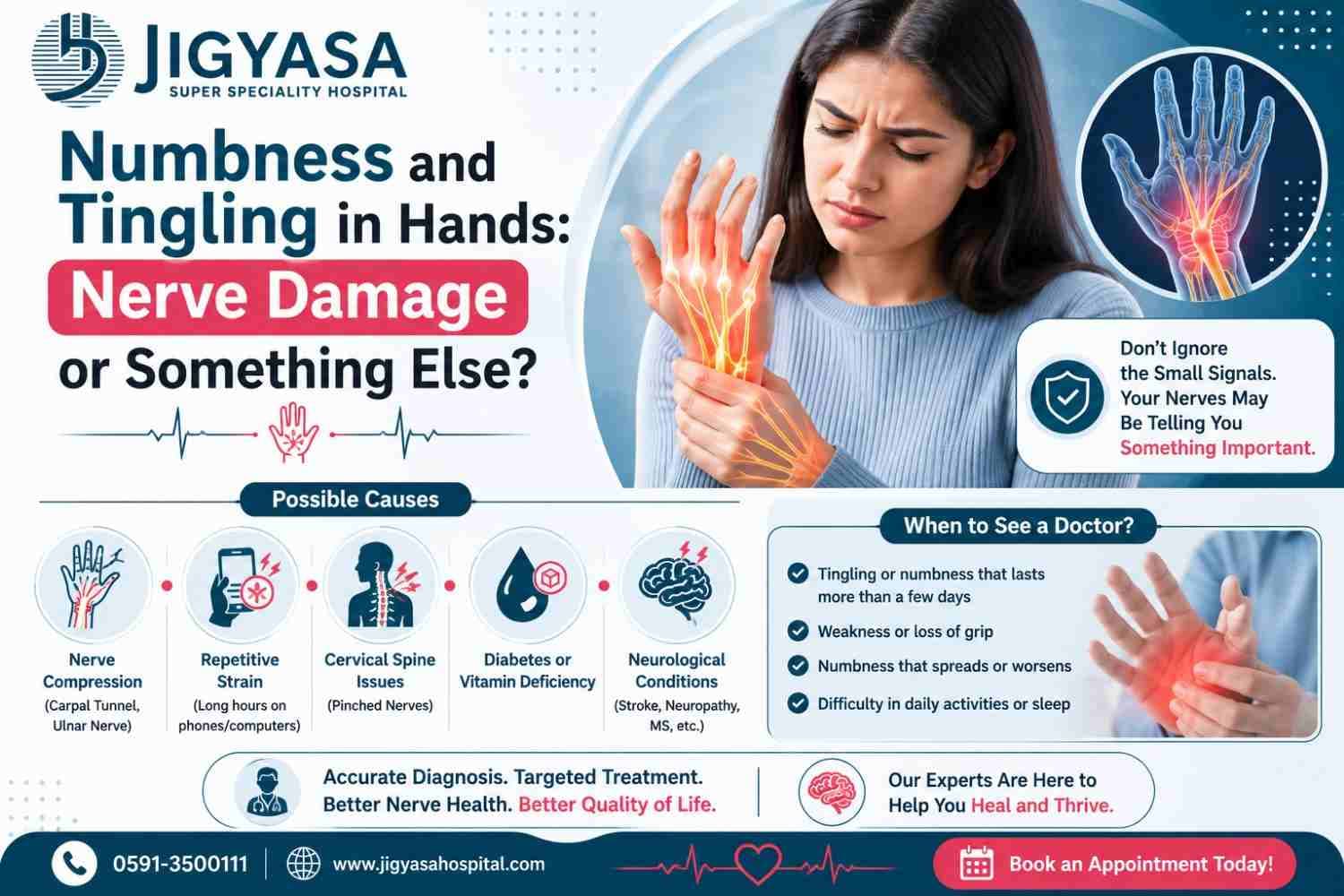
Numbness and Tingling in Hands: Nerve Damage or Something Else?
Persistent numbness or tingling in your hands? Learn the possible causes — from nerve compression to diabetes — and when to seek treatment.
That familiar "pins and needles" sensation after sitting on your hand the wrong way is something almost everyone has experienced — harmless, brief, and gone within minutes. But when numbness or tingling in the hands becomes frequent, persistent, or starts appearing without any obvious pressure or position causing it, it raises a different question entirely: is this a sign of nerve damage, or something else going on in the body? At Jigyasa Hospital, Moradabad, Dr. C.P. Singh, Founder and Chairman, regularly evaluates patients with ongoing hand numbness and tingling to identify whether the cause is a localized nerve compression, an underlying systemic condition, or something else requiring specific treatment.
What Causes That "Pins and Needles" Feeling?
Numbness and tingling — medically referred to as paresthesia — occur when nerve signals traveling between the hands and the brain are disrupted in some way. This disruption can happen at any point along the nerve pathway: at the nerve itself in the wrist or arm, higher up near the shoulder or neck, or as part of a more widespread condition affecting nerves throughout the body. Understanding where and why this disruption is happening is the key to figuring out the right treatment.
Common Localized Causes: Nerve Compression
1. Carpal Tunnel Syndrome
One of the most common causes of hand numbness, carpal tunnel syndrome occurs when the median nerve, which runs through a narrow passage in the wrist, becomes compressed.
Typical features:
- •Numbness and tingling primarily in the thumb, index, middle, and part of the ring finger
- •Often worse at night, sometimes waking the person from sleep
- •May improve temporarily by shaking or moving the hand
- •Weakness in grip strength or difficulty with fine tasks like buttoning clothes, in more advanced cases
- •Often related to repetitive hand movements, certain occupations, or underlying conditions like diabetes or hypothyroidism
2. Cubital Tunnel Syndrome
This involves compression of the ulnar nerve at the elbow, commonly known as hitting your "funny bone" nerve.
Typical features:
- •Numbness and tingling in the ring and little fingers
- •Often worsened by prolonged elbow bending, such as during sleep or while on the phone
- •Weakness in hand grip or difficulty with fine finger movements in more advanced cases
3. Cervical Radiculopathy (Nerve Compression in the Neck)
When a nerve is compressed or irritated where it exits the spine in the neck — often due to a herniated disc or degenerative changes — symptoms can radiate down the arm into the hand.
Typical features:
- •Numbness or tingling that often follows a specific pattern down the arm to particular fingers, depending on which nerve is affected
- •Often accompanied by neck pain or stiffness
- •May worsen with certain neck movements or positions
- •Weakness in specific arm or hand muscles, depending on the nerve involved
Common Systemic Causes: When It's More Than Local Compression
1. Diabetic Peripheral Neuropathy
Long-standing, poorly controlled diabetes is one of the most common causes of nerve damage affecting the hands and feet.
Typical features:
- •Usually begins in the feet before affecting the hands, often described as a "glove and stocking" pattern
- •Numbness, tingling, or burning sensations, sometimes accompanied by reduced sensation to touch or temperature
- •Symptoms tend to be gradual and progressive, worsening over months to years without good blood sugar control
2. Vitamin Deficiencies
Deficiencies in certain vitamins, particularly vitamin B12, can damage peripheral nerves, leading to numbness and tingling, often in both hands and feet, sometimes accompanied by fatigue, weakness, or balance difficulties.
3. Thyroid Dysfunction
An underactive thyroid can contribute to nerve compression syndromes like carpal tunnel syndrome, as well as generalized nerve-related symptoms, and correcting the thyroid imbalance often improves associated numbness and tingling.
4. Autoimmune and Inflammatory Conditions
Certain autoimmune conditions can affect peripheral nerves as part of a broader inflammatory process, leading to numbness, tingling, or weakness that may involve multiple areas of the body.
Red Flags: When Numbness and Tingling Need Urgent Evaluation
While most causes of hand numbness are manageable and not immediately dangerous, certain patterns warrant urgent medical attention:
- •Sudden numbness or weakness affecting one entire side of the body, or one arm and the corresponding leg
- •Numbness accompanied by slurred speech, facial drooping, confusion, or vision changes
- •Sudden, severe weakness making it difficult to grip or use the hand at all
- •Numbness following significant trauma or injury
- •Numbness spreading rapidly over hours, especially if accompanied by breathing difficulty or widespread weakness
These particular combinations can indicate a stroke or a more serious nerve condition requiring emergency evaluation, rather than a routine nerve compression issue.
How Numbness and Tingling Are Evaluated at Jigyasa Hospital
At Jigyasa Hospital, Dr. C.P. Singh's evaluation typically includes:
1. Detailed Clinical History
Understanding exactly which fingers are affected, the pattern and timing of symptoms, aggravating and relieving factors, and any relevant medical history such as diabetes, thyroid issues, or repetitive hand use at work — this pattern often gives strong initial clues about the likely cause.
2. Physical and Neurological Examination
Testing sensation, muscle strength, reflexes, and specific provocative maneuvers that can help identify nerve compression at the wrist, elbow, or neck.
3. Blood Tests
Checking blood sugar levels, thyroid function, vitamin B12 levels, and other relevant markers to identify systemic contributors.
4. Nerve Conduction Studies / EMG
When needed, these specialized tests measure how well electrical signals travel through specific nerves, helping to pinpoint the exact location and severity of nerve compression or damage.
5. Imaging
X-rays or MRI of the neck or wrist may be recommended when structural causes, such as a herniated disc or significant joint changes, are suspected.
6. Referral for Specialized Care
For complex nerve conditions, or when a surgical opinion is needed for significant nerve compression, coordination with specialized neurology or orthopedic care is arranged as part of comprehensive management.
Treatment Approaches
For Nerve Compression (Carpal Tunnel, Cubital Tunnel, Cervical Radiculopathy)
- •Activity modification and ergonomic adjustments to reduce repetitive strain
- •Wrist splints, particularly for nighttime use in carpal tunnel syndrome
- •Anti-inflammatory medication for pain and swelling
- •Physical therapy to improve nerve mobility and surrounding muscle strength
- •Corticosteroid injections in select cases for more targeted relief
- •Surgical intervention, when compression is severe or hasn't responded to conservative treatment, to relieve pressure on the affected nerve
Living with Chronic Numbness: Practical Tips
- •Avoid prolonged pressure on the wrists or elbows, such as leaning on them for extended periods
- •Take regular breaks during repetitive hand activities, such as typing or manual work
- •Maintain good posture, particularly for those with neck-related nerve compression
- •Keep underlying conditions like diabetes and thyroid function well controlled
- •Report any new weakness or worsening symptoms promptly, rather than waiting, since earlier treatment generally gives better outcomes for nerve-related conditions
Neurology Care at Jigyasa Hospital, Moradabad
- •Comprehensive evaluation of hand numbness and tingling with detailed neurological examination
- •Nerve conduction studies (NCS/EMG) to pinpoint location and severity of nerve compression
- •Blood tests for diabetes, thyroid, vitamin B12, and other systemic causes
- •Treatment options including splinting, therapy, injections, and surgical referral when needed
Nerve Conduction Studies | EMG | Carpal Tunnel Treatment | Peripheral Neuropathy Care | Neurology Services | Ayushman Bharat Accepted
Key Takeaways
- •Numbness and tingling (paresthesia) occur when nerve signals between hands and brain are disrupted.
- •Common causes include carpal tunnel syndrome, cubital tunnel syndrome, cervical radiculopathy, and diabetic neuropathy.
- •Red flags like sudden one-sided numbness with slurred speech or facial drooping require emergency evaluation for stroke.
- •Diagnosis involves detailed history, neurological exam, blood tests, and nerve conduction studies (NCS/EMG).
- •Treatment ranges from splinting and therapy to injections or surgery, depending on severity and underlying cause.
Frequently Asked Questions
Is numbness in the hands always related to nerve damage?
Not always — it can also be caused by reduced circulation, certain medications, or temporary compression from sleeping position. However, persistent or recurrent numbness should be evaluated to identify the specific cause.
Can carpal tunnel syndrome go away on its own?
Mild cases can sometimes improve with rest and activity modification, but moderate to severe cases often need specific treatment, such as splinting, therapy, or in some cases, surgery, to prevent progression and permanent nerve damage.
Why does numbness in my hands seem worse at night?
Nighttime worsening is a classic feature of carpal tunnel syndrome, often related to wrist position during sleep, which increases pressure on the affected nerve.
If my blood sugar is under control, can diabetic nerve damage still get worse?
Good blood sugar control significantly slows the progression of diabetic neuropathy and can improve symptoms in some cases, though existing nerve damage may not fully reverse, making prevention through good control especially important.
When should numbness in the hands be treated as an emergency?
If numbness comes on suddenly, affects one entire side of the body, or is accompanied by facial drooping, slurred speech, or severe weakness, this should be treated as a medical emergency, as it may indicate a stroke.
Related Articles

Heart Attack Warning Signs You Must Never Ignore
Recognizing heart attack symptoms early can save your life. Learn the critical warning signs from Dr. Amit Kumar Singh, Senior Interventional Cardiologist at Jigyasa Hospital, Moradabad. Call 7900903333.

5 Early Morning Habits That Prevent Diabetes Naturally
Discover 5 powerful morning habits that naturally prevent diabetes. Expert advice from Dr. C.P. Singh, Senior Consultant Physician at Jigyasa Hospital, Moradabad. Call 7900903333.

Why Summers in UP Are Dangerous for Your Kidneys
UP summers can silently damage your kidneys. Jigyasa Hospital Moradabad explains the hidden risks, warning signs, and how to protect your kidneys this season. Call 7900903333.