
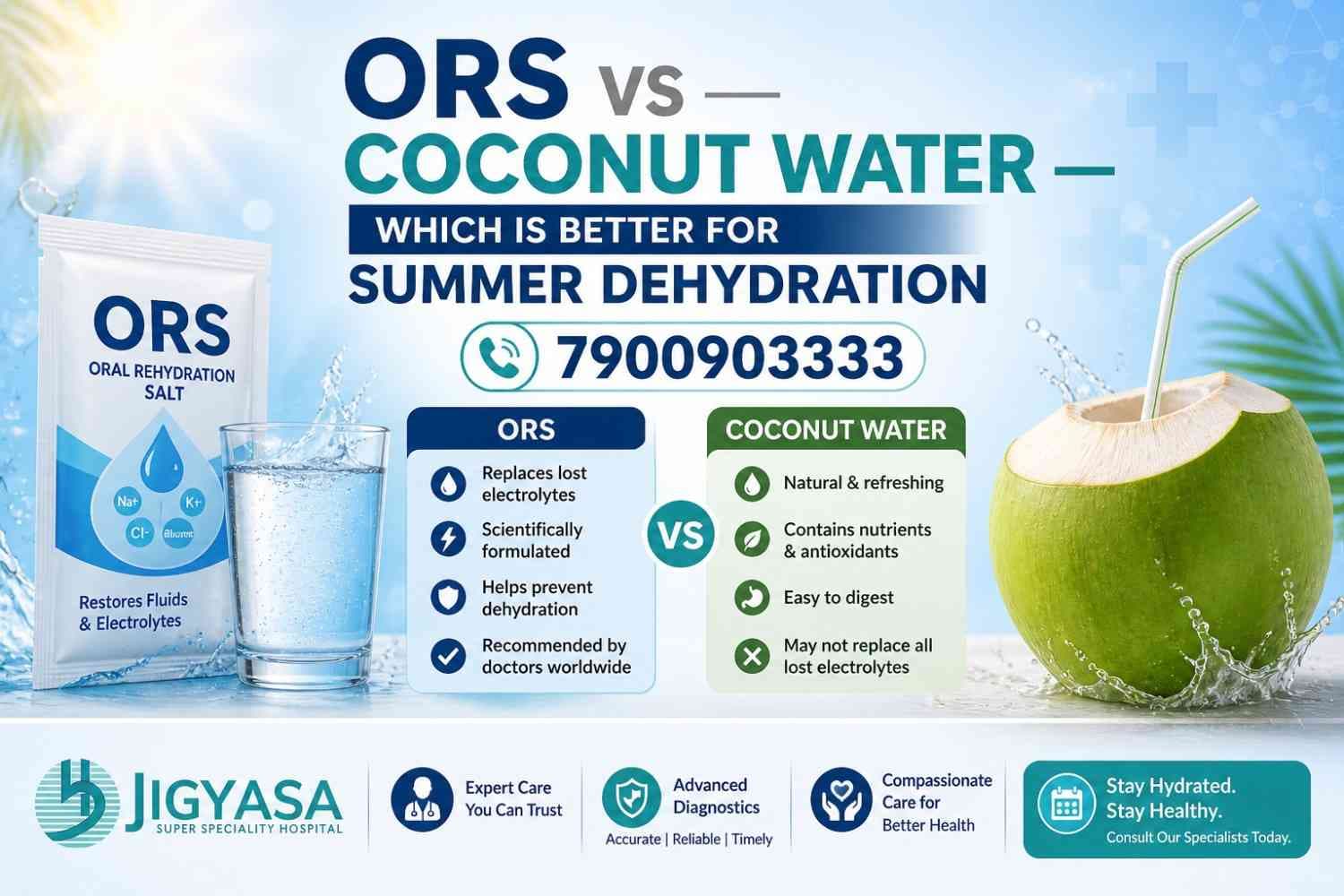
ORS vs Coconut Water — Which Is Better for Summer Dehydration?
ORS or coconut water — which one actually beats summer dehydration faster? Expert answer from Dr. C.P. Singh at Jigyasa Hospital Moradabad. Know the truth before the heat hits.
The moment summer arrives in Uttar Pradesh, temperatures in cities like Moradabad, Rampur, Sambhal, and Amroha routinely climb past 42°C. The air feels thick, sweat soaks through clothes within minutes of stepping outside, and by afternoon the body is losing fluids faster than most people realise. Two remedies dominate the conversation — ORS (Oral Rehydration Solution) and coconut water. Every household has an opinion. Mothers swear by coconut water. Doctors often recommend ORS. Social media pushes both with equal confidence. And somewhere in between, a dehydrated person is trying to make the right decision. This blog gives you the complete, clinically grounded answer — not a vague 'both are good' response, but a specific guide on which to use, when to use it, and when neither is enough. At Jigyasa Hospital, Moradabad, our physicians see patients with heat exhaustion, dehydration, and electrolyte imbalances every summer. This is the advice we give our patients — in plain language.
What Happens to Your Body During Summer Dehydration?
When you sweat, your body loses two things simultaneously — water and electrolytes. Electrolytes are electrically charged minerals: sodium, potassium, chloride, magnesium, and bicarbonate. They regulate fluid movement into and out of cells, nerve signals, muscle contractions, and blood pressure.
Losing water without replacing electrolytes — or replacing water without replacing electrolytes — does not restore the body's balance. This is why drinking plain water alone during heavy sweating can sometimes worsen symptoms: it dilutes what little electrolyte concentration remains in your blood. True rehydration requires replacing both the fluid and the electrolytes lost — and, critically, in the right ratios for efficient absorption. This is the entire basis on which ORS was designed.
What Is ORS? How Does It Work?
ORS — Oral Rehydration Solution — was developed in the 1960s and 1970s and is one of the most important medical inventions of the 20th century. It is endorsed by the World Health Organisation (WHO) and UNICEF and has saved tens of millions of lives globally, particularly in cases of diarrhoea-induced dehydration.
The standard WHO-formulated ORS contains a precisely calibrated ratio of sodium, potassium, glucose, and chloride dissolved in water. The key mechanism is the sodium-glucose co-transport system. When sodium and glucose are present together in the small intestine in the right ratio, they are absorbed together — and water follows this absorption rapidly. This means ORS is absorbed faster and more efficiently than plain water or most other fluids.
- •Sodium — 75 mmol/L
- •Glucose — 75 mmol/L
- •Potassium — 20 mmol/L
- •Chloride — 65 mmol/L
- •Citrate — 10 mmol/L
- •Total osmolarity — 245 mOsm/L (reduced osmolarity formula)
This formula is not arbitrary — it is the result of decades of clinical research to optimise intestinal absorption. ORS packets are widely available across India — in pharmacies, government hospitals, and even most general stores. They are inexpensive, reliable, and effective.
What Is Coconut Water? Why Do People Recommend It?
Coconut water is the clear liquid found inside young, green coconuts. It has been consumed across tropical regions of India for centuries and has a strong cultural association with cooling and hydration. Coconut water contains natural electrolytes — primarily potassium, along with smaller amounts of sodium, magnesium, calcium, and phosphorus. It also contains natural sugars, some amino acids, and antioxidants.
Approximate electrolyte composition of fresh coconut water per 240 ml:
- •Potassium — approximately 600 mg (highest among natural beverages)
- •Sodium — approximately 40–60 mg (significantly lower than ORS)
- •Magnesium — approximately 15–25 mg
- •Calcium — approximately 57 mg
- •Sugars — approximately 9–11 grams
The reason coconut water is recommended for hydration is valid — it does contain electrolytes and fluid. The question is whether those electrolytes are in the right amounts and ratios for treating active dehydration.
ORS vs Coconut Water — The Direct Comparison
Sodium Content: The Most Important Difference
Sodium is the primary electrolyte lost in sweat and the most critical one for rehydration. ORS contains 75 mmol/L of sodium — approximately 1.7 grams per litre. Coconut water contains roughly 40 to 60 mg per 240 ml serving, translating to approximately 160–240 mg per litre. This means ORS delivers nearly 7 to 10 times more sodium per litre than coconut water. When a person is significantly dehydrated, the sodium deficit is substantial — coconut water simply does not carry enough sodium to correct it efficiently.
Potassium Content: Where Coconut Water Leads
Coconut water is exceptional for potassium — approximately 600 mg per serving, more than most natural beverages including sports drinks. For mild potassium replenishment, coconut water is genuinely excellent. Potassium supports muscle function, heart rhythm, and recovery from cramps.
Glucose-Sodium Ratio: Critical for Absorption
The WHO ORS is engineered so that glucose and sodium are present in a near 1:1 molar ratio — exactly optimised to trigger the sodium-glucose co-transport mechanism for maximum intestinal absorption. Coconut water's glucose and sodium levels are not in this ratio, and natural variation between coconuts means composition is inconsistent.
Standardisation and Reliability
Every sachet of WHO ORS contains the same composition. Coconut water varies based on the age of the coconut, the season, the variety, and where it was grown. You cannot know precisely how much sodium or potassium you are consuming — which matters when treating moderate or severe dehydration.
Taste and Palatability
Coconut water wins here, particularly for children and elderly patients who resist drinking ORS due to its slightly salty taste. In cases where mild dehydration needs to be addressed and the person refuses ORS, coconut water is a meaningful alternative that is far better than nothing.
Cost and Accessibility
ORS packets cost between ₹5 and ₹20 per sachet and are available everywhere. Fresh coconut water in Moradabad is widely available at ₹20–₹50 per coconut. Both are accessible. ORS has the advantage of a longer shelf life and predictable composition.
So Which Is Better for Summer Dehydration?
The honest clinical answer is: it depends on the severity of dehydration.
- •Mild dehydration (slight tiredness, mild headache, dry mouth) — coconut water is a pleasant, nutritious, and reasonably effective option. Combined with adequate plain water, it can comfortably manage mild fluid and electrolyte losses.
- •Moderate dehydration (significant sweating, weakness, muscle cramps, dizziness, reduced urination) — ORS is clearly superior. The sodium content and absorption mechanism of ORS are specifically designed for this scenario.
- •Severe dehydration (confusion, rapid heartbeat, inability to stand, sunken eyes, no urination for several hours, loss of consciousness) — neither ORS nor coconut water is sufficient. This is a medical emergency requiring IV fluids and immediate hospital care.
- •Dehydration caused by diarrhoea or vomiting — ORS is the medically correct treatment without exception. Coconut water does not contain enough sodium to manage this situation effectively.
- •Children — WHO ORS remains the first-line recommendation for paediatric dehydration from diarrhoea or illness. Coconut water should not be substituted for ORS when a child has active diarrhoea.
Can You Drink Both Together?
Yes — and in practice, this is often the most sensible approach in Indian summers. Starting with ORS to correct any electrolyte deficit and following it with coconut water for potassium replenishment, palatability, and continued fluid intake is a reasonable strategy.
Some people also prepare a homemade oral rehydration drink using water, sugar, salt, and lemon — a useful emergency measure when ORS sachets are not available, though less precisely calibrated.
Signs of Dehydration You Should Not Ignore
- •Mild dehydration: dry mouth, dark yellow urine, increased thirst, mild fatigue, slight headache
- •Moderate dehydration: very dark urine or significantly reduced urination, dizziness when standing, muscle cramps especially in the legs, weakness, dry skin with reduced elasticity
- •Severe dehydration (emergency care required): confusion or disorientation, rapid breathing, fast and weak pulse, sunken eyes, no urination for 8 or more hours, inability to keep fluids down, fainting
Children and elderly individuals are at higher risk of rapid progression from mild to severe dehydration. A child who is unusually sleepy, not producing tears when crying, or has a sunken fontanelle (in infants) needs medical attention immediately.
Who Is Most at Risk of Summer Dehydration in Moradabad?
- •Outdoor workers, daily wage labourers, and farmers — prolonged heat exposure with limited access to fluids
- •Children — lose fluids rapidly due to higher surface area-to-body-weight ratios
- •Elderly individuals — diminished thirst response means they often do not feel thirsty even when significantly dehydrated
- •Patients with diabetes, heart disease, or kidney conditions — more vulnerable to dehydration complications
- •People who fast — for religious or other reasons during summer months must replenish fluids and electrolytes carefully during non-fasting hours
Practical Summer Hydration Guidelines from Jigyasa Hospital
- •Drink at least 3 to 4 litres of fluid daily during peak summer months — more if working outdoors or sweating heavily
- •Do not wait until you feel thirsty — by the time thirst registers, you are already mildly dehydrated
- •Begin hydrating before going out into the heat, carry water with you, and continue drinking after returning indoors
- •Keep ORS sachets at home throughout the summer — they are inexpensive and can make a significant difference in the first hours of a dehydration episode
- •Check on elderly family members daily during extreme heat — they will not always say they are thirsty
- •Dress in lightweight, light-coloured, loose cotton clothing outdoors
- •Avoid alcohol and excess caffeine in summer as both increase fluid loss
- •If you feel dizzy, confused, or extremely weak in the heat — sit in shade, begin sipping ORS or coconut water, and seek medical attention
When to See a Doctor at Jigyasa Hospital for Dehydration
Go immediately to Jigyasa Hospital's emergency department if you or a family member experiences any of the following:
- •Confusion or inability to speak clearly
- •No urination for 8 or more hours
- •Cannot keep any fluids down
- •Very rapid or weak heartbeat
- •Fainting or near-fainting
- •Severe weakness or inability to stand
These are signs of severe dehydration or heatstroke requiring IV fluids and emergency care. ORS and coconut water are both valuable — but they are not interchangeable, and they are not a substitute for emergency medical treatment when the situation calls for it.
At Jigyasa Hospital, Moradabad, we are here when summer becomes more than just uncomfortable. Our 24/7 emergency unit, experienced physicians, and IV therapy support are available whenever you or your family need us. Stay hydrated. Stay safe. And if you are unsure — call us.
📞 Call: 7900903333
📍 Address: Near Miglani Cinema, Rampur Road, Moradabad – 244001
📧 Email: info@jigyasahospital.in
🌐 Website: jigyasahospital.com
✅ 24/7 Emergency Care | IV Fluid Therapy | General Medicine OPD | Ayushman Bharat Accepted
The right answer for the right situation — and the right hospital when you need one.
Frequently Asked Questions
Is coconut water as good as ORS for dehydration?
For mild dehydration and general daily hydration in summer, coconut water is a good, natural choice. But for moderate or severe dehydration, or dehydration caused by illness, vomiting, or diarrhoea, ORS is significantly more effective. ORS has precisely the sodium concentration and glucose-to-sodium ratio needed for rapid rehydration. Coconut water does not contain enough sodium to achieve this at the same speed.
Can I give coconut water to my child instead of ORS during loose motions?
No. For diarrhoea or vomiting in children, WHO ORS is the medically recommended treatment. Coconut water is too low in sodium to replace what is lost during active diarrhoea. Always use ORS for dehydration from illness in children. If the child refuses ORS, consult a paediatrician at Jigyasa Hospital immediately rather than substituting coconut water.
How much ORS should an adult drink per day in summer?
In summer heat, an adult with moderate dehydration should drink ORS until thirst is satisfied — typically 1 to 2 litres in divided sips over a few hours. ORS should be sipped slowly rather than gulped. Once rehydrated, maintain fluid intake with water, diluted juices, or coconut water throughout the day. Always follow guidance from your doctor for your specific condition.
Does coconut water have any side effects?
Coconut water is safe for most people. However, individuals with kidney disease need to be cautious because of its high potassium content — excess potassium can be dangerous when the kidneys cannot filter it properly. People with diabetes should note that coconut water contains natural sugars and should check blood glucose if consuming large quantities. For most healthy individuals, 1 to 2 glasses per day during summer is beneficial and safe.
Is ORS safe for diabetics?
Standard ORS contains glucose, which will affect blood sugar levels. Diabetic patients who are dehydrated should consult a physician before using regular ORS. There are low-sugar or rice-based ORS formulations available. For diabetic patients with severe dehydration, hospital management with IV fluids is often the safest approach.
What about sports drinks like Glucon-D or Electral Sport — are they better?
Sports drinks and glucose-based drinks like Glucon-D are generally higher in sugar and lower in electrolytes than WHO ORS. They are appropriate for athletes replacing energy during exercise but are not the optimal choice for treating clinical dehydration. Electral (a brand of ORS) follows WHO formulation and is a reliable option. Plain Glucon-D without electrolytes does not treat dehydration effectively.
Can I make ORS at home?
Yes — a simple homemade oral rehydration solution can be made by dissolving 6 level teaspoons of sugar and half a teaspoon of salt in 1 litre of clean water. This is a recognised emergency preparation when sachets are unavailable. It is not as precisely balanced as standard ORS but is far better than plain water during a dehydration episode.
When should I go to the hospital for dehydration?
Go immediately if you or a family member experiences: confusion or inability to speak clearly, no urination for 8 or more hours, cannot keep any fluids down, very rapid heartbeat, fainting or near-fainting, or severe weakness. These are signs of severe dehydration or heatstroke requiring IV fluids and emergency care. Jigyasa Hospital has 24/7 emergency services — call 7900903333.
Related Articles

Heart Attack Warning Signs You Must Never Ignore
Recognizing heart attack symptoms early can save your life. Learn the critical warning signs from Dr. Amit Kumar Singh, Senior Interventional Cardiologist at Jigyasa Hospital, Moradabad. Call 7900903333.

5 Early Morning Habits That Prevent Diabetes Naturally
Discover 5 powerful morning habits that naturally prevent diabetes. Expert advice from Dr. C.P. Singh, Senior Consultant Physician at Jigyasa Hospital, Moradabad. Call 7900903333.
Why Summers in UP Are Dangerous for Your Kidneys
UP summers can silently damage your kidneys. Jigyasa Hospital Moradabad explains the hidden risks, warning signs, and how to protect your kidneys this season. Call 7900903333.