

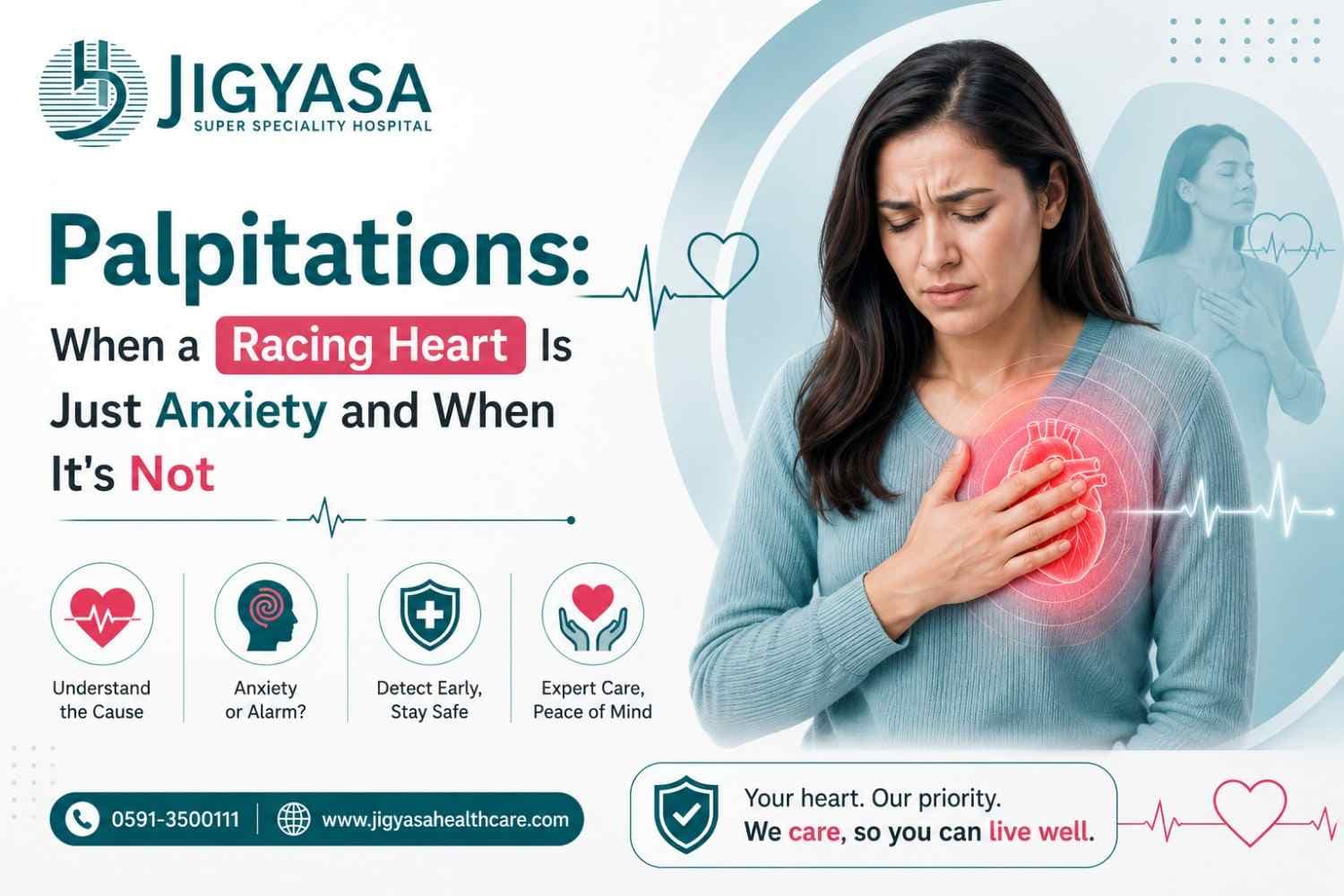
Palpitations: When a Racing Heart Is Just Anxiety and When It's Not
Racing heart, skipped beats, or fluttering in your chest? Learn how to tell anxiety-related palpitations from a cardiac issue.
A sudden awareness of your own heartbeat — racing, pounding, fluttering, or skipping — can be unsettling no matter what's causing it. For some people, this sensation, known medically as palpitations, is a passing response to stress, caffeine, or anxiety. For others, it's an early sign of an underlying heart rhythm problem that needs evaluation. The tricky part is that both can feel remarkably similar, which is why so many patients arrive at Jigyasa Hospital, Moradabad unsure whether their racing heart is "just nerves" or something that needs a cardiologist's attention. Our cardiology team, led by Dr. Amit Kumar Singh, regularly evaluates patients with palpitations to distinguish between benign causes and those that require closer monitoring or treatment.
What Are Palpitations, Exactly?
Palpitations refer to an unusual awareness of your heartbeat — it may feel like your heart is racing, pounding, fluttering, flip-flopping, or skipping a beat. They can last a few seconds or persist for several minutes, and may happen occasionally or quite frequently, depending on the underlying cause.
Importantly, palpitations are a symptom, not a diagnosis. The sensation itself doesn't tell you what's causing it — that requires looking at the pattern, triggers, associated symptoms, and sometimes further testing.
Anxiety-Related Palpitations: What They Typically Feel Like
Anxiety and stress are among the most common causes of palpitations, particularly in younger, otherwise healthy individuals. When the body's stress response is activated, it releases adrenaline, which increases heart rate and the force of each heartbeat — producing a very real physical sensation of a racing or pounding heart.
Features that often point toward anxiety-related palpitations:
- •Clear association with stress, a panic episode, or an anxiety-provoking situation
- •Accompanied by other anxiety symptoms — sweating, trembling, a feeling of impending doom, shortness of breath, or tingling
- •Gradual onset and gradual resolution as the stressful trigger passes
- •Occurs more often at rest or during moments of worry, rather than during physical exertion
- •No associated chest pain, fainting, or severe breathlessness
- •Improves with relaxation techniques, deep breathing, or once the anxious thought passes
- •Often recurrent in predictable situations — public speaking, exams, conflict, or health-related worry
Caffeine, lack of sleep, dehydration, and certain stimulant medications can also trigger palpitations that mimic anxiety-related patterns, and often occur alongside genuine anxiety.
When Palpitations May Signal a Heart Problem
While anxiety is a common and generally benign cause, certain patterns of palpitations warrant closer cardiac evaluation, since they may indicate an underlying arrhythmia or structural heart issue.
Warning features that suggest a cardiac cause:
- •Sudden onset and sudden termination, almost like a switch being flipped, rather than a gradual buildup
- •Associated with chest pain or pressure
- •Accompanied by dizziness, lightheadedness, or fainting (or near-fainting)
- •Occurs during physical exertion rather than at rest
- •A sensation of the heart beating very irregularly, rather than simply fast
- •Palpitations lasting an unusually long time or associated with significant breathlessness
- •A family history of heart rhythm problems, sudden cardiac death, or structural heart disease
- •Palpitations in someone with known heart disease, high blood pressure, diabetes, or prior heart attack
- •New palpitations appearing for the first time in older adults
These features don't confirm a cardiac cause on their own, but they significantly raise the likelihood that further evaluation is needed rather than attributing symptoms to stress alone.
Common Cardiac Causes of Palpitations
When palpitations do stem from a heart-related cause, some of the more common culprits include:
- •Atrial fibrillation — an irregular, often rapid heart rhythm that increases stroke risk if untreated
- •Supraventricular tachycardia (SVT) — episodes of sudden rapid heartbeat that start and stop abruptly
- •Premature atrial or ventricular contractions (PACs/PVCs) — extra or skipped beats that are usually benign but can sometimes indicate an underlying issue if frequent
- •Structural heart conditions, such as valve disease or cardiomyopathy, which can alter normal heart rhythm
- •Thyroid dysfunction, particularly an overactive thyroid, which can mimic both anxiety and cardiac causes of palpitations
- •Electrolyte imbalances, which can affect the heart's electrical stability
Why Self-Diagnosis Isn't Reliable
One of the biggest challenges with palpitations is that both anxiety and genuine arrhythmias can feel remarkably similar in the moment — a racing, pounding sensation is common to both. Additionally, health-related anxiety can itself be triggered by noticing palpitations, creating a cycle where the person becomes increasingly worried about their heart, which in turn worsens the sensation of palpitations — making self-diagnosis particularly unreliable in either direction.
This is precisely why an objective evaluation, rather than guesswork, is the safest approach — especially for anyone experiencing palpitations for the first time, or with any of the warning features mentioned above.
How Palpitations Are Evaluated at Jigyasa Hospital
At Jigyasa Hospital, Dr. Amit Kumar Singh takes a structured approach to evaluating palpitations:
- •1. Detailed History: Understanding the exact sensation, triggers, duration, associated symptoms, and any personal or family history of heart disease helps narrow down likely causes before any testing.
- •2. Physical Examination: Checking pulse rate and rhythm, blood pressure, and signs of thyroid dysfunction or other contributing conditions.
- •3. ECG: A resting ECG can detect certain rhythm abnormalities, though it only captures a brief snapshot and may appear normal if palpitations aren't occurring at that exact moment.
- •4. Ambulatory Monitoring: For intermittent palpitations that don't show up on a resting ECG, extended heart rhythm monitoring over 24 hours or longer can capture the heart's activity during an actual episode, providing far more diagnostic information than a single ECG.
- •5. Blood Tests: Checking thyroid function, electrolyte levels, and blood counts to rule out non-cardiac contributors.
- •6. Echocardiography: If a structural heart issue is suspected, an echo evaluates heart chamber size, valve function, and pumping strength.
Based on findings, Dr. Singh determines whether the palpitations are benign and manageable with reassurance and lifestyle adjustments, or whether they require specific rhythm-based treatment or, in cases involving coronary blockages, coronary angioplasty and stenting (PCI), which he performs directly.
Managing Anxiety-Related Palpitations
Once a cardiac cause has been reasonably ruled out, managing anxiety-driven palpitations often involves:
- •Identifying and addressing specific stress triggers
- •Practicing slow, deep breathing techniques during episodes
- •Reducing caffeine and stimulant intake
- •Prioritizing consistent, adequate sleep
- •Regular physical activity, which helps regulate the body's stress response over time
- •Mindfulness or relaxation practices
- •Professional support for underlying anxiety, if it's frequent or significantly affecting quality of life
When to Seek Immediate Medical Attention
Certain situations require prompt evaluation rather than waiting for a routine appointment:
- •Palpitations accompanied by chest pain or pressure
- •Fainting or near-fainting during an episode
- •Severe breathlessness alongside palpitations
- •A very rapid or highly irregular pulse that doesn't settle within a few minutes
- •Palpitations in someone with known heart disease
Heart Care at Jigyasa Hospital, Moradabad
- •Comprehensive palpitation evaluation with ECG, ambulatory monitoring, and echocardiography
- •Expert arrhythmia diagnosis and management by Dr. Amit Kumar Singh
- •Advanced cardiac care including angiography and angioplasty when needed
- •Anxiety-related palpitation counseling and lifestyle guidance
Key Takeaways
- •Palpitations can be caused by anxiety or genuine heart rhythm problems — both can feel similar.
- •Anxiety-related palpitations typically have gradual onset, occur at rest, and improve with relaxation.
- •Warning signs like sudden onset, chest pain, fainting, or exertional palpitations warrant cardiac evaluation.
- •Self-diagnosis is unreliable; objective testing with ECG and monitoring provides accurate diagnosis.
- •Don't ignore new or concerning palpitations — early evaluation ensures proper treatment and peace of mind.
Frequently Asked Questions
Are occasional skipped heartbeats always dangerous?
No. Occasional extra or skipped beats (PACs or PVCs) are common and often harmless, especially without other symptoms. However, if they're frequent, prolonged, or accompanied by other warning signs, evaluation is recommended.
Can palpitations be caused by something other than the heart or anxiety?
Yes. Thyroid problems, anemia, fever, dehydration, certain medications, and hormonal changes can all cause palpitations unrelated to a primary heart rhythm problem.
If my ECG is normal, does that mean my palpitations aren't heart-related?
Not necessarily. A resting ECG only captures a brief moment, so if the palpitations weren't occurring during the test, a normal result doesn't fully rule out an intermittent arrhythmia — this is why ambulatory monitoring is sometimes needed.
Can anxiety and a heart rhythm problem occur together?
Yes. It's possible to have genuine anxiety alongside an underlying arrhythmia, which is another reason a proper cardiac evaluation is valuable rather than assuming symptoms are purely psychological.
Should I avoid exercise if I experience palpitations?
Not necessarily, but if palpitations specifically occur during exertion, this is a warning feature that should be evaluated before continuing regular physical activity, since exertional palpitations warrant closer cardiac assessment.
Related Articles
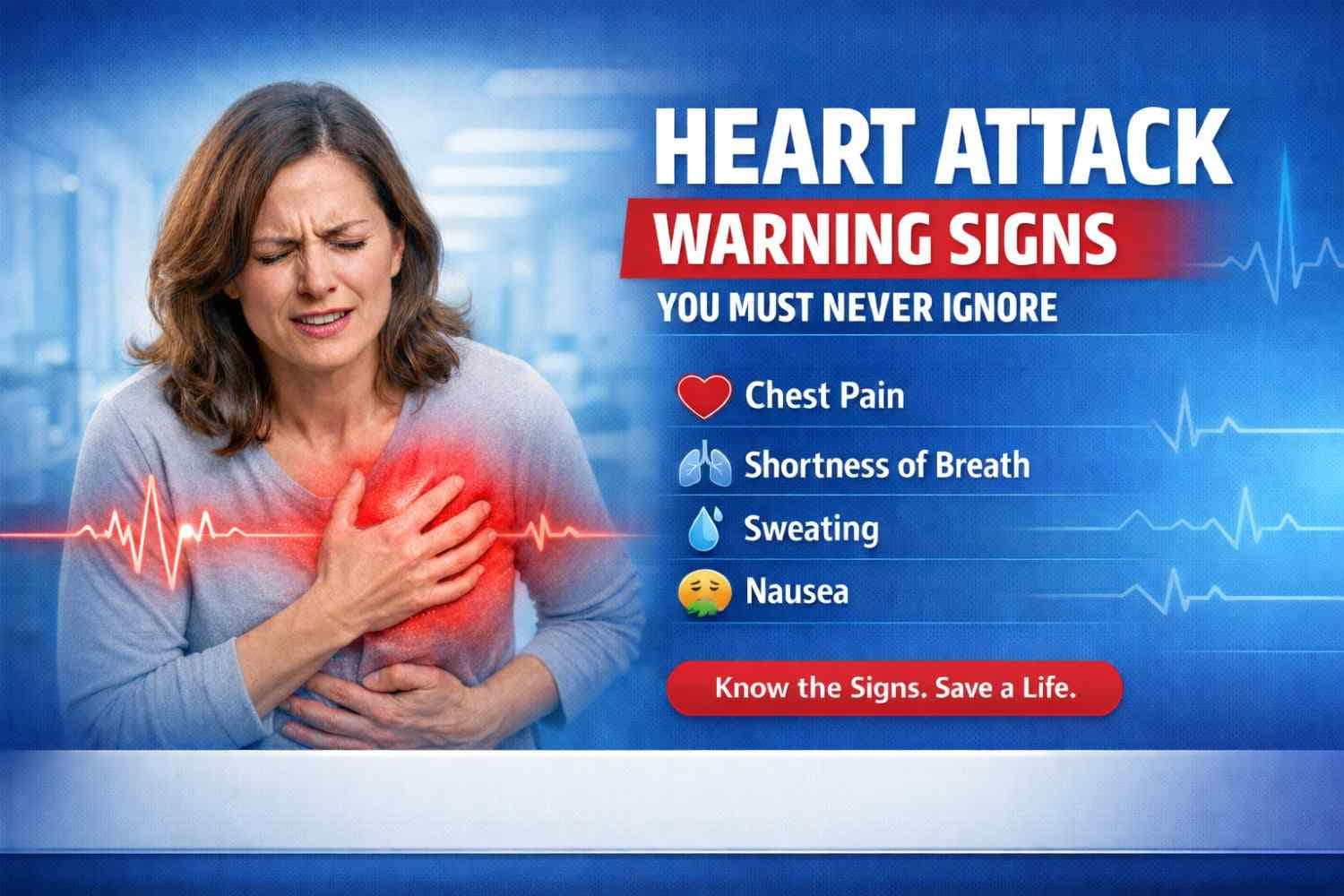
Heart Attack Warning Signs You Must Never Ignore
Recognizing heart attack symptoms early can save your life. Learn the critical warning signs from Dr. Amit Kumar Singh, Senior Interventional Cardiologist at Jigyasa Hospital, Moradabad. Call 7900903333.
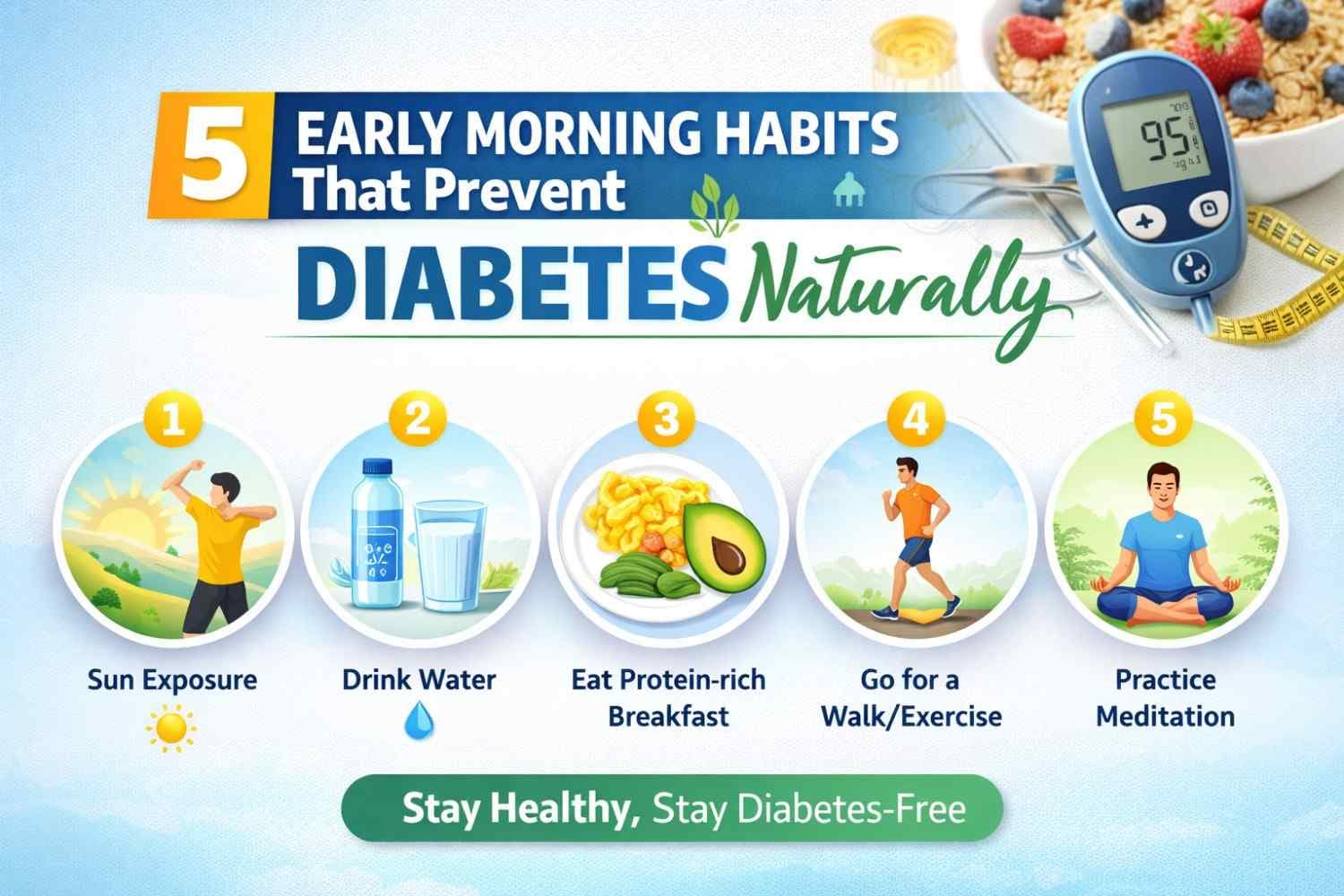
5 Early Morning Habits That Prevent Diabetes Naturally
Discover 5 powerful morning habits that naturally prevent diabetes. Expert advice from Dr. C.P. Singh, Senior Consultant Physician at Jigyasa Hospital, Moradabad. Call 7900903333.
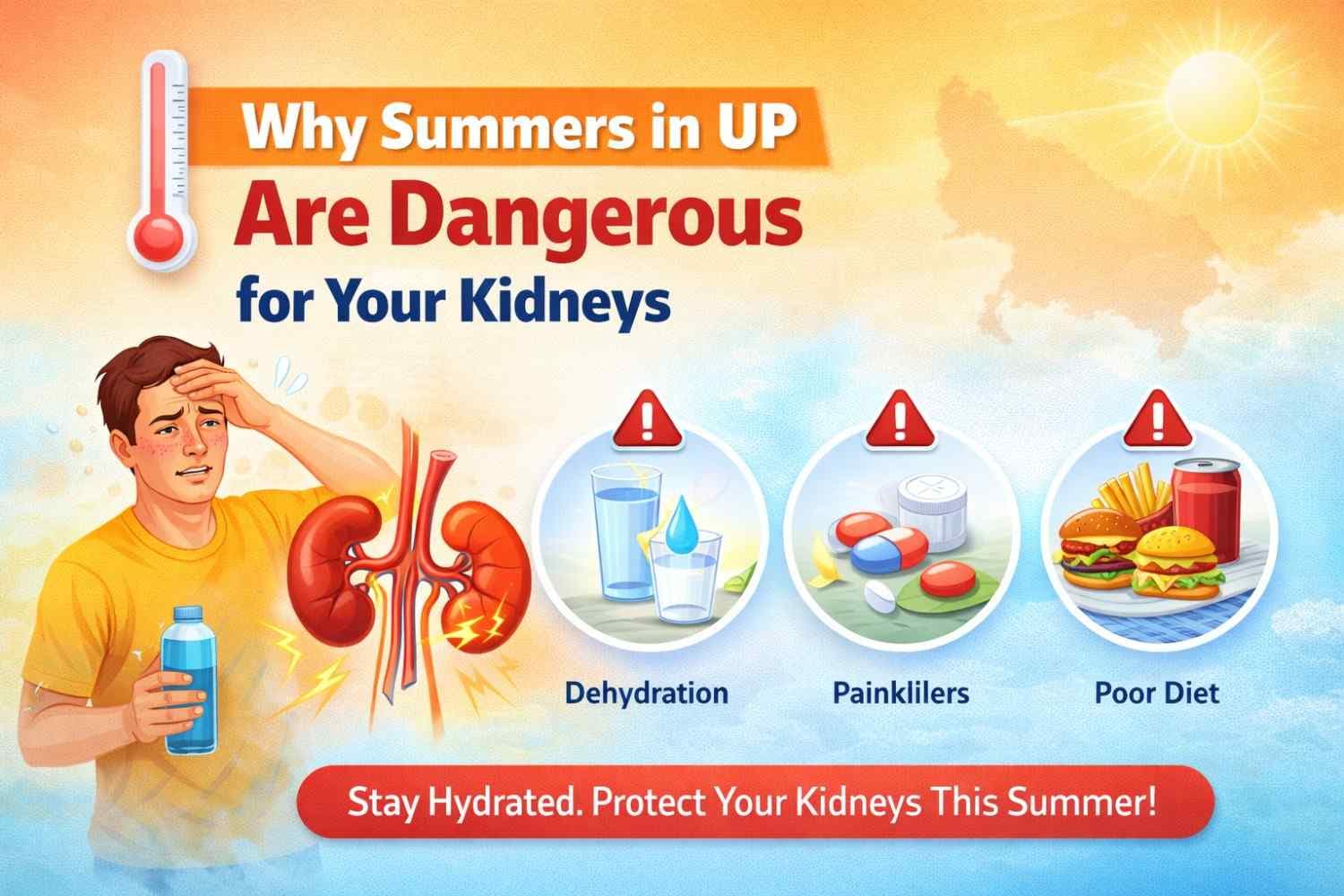
Why Summers in UP Are Dangerous for Your Kidneys
UP summers can silently damage your kidneys. Jigyasa Hospital Moradabad explains the hidden risks, warning signs, and how to protect your kidneys this season. Call 7900903333.