
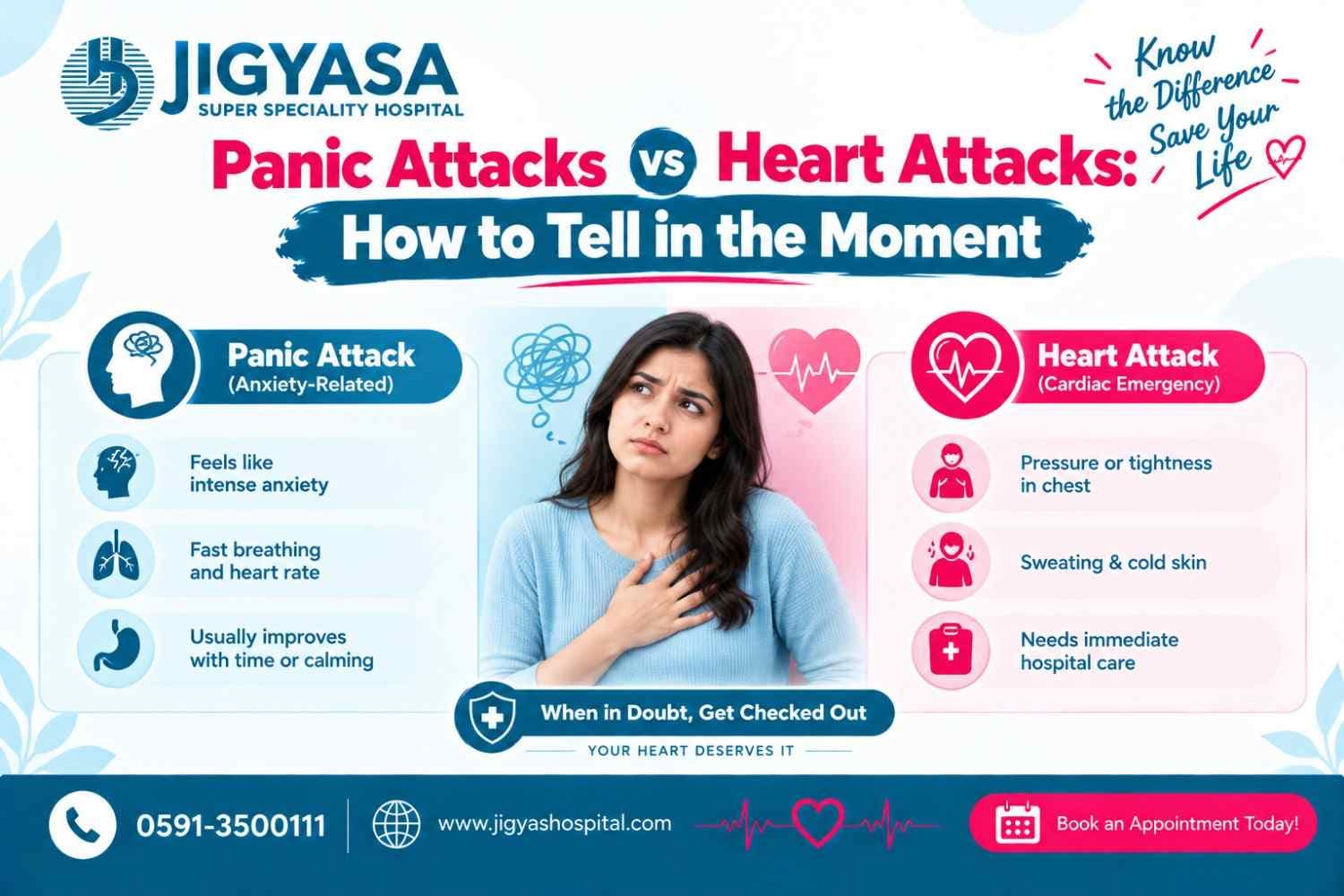
Panic Attacks vs Heart Attacks: How to Tell in the Moment
Chest pain, racing heart, breathlessness: panic attack or heart attack? Learn the differences, why you can't always tell, and what to do, with guidance from Dr. Amit Kumar Singh, Jigyasa Hospital, Moradabad.
Your chest tightens, your heart pounds, your breath feels short, your hands tingle, and a frightening thought arrives: Is this a heart attack? Panic attacks and heart attacks can feel strikingly similar, and even experienced doctors cannot always separate them by symptoms alone. Many people with panic attacks end up in the emergency room, and, more worryingly, some people having a real heart attack dismiss it as "just anxiety" and wait too long. At Jigyasa Hospital, Moradabad, our cardiology team, led by Dr. Amit Kumar Singh, sees both situations. The most important message is simple: when in doubt, treat it as a heart attack first.
The Most Important Rule
You cannot reliably diagnose yourself in the moment. A heart attack is a time-critical emergency, where every minute of delay can mean more permanent heart damage. A panic attack, while distressing, is not dangerous to the heart. Because the cost of wrongly assuming "it's only panic" is far higher than the cost of an unnecessary check, any new or unexplained chest discomfort deserves emergency evaluation.
What Is a Panic Attack?
A panic attack is a sudden surge of intense fear or discomfort that peaks within minutes. It happens when the body's alarm system fires without real danger, flooding the body with adrenaline. It can occur without any obvious trigger, and many people have one or two in a lifetime, while others develop recurrent episodes (panic disorder).
What Is a Heart Attack?
A heart attack happens when blood flow to part of the heart muscle is blocked, usually by a clot forming on a narrowed artery. Without oxygen, heart muscle begins to die. Prompt treatment to reopen the artery saves heart muscle and lives.
Features That Lean Toward a Panic Attack
These are clues, not proof:
- •Peaks quickly, often within about 10 minutes, then gradually settles
- •Comes with intense fear, a sense of losing control, or feeling detached from reality
- •Tingling around the mouth or in both hands, often with fast, deep breathing (hyperventilation)
- •Sharp, stabbing chest pain that is localised, or changes with breathing or position
- •Occurs during stress or in a situation that triggers anxiety, though it can also appear without a trigger
- •Similar episodes have happened before and were checked by a doctor
- •Usually affects younger people without heart risk factors
Features That Lean Toward a Heart Attack
These are clues, not proof:
- •Pressure, squeezing, heaviness, or a "band" across the centre or left of the chest
- •Pain spreading to the left arm, both arms, jaw, neck, or back
- •Discomfort that builds gradually, or lasts longer than about 10 to 15 minutes, or comes and goes
- •Brought on by exertion or emotional stress, and not relieved by rest
- •Cold sweat, marked breathlessness, nausea, or vomiting
- •Unusual fatigue or weakness
- •Occurs in someone with risk factors such as diabetes, high blood pressure, high cholesterol, smoking, obesity, or a family history of early heart disease
- •Age above 40 or after menopause, though heart attacks can happen younger
Importantly, women, older adults, and people with diabetes may have milder or atypical symptoms, such as breathlessness, extreme tiredness, nausea, or jaw and back discomfort, without classic chest pain. See our article on silent heart attacks in women for more.
Side-by-Side Comparison
| Feature | Panic Attack | Heart Attack |
|---|---|---|
| Onset | Sudden, peaks fast | Often builds, or comes in waves |
| Pain type | Sharp, stabbing, localised | Pressure, squeezing, heaviness |
| Spread of pain | Usually stays in chest | May spread to arm, jaw, neck, back |
| Duration | Usually settles within 20 to 30 minutes | May persist or recur |
| Breathing | Fast, shallow, hyperventilation | Breathlessness, may not be fast |
| Mental state | Intense fear, loss of control | Anxiety is possible but not defining |
| Tingling | Mouth and both hands, common | Less typical |
| Triggers | Stress or none | Exertion, stress, or none |
| Risk factors | Not required | Usually present |
No single feature is decisive. A heart attack can cause great fear, and a panic attack can cause pain that feels like pressure.
When to Treat It as an Emergency
Call emergency services or get to a hospital immediately if:
- •The chest pain or pressure lasts more than a few minutes, or keeps coming back
- •It is the first time you have had such symptoms
- •You are over 40, or have diabetes, high blood pressure, high cholesterol, a smoking history, or a family history of heart disease
- •Pain spreads to the arm, jaw, neck, or back
- •You have cold sweats, marked breathlessness, nausea, or feel faint
- •Symptoms don't clearly settle with rest and slow breathing
- •You simply cannot tell the difference
What to do right away:
- •Stop what you are doing and sit or lie down
- •Call for emergency help, and do not drive yourself
- •Ask someone to stay with you
- •Do not wait to see if it passes
- •If an emergency doctor or operator advises taking medicine such as aspirin, follow their instructions rather than deciding on your own, since it is not suitable for everyone
If You Have Had Panic Attacks Before
Even people with a known history of panic attacks can have a genuine heart problem. Treat a new pattern, a longer episode, or pain that feels different from your usual episodes as a possible heart attack. Don't assume "it's just my anxiety again."
What to Do During a Confirmed Panic Attack
Once a doctor has ruled out a heart cause, these steps can help during an episode:
- •Slow your breathing: Breathe in through the nose for about four counts, and out slowly through the mouth for about six, repeating for a few minutes
- •Ground yourself: Name five things you can see and four you can touch
- •Remind yourself it will pass: Panic peaks and then fades, and it is not harming your heart
- •Avoid caffeine and stimulants that can bring episodes on
- •Seek support from a trusted person nearby
How Chest Pain Is Evaluated at Jigyasa Hospital
At Jigyasa Hospital, Dr. Amit Kumar Singh's team approaches chest pain with caution, and our 24/7 emergency care is available for urgent cases.
1. Rapid Assessment
Checking symptoms, pulse, blood pressure, and oxygen levels.
2. ECG
A quick heart tracing that can show signs of a heart attack. It may be repeated, since early tracings can sometimes look normal.
3. Cardiac Blood Tests
Markers released when heart muscle is damaged, often repeated over several hours.
4. Further Cardiac Evaluation
Echocardiography, and when indicated, stress testing or coronary angiography, to look for blocked arteries.
5. Treatment When a Heart Cause Is Found
If a blockage needs opening, Dr. Singh performs coronary angioplasty and stenting (PCI) to restore blood flow quickly.
6. If the Heart Is Clear
Once serious heart causes are reasonably excluded, the patient is advised on anxiety and panic management, with referral for counselling or psychiatric care where needed.
Why Repeated "Panic" Episodes Still Deserve Attention
Recurrent panic attacks are treatable. Counselling, especially cognitive behavioural therapy, and in some cases medication, can greatly reduce them. Living with frequent attacks, or avoiding places and activities out of fear, is not something you have to accept. It is also worth checking for conditions that mimic panic, such as an overactive thyroid, heart rhythm problems, low blood sugar, and excessive caffeine intake.
Cardiology Care at Jigyasa Hospital, Moradabad
- •24/7 emergency care for chest pain and suspected heart attack
- •Rapid ECG, cardiac blood tests, and echocardiography
- •Coronary angioplasty and stenting (PCI) by Dr. Amit Kumar Singh
- •Comprehensive heart risk assessment and panic disorder management
Book an Appointment: 7900903333
Address: Near Miglani Cinema, Rampur Road, Moradabad – 244001
Online Appointments: jigyasahospital.com
Cardiology | Chest Pain Emergency | Angioplasty | Heart Attack Care | Ayushman Bharat Accepted
Key Takeaways
- •When in doubt, treat chest discomfort as a heart attack first — heart attacks are time-critical; panic attacks are not dangerous to the heart.
- •Shared symptoms: chest pain/pressure, racing heart, breathlessness, sweating, nausea, tingling, sense of doom.
- •Heart attack clues: pressure/squeezing pain spreading to arm/jaw/back, lasts >10-15 min, brought on by exertion, cold sweat, risk factors present.
- •Panic attack clues: peaks in ~10 min, intense fear, tingling in mouth/both hands, sharp localized pain, hyperventilation.
- •Emergency: call for help, don't drive yourself, don't wait for it to pass. Even with prior panic attacks, new/different/longer episodes need evaluation.
Frequently Asked Questions
Can a panic attack damage my heart?
No. Panic attacks make the heart beat fast and can feel alarming, but they do not cause a heart attack or damage a healthy heart.
Can stress or anxiety cause a real heart attack?
Severe emotional stress can trigger a heart attack in people who already have heart disease, and long-term stress adds to heart risk. That is why chest pain should never simply be put down to anxiety.
My ECG was normal. Does that rule out a heart attack?
Not always. A single early ECG can look normal, which is why doctors may repeat it and check blood tests. Follow the advice of the treating team.
How long does a panic attack last?
Usually the worst of it peaks within about 10 minutes and settles within 20 to 30 minutes. Chest discomfort that lasts longer, or keeps returning, should be treated as an emergency.
I'm young and healthy. Can I still have a heart attack?
It is less likely but possible, especially with smoking, diabetes, high cholesterol, a family history, or drug use. Don't dismiss chest pain because of your age.
Related Articles
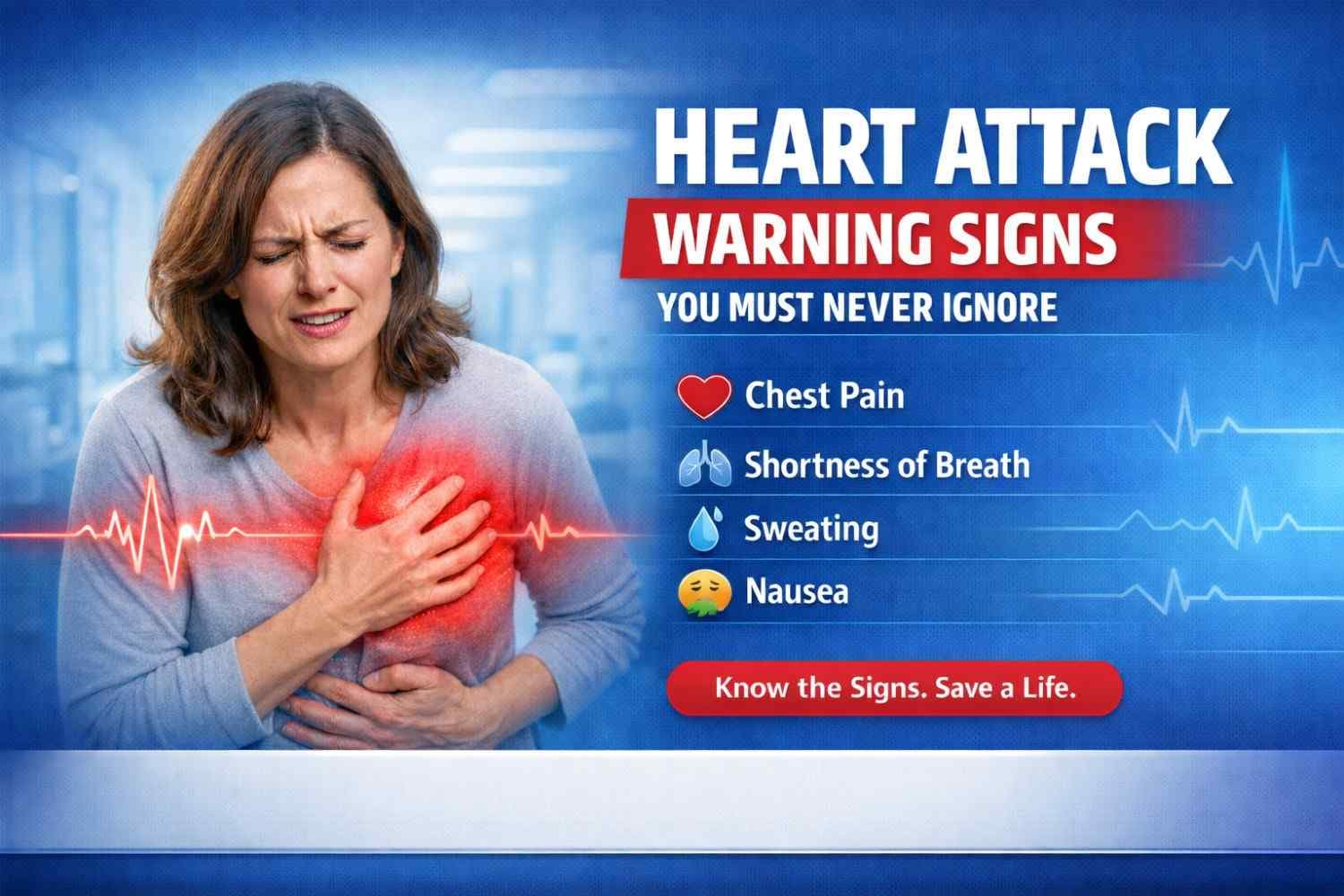
Heart Attack Warning Signs You Must Never Ignore
Recognizing heart attack symptoms early can save your life. Learn the critical warning signs from Dr. Amit Kumar Singh, Senior Interventional Cardiologist at Jigyasa Hospital, Moradabad. Call 7900903333.
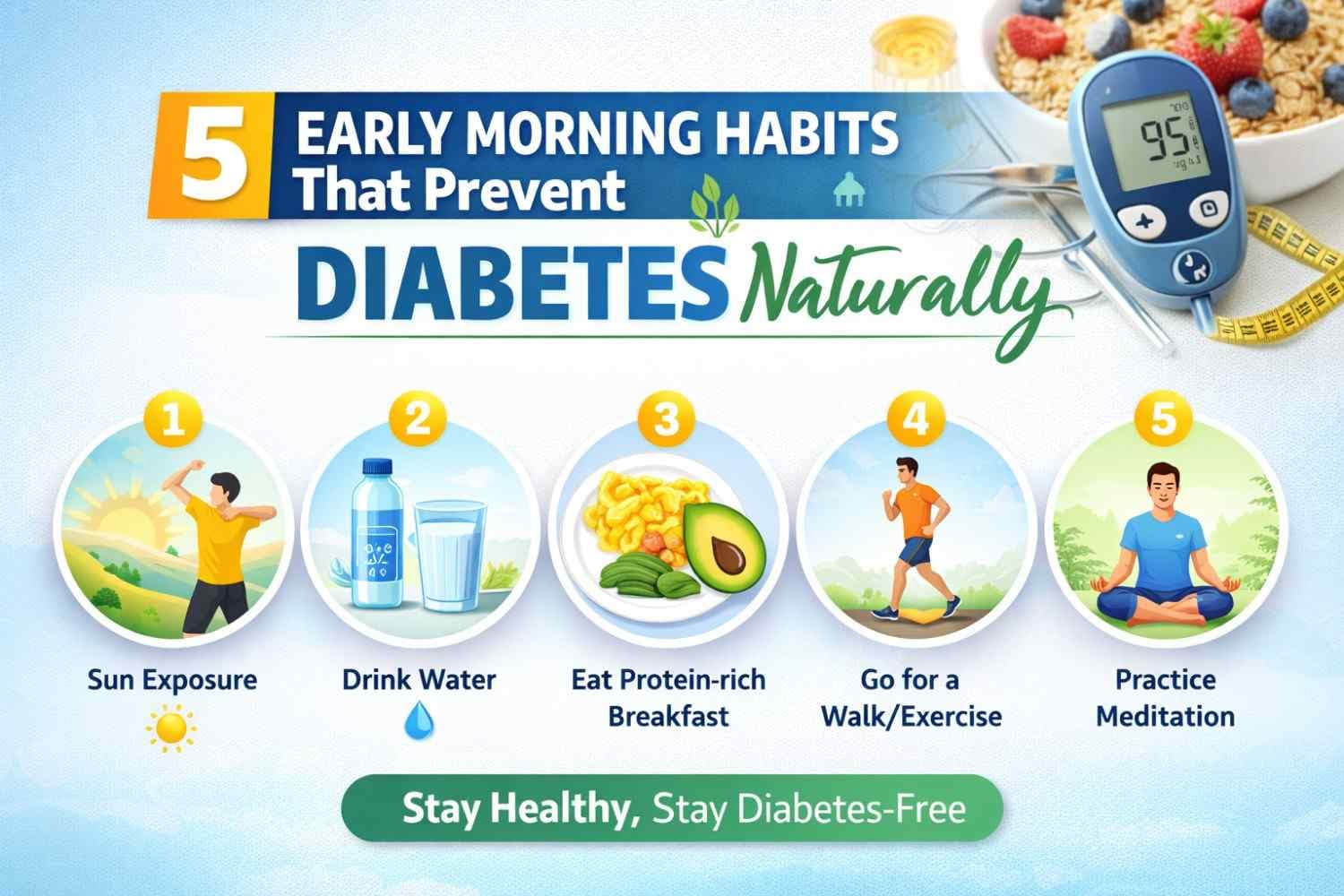
5 Early Morning Habits That Prevent Diabetes Naturally
Discover 5 powerful morning habits that naturally prevent diabetes. Expert advice from Dr. C.P. Singh, Senior Consultant Physician at Jigyasa Hospital, Moradabad. Call 7900903333.
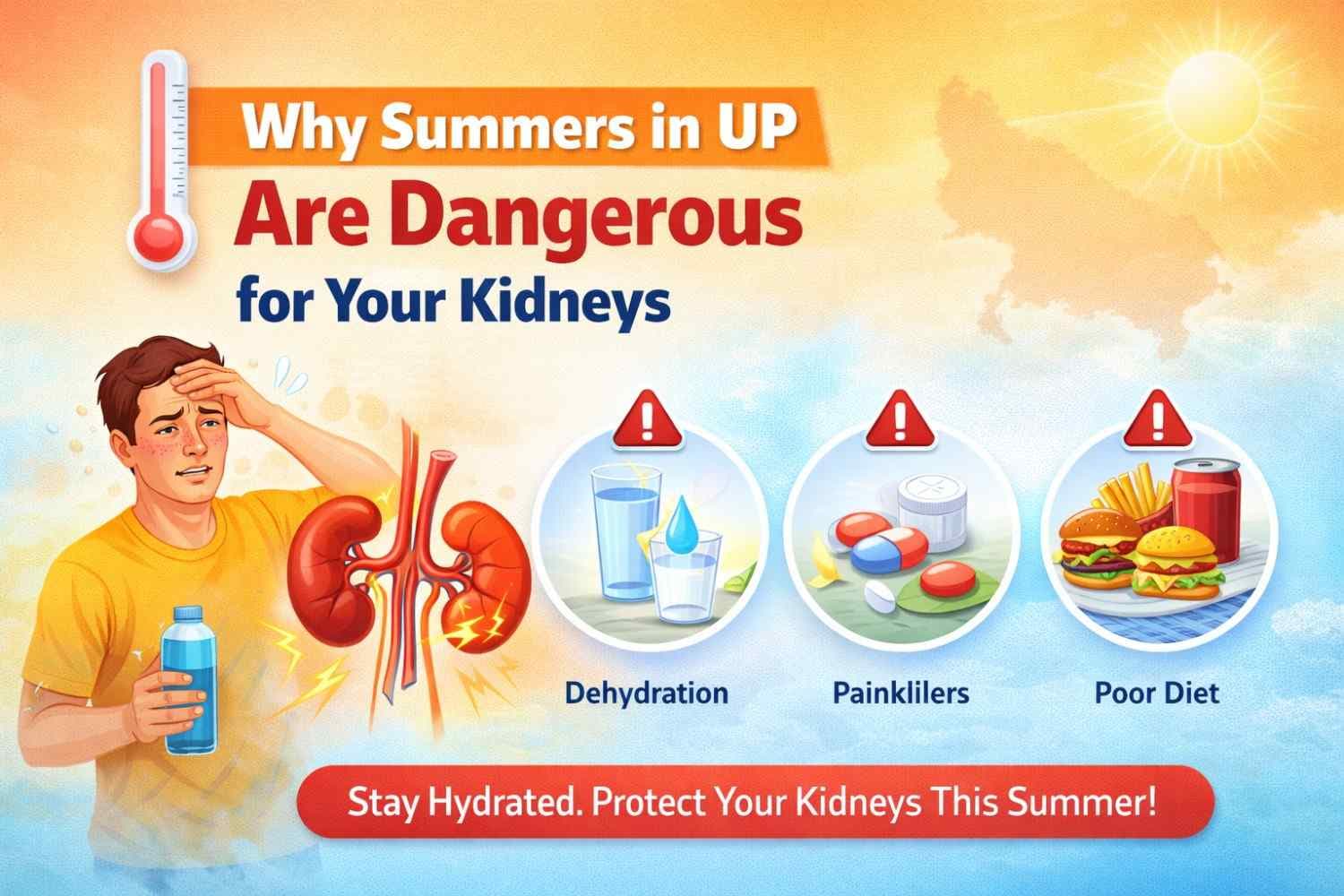
Why Summers in UP Are Dangerous for Your Kidneys
UP summers can silently damage your kidneys. Jigyasa Hospital Moradabad explains the hidden risks, warning signs, and how to protect your kidneys this season. Call 7900903333.