

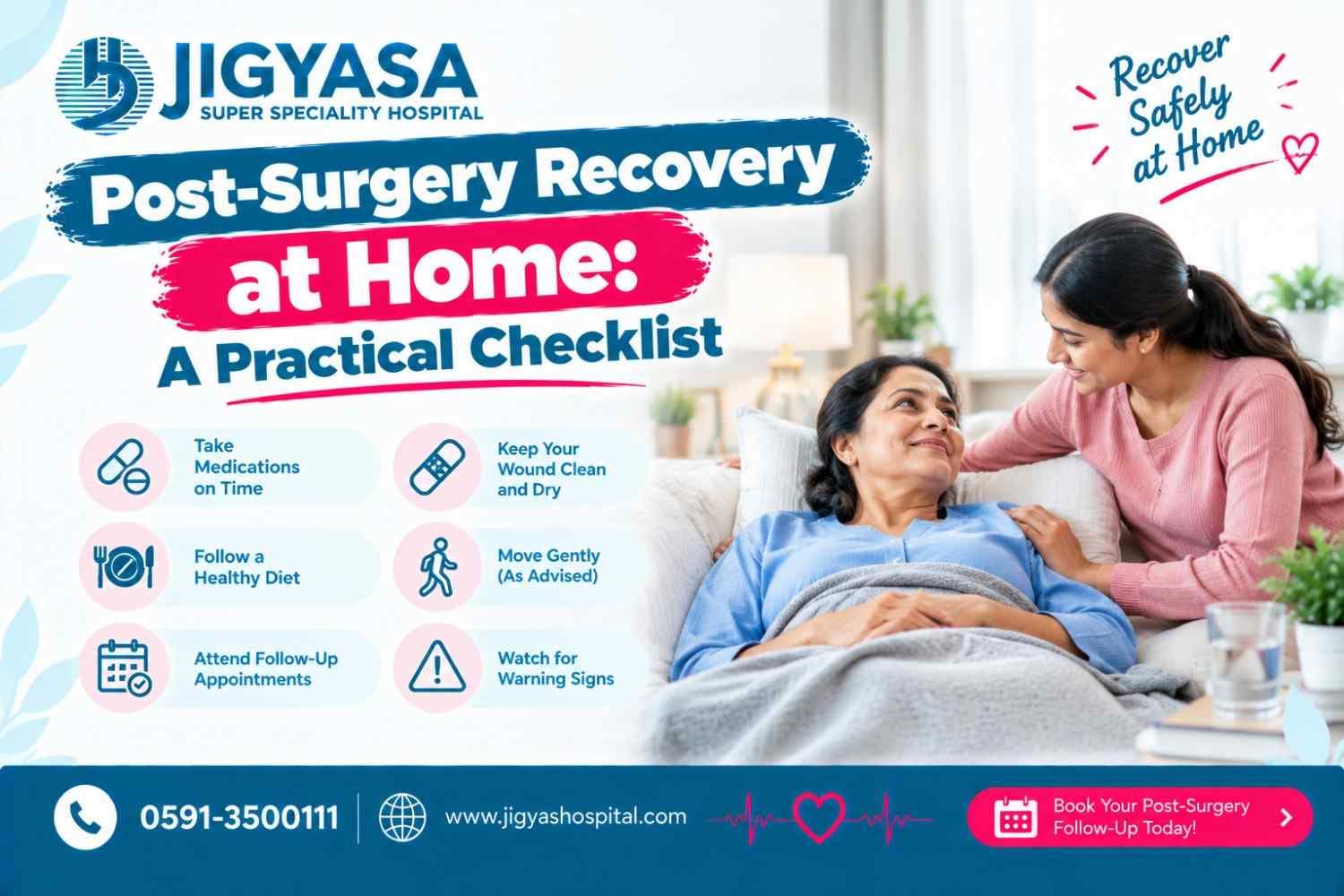
Post-Surgery Recovery at Home: A Practical Checklist
Going home after surgery? Use this checklist for wound care, pain, diet, movement, medicines, and warning signs, from Jigyasa Hospital, Moradabad.
The operation is over, the discharge papers are signed, and you are finally home. But recovery has only just begun. Much of what decides how smoothly you heal happens after you leave the hospital: how you care for the wound, whether you take medicines correctly, how you eat and move, and how quickly you act on warning signs. Many complications are small problems that were noticed late. At Jigyasa Hospital, Moradabad, we encourage patients and families to treat the first weeks at home as part of the treatment. This checklist covers the essentials. Always follow the written instructions from your own surgeon, since they are specific to your operation and health. If this checklist differs from your doctor's advice, follow your doctor.
Before You Leave the Hospital
- •Ask for written discharge instructions and a discharge summary
- •Make sure you understand your medicine list: names, doses, timing, and duration
- •Ask what to do about your regular medicines, especially for diabetes, blood pressure, and blood thinners
- •Learn when you can eat, bathe, walk, and resume activities
- •Ask for wound care instructions and whether dressings need to be changed
- •Note your follow-up date and any tests due
- •Save the hospital phone number and ask whom to contact at night
- •Ask for a list of warning signs specific to your surgery
Set Up Your Home First
- •Arrange a comfortable resting place on the ground floor if stairs will be difficult
- •Keep essentials within reach: water, medicines, phone, tissues, charger
- •Remove trip hazards such as loose rugs, cables, and clutter
- •Use a non-slip mat and, if needed, a stool or support in the bathroom
- •Raise a low bed or chair if getting up is hard
- •Keep the room clean, ventilated, and quiet
- •Plan help: a family member for the first days, and someone to cook and manage chores
- •Keep a notebook for medicine times, temperature, pain levels, meals, and questions
Wound Care
- •Keep the wound clean and dry unless told otherwise
- •Wash your hands before touching the dressing or wound
- •Change dressings only as instructed, using clean materials
- •Do not apply powders, creams, oils, turmeric, or home remedies on the wound unless your surgeon agrees
- •Do not scratch, pick, or remove stitches, strips, or scabs
- •Follow instructions about bathing: some wounds must stay dry for a few days, others can be washed gently
- •Wear loose, clean, soft clothing that does not rub the wound
- •Watch for signs of infection, listed below
Pain Management
- •Take pain medicines exactly as prescribed, ideally before pain becomes severe
- •Do not take extra painkillers from other sources without asking, since combining medicines can be harmful
- •Pain should generally improve day by day. Increasing pain needs a call to your doctor
- •Use comfort measures that your surgeon approves, such as positioning with pillows
- •Support the wound with a pillow when coughing, sneezing, or laughing, if you had abdominal or chest surgery
- •Tell your doctor about side effects such as drowsiness, nausea, or constipation
Medicines
- •Use a pillbox or chart to track doses
- •Finish antibiotics exactly as prescribed, even if you feel better
- •Do not restart or stop blood thinners, diabetes medicines, or blood pressure medicines without instructions
- •Bring all medicines to follow-up visits
- •Ask about interactions with supplements and herbal products
- •Keep medicines safely stored, out of reach of children
Eating and Drinking
Good nutrition speeds healing.
- •Follow any specific diet your surgeon gave, especially after stomach, bowel, gallbladder, or throat surgery
- •Start with light, easily digestible meals if you feel nauseous, and build up gradually
- •Include protein, such as dal, eggs, paneer, curd, fish, or chicken, to support tissue repair
- •Eat fruits, vegetables, and whole grains for vitamins and fibre
- •Drink plenty of fluids unless your doctor has restricted them
- •Prevent constipation, which is common after surgery and pain medicines, with fibre, fluids, and movement, and ask your doctor about a stool softener if needed
- •Avoid alcohol and smoking, which delay healing and interact with medicines
- •Diabetics should monitor blood sugar closely, since high sugar slows healing and raises infection risk
Movement and Activity
Rest matters, but so does gentle movement.
- •Walk short distances as soon as your surgeon allows, increasing gradually, since movement helps prevent blood clots, chest infections, and stiffness
- •Follow lifting limits carefully, since lifting too soon can damage the repair
- •Avoid driving until your doctor says it is safe, and until you are off sedating medicines
- •Do breathing exercises or use a breathing aid if your hospital gave one
- •Follow the physiotherapy exercises shown to you, without overdoing them
- •Get up slowly to avoid dizziness
- •Return to work and exercise only on your doctor's advice
- •Ask when you can resume travel, sexual activity, and sports, since this differs by operation
Rest and Sleep
- •Sleep as much as your body needs, and nap during the day if tired
- •Find a comfortable sleeping position with pillows for support, as advised
- •Fatigue after surgery is normal and may last for weeks
- •Do not push yourself to "get back to normal" too fast
Emotional Recovery
Feeling low, tearful, anxious, or irritable after surgery is common. Pain, poor sleep, medicines, and worry about recovery all play a part. Try to:
- •Talk to family and friends
- •Take short walks and get daylight if permitted
- •Stick to a simple daily routine
- •Be patient with progress
- •Tell your doctor if low mood, anxiety, or sleeplessness persists or feels severe
Warning Signs: When to Call Your Doctor
Contact your surgeon or the hospital if you notice:
- •Fever or chills
- •Redness, warmth, swelling, or increasing pain around the wound
- •Pus, foul-smelling discharge, or the wound opening
- •Bleeding that soaks the dressing
- •Pain that gets worse instead of better, or is not relieved by prescribed medicine
- •Persistent vomiting or inability to keep fluids down
- •No bowel movement or passing gas for several days after abdominal surgery, or a swollen, tight abdomen
- •Reduced or no urine
- •Leg pain, swelling, warmth, or redness, especially in one calf
- •Severe dizziness or fainting
- •Yellowing of the skin or eyes, when relevant to your surgery
When to Seek Emergency Care Immediately
Go to the nearest emergency department or call for urgent help if you have:
- •Chest pain or sudden breathlessness
- •Coughing up blood
- •Heavy, uncontrolled bleeding
- •Confusion, severe drowsiness, or fainting
- •Sudden weakness, facial drooping, or slurred speech
- •High fever with severe pain or feeling very unwell
Our 24/7 emergency care at Jigyasa Hospital is available at any hour.
Follow-Up Visits
- •Do not skip follow-ups, even if you feel well, since the doctor checks the wound, removes stitches if needed, and reviews test results
- •Bring your notebook, medicines, and reports
- •Ask about pathology or biopsy results and what they mean
- •Ask what long-term care or lifestyle changes are needed
- •Ask when you can return to normal activities
Practical Checklist at a Glance
- •[ ] Discharge summary, medicine list, and instructions in hand
- •[ ] Home prepared and a caregiver arranged
- •[ ] Wound clean, dry, and checked daily
- •[ ] Medicines taken on time and tracked
- •[ ] Pain controlled and noted
- •[ ] Light, nutritious meals and enough fluids
- •[ ] Gentle walking and prescribed exercises
- •[ ] Temperature checked if advised or if you feel unwell
- •[ ] Warning signs list and emergency number saved
- •[ ] Follow-up appointment confirmed
How Jigyasa Hospital Supports Recovery
At Jigyasa Hospital, our team explains discharge instructions and warning signs before you go home, and patients are encouraged to call with concerns rather than wait. Follow-up visits allow the doctor to check healing and adjust medicines. For urgent problems, our 24/7 emergency care is available.
Post-Surgery Care at Jigyasa Hospital, Moradabad
- •Detailed discharge counselling with written instructions and warning signs
- •Follow-up visits for wound checks, stitch removal, and medicine adjustment
- •24/7 emergency care for urgent post-operative problems
- •Family guidance on home care, diet, and recovery
Book an Appointment: 7900903333
Address: Near Miglani Cinema, Rampur Road, Moradabad – 244001
Online Appointments: jigyasahospital.com
Post-Surgery Care | Wound Care | Recovery Support | 24/7 Emergency | Ayushman Bharat Accepted
Key Takeaways
- •Recovery begins at home — wound care, medicines, nutrition, movement, and early action on warning signs decide how smoothly you heal.
- •Before discharge: get written instructions, understand your medicine list, know bathing/walking limits, and save the hospital's emergency number.
- •Wound care: keep clean and dry, wash hands first, no home remedies (turmeric/creams) unless surgeon approves, never pick stitches or scabs.
- •Nutrition and movement: protein-rich diet (dal, eggs, paneer), plenty of fluids, prevent constipation, and walk gently as allowed to prevent clots and chest infections.
- •Emergency signs: chest pain, breathlessness, coughing blood, heavy bleeding, confusion, or sudden weakness — go to emergency immediately. Don't skip follow-ups even if you feel well.
Frequently Asked Questions
How long does recovery usually take?
It depends on the operation, your age, and your health. Some surgeries need days, others weeks or months. Your surgeon can give a realistic timeline for your case.
Is it normal to feel very tired after surgery?
Yes. Tiredness is common and can last for weeks. Rest, nutrition, and gentle activity help. Report fatigue that is severe or worsening.
Can I bathe after surgery?
It depends on the wound and procedure. Follow your surgeon's instructions on when and how to wash, and keep dressings dry if told to.
What should I do if I miss a dose of medicine?
Do not double up. Check the instructions, and call your doctor or pharmacist if unsure, especially for blood thinners, diabetes medicines, or antibiotics.
When can I go back to work?
It depends on the surgery and your job. Desk work may resume sooner than physical work. Ask your doctor for a written advice on when and how.
Related Articles

Heart Attack Warning Signs You Must Never Ignore
Recognizing heart attack symptoms early can save your life. Learn the critical warning signs from Dr. Amit Kumar Singh, Senior Interventional Cardiologist at Jigyasa Hospital, Moradabad. Call 7900903333.

5 Early Morning Habits That Prevent Diabetes Naturally
Discover 5 powerful morning habits that naturally prevent diabetes. Expert advice from Dr. C.P. Singh, Senior Consultant Physician at Jigyasa Hospital, Moradabad. Call 7900903333.

Why Summers in UP Are Dangerous for Your Kidneys
UP summers can silently damage your kidneys. Jigyasa Hospital Moradabad explains the hidden risks, warning signs, and how to protect your kidneys this season. Call 7900903333.