

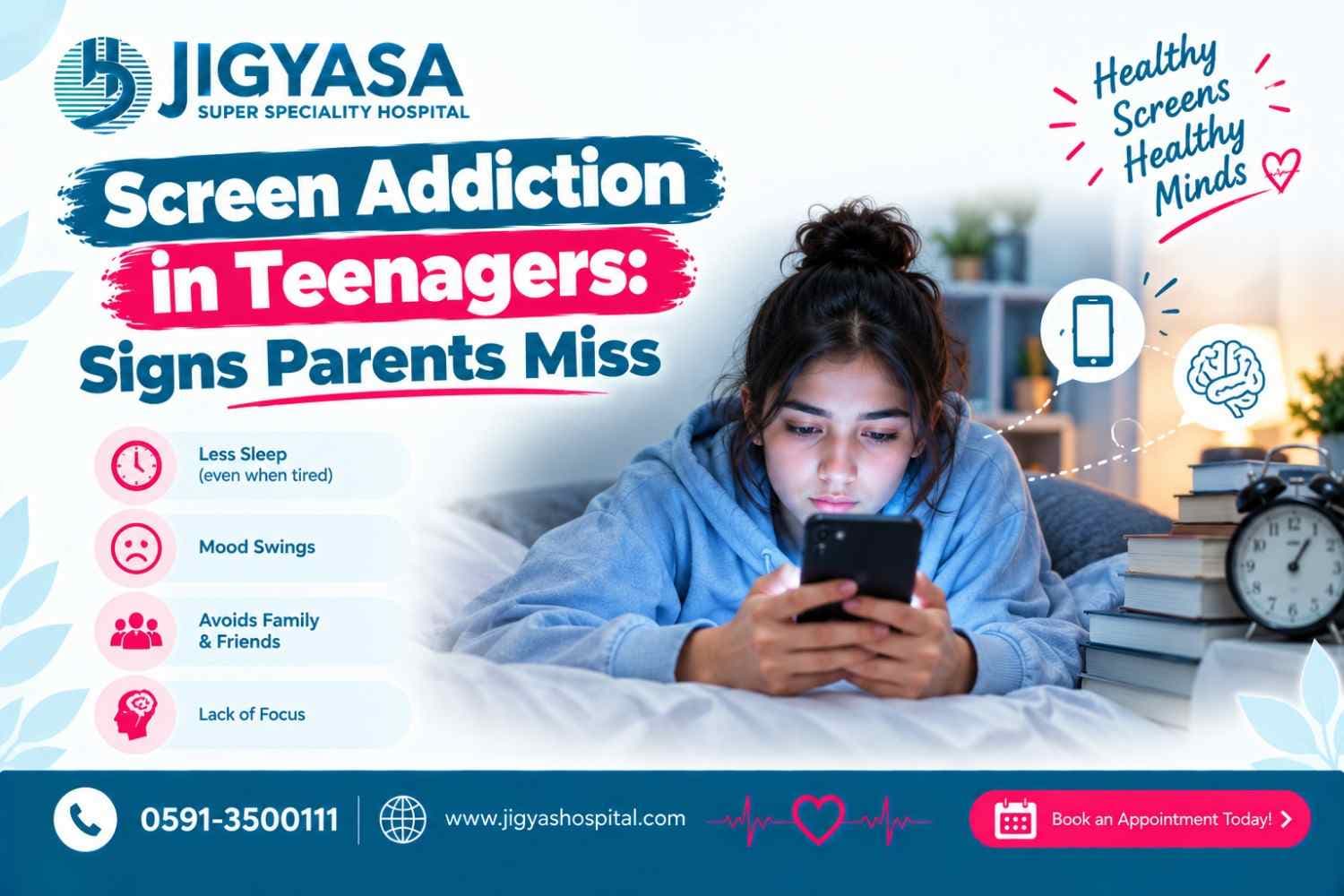
Screen Addiction in Teenagers: Signs Parents Miss
Is it heavy use or addiction? Learn the signs of problematic screen use in teens that parents often miss, and how to respond, from Jigyasa Hospital, Moradabad.
"He's always on his phone." Almost every parent of a teenager says this, and most of the time it is ordinary teenage life. Phones are how teens study, chat, and relax. But for some, screens slowly move from a habit to something that controls mood, sleep, studies, and family life. The change is gradual, and parents often notice it late, or explain it away as a phase. At Jigyasa Hospital, Moradabad, we see the physical and emotional effects of excessive screen use on young people, from disturbed sleep and headaches to anxiety and falling grades. This article helps parents tell heavy use from problematic use, and know when to act.
Heavy Use vs Addiction: What Is the Difference?
The number of hours alone does not define addiction. A teen who spends long hours on online classes or a creative project is different from one who cannot stop. Problematic use is generally judged by loss of control and harm, not just time.
Signs it may have crossed the line:
- •Repeatedly failing to cut down despite wanting to or promising to
- •Screens taking priority over studies, sleep, meals, and friends
- •Distress, anger, or restlessness when the device is taken away
- •Continuing despite clear problems, such as poor results or conflict at home
Gaming disorder is recognised by the World Health Organization as a condition, and excessive social media and short-video use are an increasing concern.
Signs Parents Often Miss
1. Sleep Quietly Disappearing
Late-night scrolling, secret use after lights out, difficulty waking for school, and daytime sleepiness. Poor sleep is often the earliest and most overlooked sign.
2. Slipping Studies and Concentration
Falling marks, unfinished homework, trouble focusing, and a short attention span, often blamed on laziness or "lack of interest."
3. Loss of Interest in Offline Life
Dropping sports, hobbies, tuition, family outings, or old friends, and saying "there's nothing to do" away from the screen.
4. Mood Changes
Irritability, sudden anger, sulking, or low mood, especially around device limits, and anxiety when the phone is out of reach or the battery is low.
5. Secrecy and Lying
Hiding the screen, deleting history, lying about time spent, or using the device late at night. This often shows that the teen already senses the problem.
6. Withdrawal from Family
Eating in the room, skipping family meals, responding with one-word answers, and appearing present but distant.
7. Physical Complaints
Headaches, eye strain, neck and back pain, wrist or thumb pain, poor posture, and changes in appetite or weight. Also frequent snacking or skipped meals while using devices.
Why Teenagers Are Especially Vulnerable
- •The teenage brain's reward system is highly active while the self-control areas are still developing
- •Apps and games are designed to keep users engaged, using endless scrolling, streaks, rewards, and notifications
- •Teens seek belonging and approval, which social platforms feed constantly
- •Stress from exams, comparison, and peer pressure can push teens toward screens for escape
- •Boredom, loneliness, and limited outdoor options make screens an easy default
- •Teens may use screens to cope with anxiety, low mood, or difficulty with friendships
Screens as a Symptom, Not Only the Cause
Excessive screen use often goes hand in hand with other issues, such as anxiety, depression, attention difficulties, bullying, loneliness, or family conflict. Sometimes screens are the problem, and sometimes they are the way a teen copes with a problem. This is why punishment alone rarely works. Understanding what the screen is doing for your teen is as important as limiting it.
How It Can Affect Health
- •Sleep: Reduced and poor-quality sleep, affecting mood, memory, and growth
- •Mental health: Higher risk of anxiety, low mood, irritability, and poor self-esteem
- •Eyes: Strain, dryness, and a higher risk of short-sightedness
- •Body: Poor posture, neck, back, and wrist pain, and low physical activity
- •Weight: Weight gain from inactivity and snacking
- •Learning: Reduced focus and academic performance
- •Safety: Exposure to cyberbullying, inappropriate content, scams, and unsafe contacts
What Parents Can Do
Start With Calm Conversation
- •Choose a relaxed moment, not an argument
- •Express concern and curiosity instead of accusation: "I've noticed you seem tired and stressed lately. Can we talk?"
- •Ask what they enjoy about their games or apps, and listen without judging
- •Avoid labelling your teen as "addicted," which can make them defensive
Set Clear, Shared Rules
- •Agree on limits together, since rules teens help create are easier to follow
- •Create screen-free times and places: meals, family time, homework, and the bedroom at night
- •Keep phones and tablets out of the bedroom overnight and charge them elsewhere
- •Fix a consistent bedtime and an hour of screen-free wind-down before sleep
- •Make rules predictable and apply them consistently
Model the Behaviour
Teens notice how adults use phones. Putting your own phone away at meals and before bed is one of the most effective steps.
Offer Real Alternatives
- •Encourage sports, outdoor play, music, art, or clubs
- •Plan family activities that don't involve screens
- •Help them rebuild offline friendships
- •Praise effort and time spent in other pursuits
Use Tools Sensibly
Parental controls and screen-time settings can help set limits and filter content, but they work best with conversation, not as secret surveillance.
Look After Basics
Regular meals, adequate sleep, daily physical activity, and time outdoors make teens more resilient and less reliant on screens.
What to Avoid
- •Sudden, harsh bans or smashing devices, which can lead to rebellion, secrecy, and conflict
- •Shaming, threats, or constant nagging
- •Using screens as the main reward or punishment
- •Ignoring the issue in the hope it will pass
- •Assuming it is only about willpower
When to Seek Professional Help
Consult a doctor or mental health professional if:
- •Your teen cannot reduce use despite repeated attempts
- •Sleep, studies, or relationships are significantly harmed
- •They become aggressive or extremely distressed when screens are limited
- •You notice signs of depression or anxiety, such as persistent sadness, hopelessness, or withdrawal
- •There is self-harm, talk of not wanting to live, or severe mood changes. Seek help immediately
- •There is online bullying, exploitation, or unsafe contacts
- •You feel the situation is beyond what you can manage at home
Seeking help is a sign of care, not failure.
How Jigyasa Hospital Can Help
At Jigyasa Hospital, a medical evaluation can be a useful first step. Doctors can:
- •Take a careful history of sleep, mood, appetite, and daily functioning
- •Check for physical contributors to tiredness and low mood, such as anemia, thyroid problems, and vitamin deficiencies
- •Assess headaches, vision, posture, and weight concerns linked to screen use
- •Guide families on healthy sleep and daily routines
- •Refer you to appropriate counselling, child, or adolescent mental health specialists when needed
For any emergency, including a teen in crisis, our 24/7 emergency care is available.
Teen Health Support at Jigyasa Hospital, Moradabad
- •Comprehensive evaluation for screen overuse, sleep problems, and mood concerns in teens
- •Medical screening for anemia, thyroid, and vitamin deficiencies
- •Family guidance on healthy routines, sleep hygiene, and screen-free habits
- •Referral to counselling and adolescent mental health specialists when needed
Book an Appointment: 7900903333
Address: Near Miglani Cinema, Rampur Road, Moradabad – 244001
Online Appointments: jigyasahospital.com
Teen Health | Screen Addiction | Mental Health | Parenting Support | Ayushman Bharat Accepted
Key Takeaways
- •Hours alone don't define addiction — loss of control and harm to sleep, studies, meals, and relationships do.
- •Signs parents miss: late-night secret use, falling grades, dropping hobbies/friends, mood swings around device limits, secrecy/lying, withdrawal from family, headaches/eye strain.
- •Teens are vulnerable because their brain's reward system is highly active while self-control is still developing, and apps are designed to hook users.
- •Screens can be a symptom of deeper issues (anxiety, depression, bullying, loneliness) — punishment alone rarely works; understand what the screen does for your teen.
- •Avoid harsh bans and shaming. Use calm conversation, shared rules, screen-free zones, parental modelling, and real alternatives. Seek help if there's self-harm, aggression, or persistent distress.
Frequently Asked Questions
How many hours of screen time is too much for a teenager?
There is no single number. Look at sleep, studies, mood, activity, and relationships. If screens are harming these or your teen cannot cut down, it is too much, regardless of the exact hours.
Is online gaming always harmful?
No. Moderate gaming can be fun and social. It becomes a concern when it replaces sleep, studies, meals, and real-life relationships, or when stopping causes distress.
Should I take away my teen's phone completely?
Sudden total bans often backfire. Agreed limits, screen-free times, and gradual changes tend to work better, along with understanding why they are using it so much.
Could my teen be using screens because of depression or anxiety?
Yes, sometimes. If your teen seems persistently low, anxious, or withdrawn, a professional assessment is worthwhile rather than treating screens as the only problem.
When should I worry that this is more than a phase?
If there is loss of control, secrecy, falling performance, disturbed sleep, or distress when limits are set, and the pattern has lasted for weeks despite your efforts, it is time to seek guidance.
Related Articles

Heart Attack Warning Signs You Must Never Ignore
Recognizing heart attack symptoms early can save your life. Learn the critical warning signs from Dr. Amit Kumar Singh, Senior Interventional Cardiologist at Jigyasa Hospital, Moradabad. Call 7900903333.

5 Early Morning Habits That Prevent Diabetes Naturally
Discover 5 powerful morning habits that naturally prevent diabetes. Expert advice from Dr. C.P. Singh, Senior Consultant Physician at Jigyasa Hospital, Moradabad. Call 7900903333.

Why Summers in UP Are Dangerous for Your Kidneys
UP summers can silently damage your kidneys. Jigyasa Hospital Moradabad explains the hidden risks, warning signs, and how to protect your kidneys this season. Call 7900903333.