
Screen Time & Children's Eye Health: What Parents Should Know
Rising screen time is affecting children's vision earlier than ever. Learn the risks, warning signs, and protective steps — guidance from Dr. Deeksha Singh, Ophthalmologist, Jigyasa Hospital, Moradabad.
Screens have become an unavoidable part of childhood — from online classes and educational apps to entertainment and, increasingly, simply keeping a child occupied. While screens themselves aren't inherently harmful in moderation, the sheer amount of time children today spend looking at phones, tablets, computers, and televisions has raised genuine concern among eye specialists about its impact on developing eyes. At Jigyasa Hospital, Moradabad, Dr. Deeksha Singh, our specialist in Ophthalmology, increasingly sees children presenting with vision problems at younger ages, a pattern closely linked to the dramatic rise in screen exposure over the past several years.
Why Children's Eyes Are More Vulnerable to Screen-Related Strain
A child's visual system is still developing throughout childhood and into the early teenage years, making it more susceptible to the effects of prolonged near-focus activities like screen use compared to a fully mature adult eye. Additionally, children often don't recognize or communicate eye discomfort the way adults do, meaning problems can go unnoticed for longer periods, sometimes only becoming apparent once vision has already been meaningfully affected.
The Rise of Myopia (Nearsightedness) in Children
One of the most significant concerns linked to increased screen time is the rising global rate of myopia (nearsightedness) in children, appearing at younger ages than in previous generations. While genetics plays a role in myopia development, environmental factors — particularly increased near-work activities like screen use and reduced time spent outdoors — are strongly associated with this trend.
Why near-work activities like screens may contribute to myopia:
- •Prolonged focus on close objects is believed to influence the way the eyeball grows during childhood development
- •Reduced outdoor time, which is separately associated with lower myopia rates, often decreases as screen time increases
- •The combination of prolonged near-focus and reduced natural light exposure appears to compound the effect, based on current understanding
This connection is a significant reason why eye specialists emphasize screen time moderation, not simply as a general wellness recommendation, but specifically for the sake of long-term eye health and development.
Digital Eye Strain in Children
Beyond myopia, prolonged screen use can cause digital eye strain — a cluster of symptoms related to extended near-focus work, particularly on backlit screens.
Common symptoms of digital eye strain in children:
- •Frequent eye rubbing
- •Complaints of tired, sore, or "heavy" eyes after screen use
- •Headaches, particularly toward the end of the day or after extended screen sessions
- •Difficulty focusing when looking away from a screen to something at a distance
- •Increased blinking or, conversely, reduced blinking leading to dryness
- •Squinting while using screens
- •Holding devices unusually close to the face
- •Sitting unusually close to the television
Since children often don't articulate these symptoms clearly, behavioral changes — increased irritability during or after screen use, avoiding certain visual tasks, or covering one eye — can sometimes be the first noticeable sign of an underlying issue.
Reduced Blinking and Dry Eyes
When focused intently on a screen, both children and adults naturally blink less frequently than usual. Reduced blinking decreases the natural moisture spread across the eye's surface, which can lead to dryness, irritation, and discomfort, particularly with extended, uninterrupted screen sessions.
Other Potential Concerns Linked to Excessive Screen Time
- •Disrupted sleep patterns — blue light exposure, particularly in the evening, can interfere with the body's natural sleep-wake cycle, and poor sleep can indirectly affect overall eye comfort and function
- •Poor posture during screen use — often overlooked, but poor viewing posture and improper screen distance can contribute to overall visual discomfort
- •Reduced outdoor time — beyond its direct link to myopia, reduced time outdoors means less exposure to varied visual distances, which is thought to support healthy visual development
Warning Signs Parents Should Watch For
- •Squinting or tilting the head to see clearly, particularly at a distance (such as while watching television or looking at a whiteboard)
- •Sitting very close to screens or holding devices unusually near the face
- •Frequent complaints of headaches, especially after school or screen use
- •Rubbing the eyes frequently
- •Difficulty concentrating on visual tasks, or avoiding activities that require sustained visual focus, such as reading
- •Complaints of blurry vision, particularly for distant objects
- •One eye appearing to drift or not track properly, which should always be evaluated
- •Consistently poor performance in tasks requiring clear distance vision, such as reading a classroom board
How Much Screen Time Is Considered Appropriate?
While specific recommendations can vary by age and organization, general guidance suggests:
- •Very young children (under 2 years) should have minimal to no screen time, aside from occasional video calls with family
- •Preschool-age children should have screen time limited to a modest amount daily, with high-quality, educational content when used
- •School-age children should have a reasonable daily limit, balanced with adequate outdoor play, physical activity, sleep, and other developmental activities
- •All children benefit from regular breaks during screen use, structured screen-free times (such as during meals and before bedtime), and encouragement toward outdoor and physical activities
These are general guidelines, and individual circumstances — including educational needs that increasingly involve digital tools — should be balanced sensibly rather than treated as rigid, anxiety-inducing rules.
The 20-20-20 Rule for Reducing Eye Strain
One simple, widely recommended strategy for reducing digital eye strain in both children and adults is the 20-20-20 rule: every 20 minutes of screen use, take a 20-second break and look at something approximately 20 feet away. This simple habit helps relax the eye muscles that have been sustained in a near-focus position and can meaningfully reduce strain-related symptoms when practiced consistently.
Practical Steps to Protect Children's Eyes
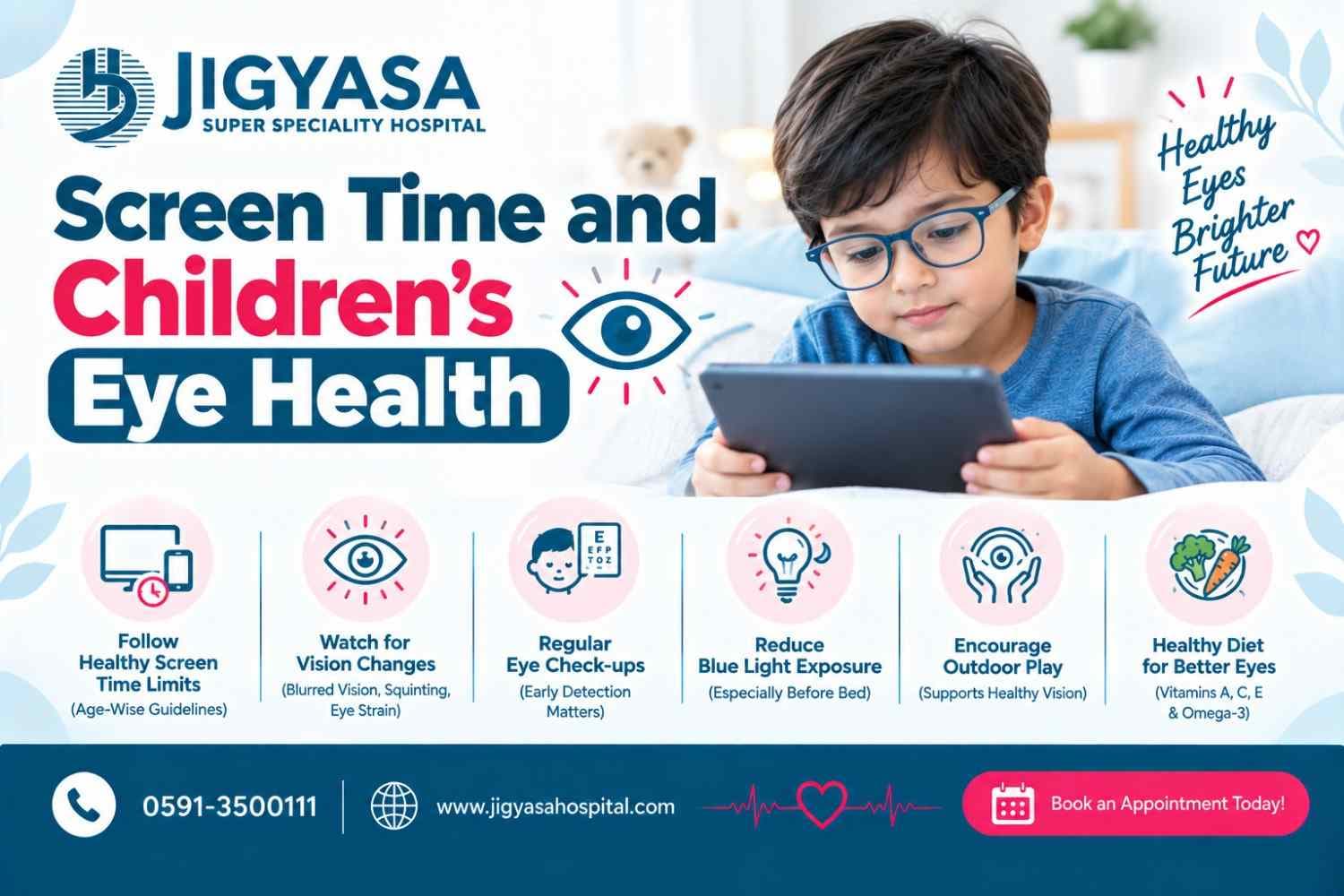
Encourage Outdoor Time
Spending time outdoors, exposed to natural light and viewing objects at varying distances, is one of the most consistently supported protective factors against the development and progression of myopia in children.
Set Reasonable Screen Time Limits
Establishing consistent daily limits, along with screen-free periods (particularly before bedtime), helps balance necessary screen use with other developmental needs.
Optimize Screen Setup
- •Position screens at an appropriate distance and slightly below eye level
- •Ensure adequate ambient lighting in the room to reduce contrast strain between the screen and surrounding environment
- •Adjust screen brightness to a comfortable level rather than excessively bright or dim
Encourage Regular Breaks
Building in the 20-20-20 rule or similar regular breaks during homework or entertainment screen sessions helps reduce cumulative eye strain.
Schedule Regular Eye Examinations
Routine eye check-ups allow early detection of vision changes, including myopia, often before a child even recognizes or reports a problem themselves.
Model Healthy Screen Habits
Children often mirror the screen habits of parents and caregivers, so demonstrating balanced screen use and taking breaks yourself reinforces healthy patterns.
Why Regular Eye Check-Ups Matter, Even Without Complaints
Since children frequently don't recognize or report vision changes — sometimes because a gradual decline in one eye's vision feels "normal" to them, having known nothing different — regular eye examinations are valuable even in the absence of specific complaints. Early detection of myopia or other vision changes allows for timely correction and monitoring, which is particularly important since progressive myopia during childhood, if significant, can carry increased risk of certain eye conditions later in life.
Ophthalmology Care at Jigyasa Hospital, Moradabad
- •Comprehensive pediatric eye examinations for children of all ages
- •Expert diagnosis and management of myopia, digital eye strain, and vision problems
- •Advanced diagnostic tools for early detection of childhood eye conditions
- •Personalized guidance on screen time management and eye health protection
Book an Appointment: 7900903333
Address: Near Miglani Cinema, Rampur Road, Moradabad – 244001
Online Appointments: jigyasahospital.com
Pediatric Ophthalmology | Myopia Management | Digital Eye Strain | Child Eye Checkup | Ayushman Bharat Accepted
Key Takeaways
- •Children's developing eyes are more vulnerable to screen strain — prolonged near-focus can contribute to myopia (nearsightedness).
- •Digital eye strain symptoms: eye rubbing, headaches, tired eyes, squinting, holding devices close, sitting near TV.
- •Warning signs: squinting at distance, frequent headaches, blurry vision, one eye drifting, poor classroom performance.
- •Follow the 20-20-20 rule: every 20 minutes, look 20 feet away for 20 seconds to reduce eye strain.
- •Protect eyes with outdoor time, reasonable screen limits, proper screen setup, and regular eye check-ups even without complaints.
Frequently Asked Questions
At what age should my child have their first eye check-up?
Even young children benefit from an initial eye examination, and regular check-ups thereafter help catch any developing issues early, particularly given how increased screen exposure is affecting younger children's vision more than in previous generations.
Can screen time alone cause permanent eye damage?
Digital eye strain itself typically doesn't cause permanent damage and improves with rest and reduced screen exposure. However, excessive near-work, including screen use, is associated with the development and progression of myopia, which does have longer-term implications for eye health.
Do blue light filtering glasses actually help protect children's eyes?
While blue light filtering products are widely marketed, current evidence on their specific benefit for reducing digital eye strain or preventing myopia is still evolving, and general screen time moderation and outdoor time remain the most consistently supported protective measures.
My child doesn't complain of any eye problems — do they still need a check-up?
Yes, children often don't recognize or report vision changes, especially gradual ones, so regular eye examinations are valuable even without specific complaints, to catch issues early.
Is outdoor time really that important for eye health, or is it just about reducing screen time?
Outdoor time appears to have its own independent protective effect against myopia development, beyond simply being time away from screens, likely related to natural light exposure and the variety of viewing distances involved in outdoor activities.
Related Articles

Heart Attack Warning Signs You Must Never Ignore
Recognizing heart attack symptoms early can save your life. Learn the critical warning signs from Dr. Amit Kumar Singh, Senior Interventional Cardiologist at Jigyasa Hospital, Moradabad. Call 7900903333.

5 Early Morning Habits That Prevent Diabetes Naturally
Discover 5 powerful morning habits that naturally prevent diabetes. Expert advice from Dr. C.P. Singh, Senior Consultant Physician at Jigyasa Hospital, Moradabad. Call 7900903333.

Why Summers in UP Are Dangerous for Your Kidneys
UP summers can silently damage your kidneys. Jigyasa Hospital Moradabad explains the hidden risks, warning signs, and how to protect your kidneys this season. Call 7900903333.