

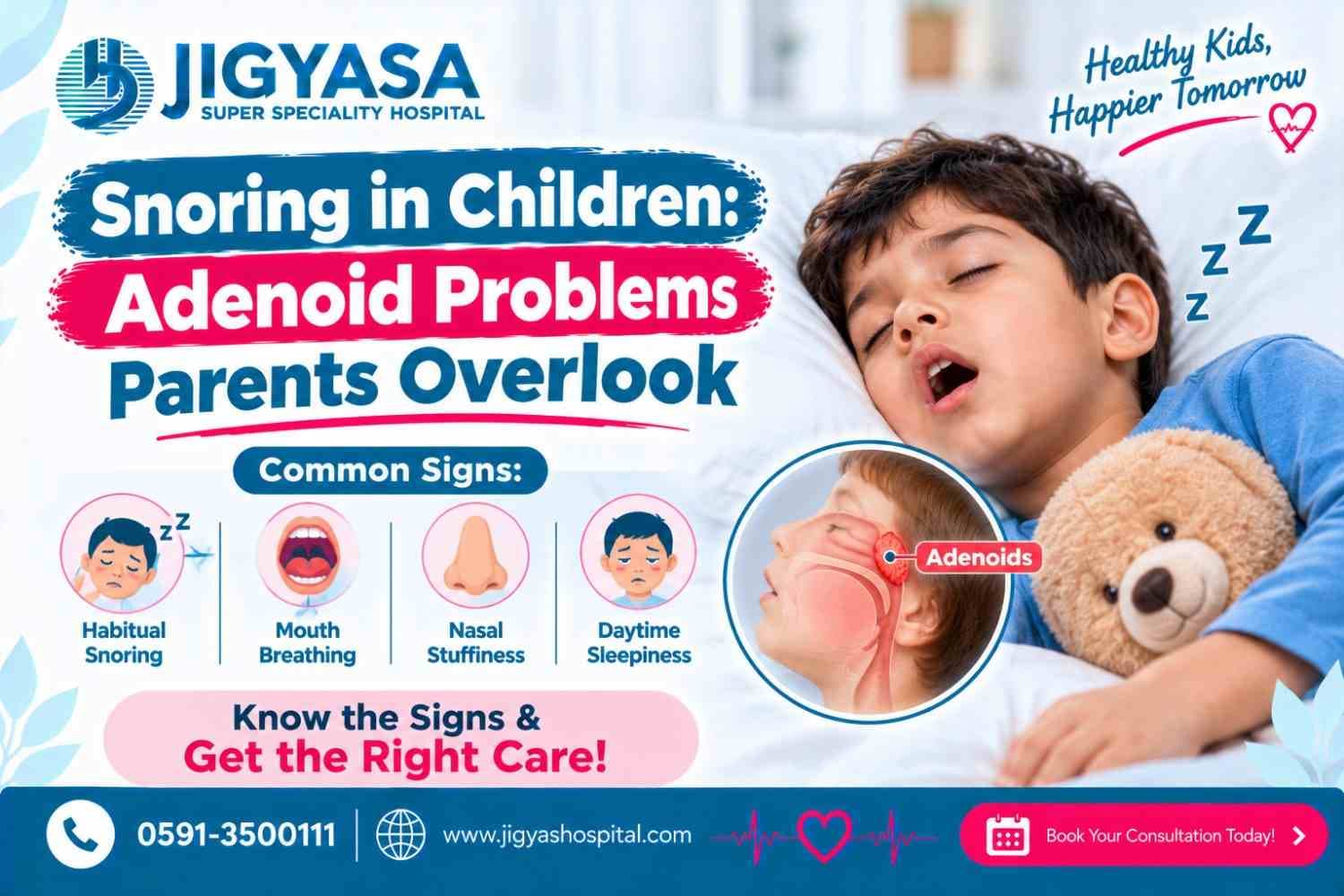
Snoring in Children: Adenoid Problems Parents Overlook
Is your child's snoring just a habit or a sign of enlarged adenoids? Learn the warning signs, effects on sleep and growth, and when to see a doctor, with guidance from Dr. Sana Ibad Khan, Jigyasa Hospital, Moradabad.
Many parents find a snoring child endearing, even funny. A little snore after a cold is usually harmless. But a child who snores night after night, sleeps with the mouth open, or seems restless and tired during the day may be telling you something important. One of the most common causes is enlarged adenoids, and it is often missed because the effects show up in the daytime, as poor concentration, irritability, or frequent illness, not at night. At Jigyasa Hospital, Moradabad, Dr. Sana Ibad Khan, our specialist in Pediatrics and Neonatology, regularly meets parents who had not connected their child's snoring with problems they were seeing at school and at home.
What Are Adenoids?
Adenoids are small masses of soft tissue at the back of the nose, above the throat, part of the body's immune system. They are not visible when you look into the mouth. Adenoids are naturally largest in early childhood, usually peaking between ages 3 and 7, and then shrink on their own in the teenage years.
Repeated infections and allergies can make adenoids swell more than usual. When enlarged, they can block the airway behind the nose, forcing the child to breathe through the mouth.
Snoring: When It Is Normal and When It Is Not
Usually harmless:
- •Occasional snoring during a cold, flu, or allergy flare
- •Snoring that disappears when the child recovers
- •A quiet, soft snore with no other symptoms
Needs attention:
- •Snoring on most nights, lasting more than a few weeks
- •Loud snoring that can be heard from another room
- •Pauses in breathing, gasping, or snorting during sleep
- •Restless sleep, or sleeping in odd positions with the neck stretched back
- •Snoring together with daytime problems
Signs Parents Often Overlook
At Night
- •Sleeping with the mouth open
- •Noisy breathing or laboured breathing during sleep
- •Pauses in breathing followed by a gasp
- •Restless tossing, frequent waking, or sweating during sleep
- •Bedwetting returning after the child had been dry
- •Nightmares, sleepwalking, or night terrors
During the Day
- •Mouth breathing, even when awake, and a constantly dry mouth or cracked lips
- •Nasal voice and a blocked-nose sound while speaking
- •Tiredness and sleepiness at school, or falling asleep in class
- •Irritability, tantrums, or hyperactivity. Poor sleep in children often looks like restlessness, not sleepiness
- •Poor concentration and falling grades
- •Morning headaches
- •Difficulty waking in the morning
- •Poor appetite or trouble swallowing certain foods
- •Frequent colds, ear infections, or sore throats
- •Hearing difficulty or a child who does not respond when called
Many of these are blamed on laziness, attention problems, or screen time. Sleep-disordered breathing should be considered before such labels are applied.
Possible Effects If Left Untreated
- •Poor sleep quality, affecting mood, memory, and school performance
- •Behavioural problems, including hyperactivity and attention difficulties
- •Repeated ear infections and fluid behind the eardrum, which can reduce hearing and affect speech and learning
- •Changes in facial development with long-standing mouth breathing, sometimes called "adenoid face", with a long narrow face and open mouth
- •Dental problems, such as crowded or misaligned teeth
- •Slower growth, since growth hormone is released mainly during deep sleep
- •Strain on the heart and lungs, in severe, long-standing cases of obstructed breathing during sleep
Early recognition prevents most of these.
Obstructive Sleep Apnea in Children
When the airway repeatedly narrows or closes during sleep, a child may have obstructive sleep apnea. In children, enlarged adenoids and tonsils are the commonest cause. Unlike adults, children with sleep apnea are often not overweight and may seem hyperactive, not drowsy. Signs include loud snoring with pauses or gasps, restless sleep, and daytime behavioural or learning difficulties. It needs proper evaluation.
Other Causes of Snoring and Blocked Nose
Not all child snoring is due to adenoids. Other causes include:
- •Allergic rhinitis, with sneezing, itching, and a runny nose, especially in pollution or dust-heavy seasons
- •Enlarged tonsils
- •Sinus infection
- •Deviated nasal septum
- •Obesity
- •Asthma
- •A foreign body in the nose, particularly if blockage affects only one side with discharge
- •Structural or other conditions, in some cases
Identifying the cause matters, because treatment differs.
How a Child with Snoring Is Evaluated
At Jigyasa Hospital, Dr. Sana Ibad Khan's evaluation typically includes:
1. Detailed History
How often and how loudly the child snores, breathing pauses, mouth breathing, sleep quality, daytime behaviour, school performance, allergies, ear infections, and family history. A short video of the child sleeping, recorded on your phone, can be very helpful.
2. Physical Examination
Including checking the nose, throat, tonsils, ears, growth, weight, and general appearance.
3. Further Tests When Needed
Depending on findings, a neck X-ray may show the size of the adenoids, allergy evaluation or blood tests may be suggested, and hearing assessment is important when ear problems are present.
4. Referral for Specialist Assessment
If adenoids are significantly enlarged, symptoms are severe, or a sleep study or surgical opinion may be needed, children are guided to an ENT specialist for further evaluation.
Treatment Options
Treatment depends on the cause and severity.
Observation
For mild symptoms without complications, the doctor may monitor, since adenoids often shrink with age.
Treating Allergy and Infection
- •Nasal sprays or medicines for allergic rhinitis or swelling, prescribed by the doctor
- •Saline nasal rinses or drops to clear secretions
- •Treating infections when they occur
- •Reducing allergen exposure: dust, smoke, and pollution
Give medicines only as prescribed. Do not give adult or leftover medicines to children.
Surgery
When adenoids cause significant sleep-disordered breathing, repeated ear infections with hearing loss, or persistent problems despite medicines, an ENT specialist may recommend removal of the adenoids, sometimes along with the tonsils. This is a common, generally safe procedure when indicated, and the decision is made after careful assessment of benefits and risks.
What Parents Can Do at Home
- •Observe and record your child's breathing and sleep, noting snoring, pauses, and mouth breathing
- •Keep the sleeping area clean: wash bedding regularly, limit dust, and avoid smoke, incense, and mosquito coils in the child's room
- •Avoid smoking around children
- •Keep the child hydrated, and maintain a healthy weight
- •Sleep position: Side-lying may help some children, but this is not a treatment
- •Maintain regular sleep times and a calm bedtime routine
- •Do not ignore school complaints such as sleepiness or inattention without considering sleep
- •Avoid unproven home remedies or herbal drops in the nose
When to See a Doctor
- •Snoring most nights for more than a few weeks
- •Mouth breathing during the day, or a constantly blocked nose
- •Breathing pauses, gasping, or restless sleep
- •Daytime sleepiness, hyperactivity, or falling school performance
- •Repeated ear infections or suspected hearing difficulty
- •Bedwetting that starts again after being dry
- •Slow weight gain or growth
Seek emergency care immediately if your child has difficulty breathing while awake, bluish lips, severe breathing effort with ribs pulling in, or cannot be woken normally. Our 24/7 emergency care at Jigyasa Hospital is available at any hour.
How Jigyasa Hospital Can Help
At Jigyasa Hospital, Dr. Sana Ibad Khan offers a careful pediatric assessment of snoring, nasal blockage, and sleep problems, looks at growth, hearing concerns, and allergies, and guides families on treatment and home care. When a child needs ENT evaluation or specialised sleep assessment, we help guide you to the appropriate care.
Pediatric Care at Jigyasa Hospital, Moradabad
- •Pediatric assessment for snoring, nasal blockage, and sleep problems
- •Growth, hearing, and allergy evaluation
- •Referral to ENT and sleep specialists when needed
- •24/7 emergency care for urgent pediatric breathing problems
Book an Appointment: 7900903333
Address: Near Miglani Cinema, Rampur Road, Moradabad – 244001
Online Appointments: jigyasahospital.com
Pediatrics | Child Sleep Problems | Adenoid Assessment | ENT Referral | Ayushman Bharat Accepted
Key Takeaways
- •Occasional snoring with a cold is normal; snoring most nights with mouth breathing, pauses, or daytime problems is NOT normal and needs evaluation.
- •Enlarged adenoids (peaking ages 3-7) are the commonest cause — they block the nose, forcing mouth breathing and disrupting sleep.
- •Daytime signs parents miss: hyperactivity/irritability (not sleepiness), poor concentration, falling grades, morning headaches, frequent ear infections, bedwetting returning.
- •Untreated sleep-disordered breathing can affect growth (growth hormone released in deep sleep), hearing, facial development, and behaviour — children with sleep apnea often look hyperactive, not drowsy.
- •Treatment: observation for mild cases, allergy/infection treatment with prescribed medicines, and adenoid/tonsil removal by ENT only when symptoms are significant. Record a sleep video on your phone to show the doctor.
Frequently Asked Questions
Is snoring in children normal?
Occasional snoring with a cold is common. Regular, loud snoring, especially with pauses, mouth breathing, or daytime problems, is not normal and should be checked.
Will my child outgrow enlarged adenoids?
Often yes, since adenoids tend to shrink after the early school years. But if they are causing significant problems now, waiting may not be wise, so discuss with your doctor.
Can enlarged adenoids affect hearing?
Yes. They can block the tube that connects the middle ear to the throat, leading to fluid behind the eardrum, ear infections, and reduced hearing.
Does every child with enlarged adenoids need surgery?
No. Many children improve with observation or medicines. Surgery is considered when symptoms are significant and persistent, after assessment by a specialist.
Can poor sleep from snoring affect my child's behaviour and studies?
Yes. Children with poor sleep often show hyperactivity, irritability, and poor concentration, and these often improve when the breathing problem is treated.
Related Articles

Heart Attack Warning Signs You Must Never Ignore
Recognizing heart attack symptoms early can save your life. Learn the critical warning signs from Dr. Amit Kumar Singh, Senior Interventional Cardiologist at Jigyasa Hospital, Moradabad. Call 7900903333.

5 Early Morning Habits That Prevent Diabetes Naturally
Discover 5 powerful morning habits that naturally prevent diabetes. Expert advice from Dr. C.P. Singh, Senior Consultant Physician at Jigyasa Hospital, Moradabad. Call 7900903333.

Why Summers in UP Are Dangerous for Your Kidneys
UP summers can silently damage your kidneys. Jigyasa Hospital Moradabad explains the hidden risks, warning signs, and how to protect your kidneys this season. Call 7900903333.