
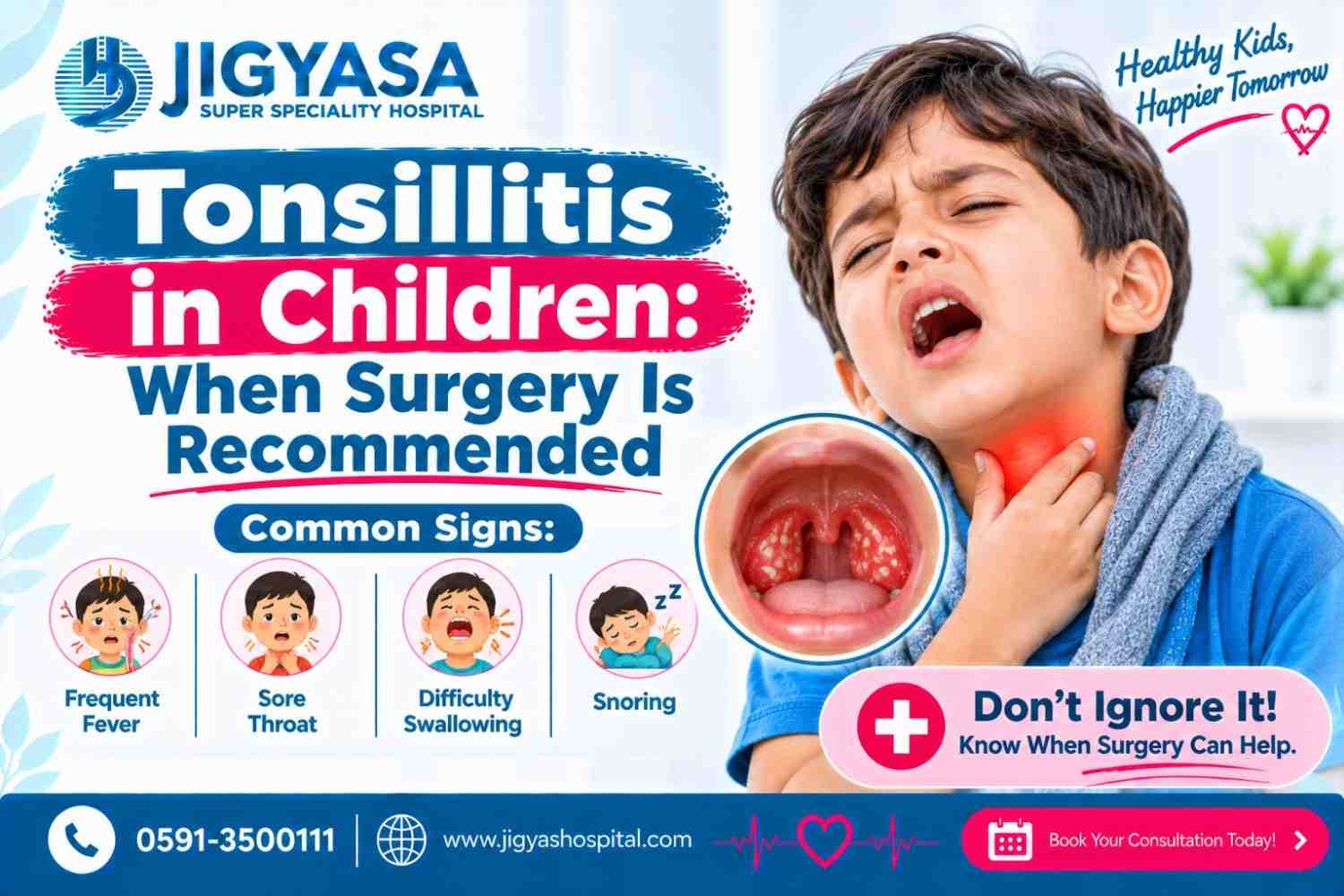
Tonsillitis in Children: When Surgery Is Recommended
Frequent sore throats and fevers? Learn the signs of tonsillitis in children, how it is treated, and when doctors recommend tonsil surgery, with guidance from Dr. Sana Ibad Khan, Jigyasa Hospital, Moradabad.
A child with a red, painful throat, high fever, and no interest in eating is a familiar sight in most households, especially in the changing seasons. Often it settles in a few days. But when it comes back again and again, with missed school days, repeated antibiotics, and worried parents, the question arises: should the tonsils come out? The answer is not automatic. Tonsil surgery helps some children a great deal, while for many others, watchful care is better. At Jigyasa Hospital, Moradabad, Dr. Sana Ibad Khan, our specialist in Pediatrics and Neonatology, helps parents understand which situation their child is in.
What Are Tonsils?
Tonsils are two small masses of tissue at the back of the throat, one on each side. They are part of the immune system and help the body fight germs entering through the mouth and nose, especially in early childhood. They are naturally larger in children, and usually shrink as the child grows. Large tonsils are not a disease by themselves. They become a problem when they are repeatedly infected or when they block breathing or swallowing.
What Is Tonsillitis?
Tonsillitis is inflammation of the tonsils, usually caused by infection.
- •Viral infections are the most common cause, often with cold-like symptoms such as runny nose, cough, and hoarseness
- •Bacterial infections, most importantly with Streptococcus (strep throat), tend to cause more sudden sore throat and fever, with little cough
Both viral and bacterial tonsillitis can look similar, so a doctor's examination and sometimes a test is needed to tell them apart.
Symptoms
- •Sore throat and pain on swallowing
- •Fever, sometimes high
- •Red, swollen tonsils, sometimes with white or yellow patches
- •Tender, swollen glands in the neck
- •Bad breath
- •Refusal to eat or drink, drooling in younger children
- •Headache and stomach ache
- •Tiredness and irritability
- •Voice changes, as if talking with a "hot potato" in the mouth
Why Strep Throat Needs Attention
Strep throat matters because untreated bacterial infection can, in some children, lead to complications such as rheumatic fever, which can damage heart valves, or kidney inflammation. This is a particular concern in India. Doctors therefore take sore throat with fever seriously, and use a throat swab test in suitable cases. Antibiotics are needed for confirmed or strongly suspected bacterial infection, and should be taken for the full prescribed course even if the child feels better.
Antibiotics: Not Every Sore Throat Needs Them
Because viruses cause most tonsillitis, antibiotics will not help many cases and can cause side effects and resistance. Your pediatrician decides based on examination and tests. Avoid giving leftover antibiotics or those suggested by others.
Home Care During an Episode
- •Rest and plenty of fluids
- •Soft, cool or lukewarm foods, such as curd, khichdi, soups, and ice cream if the child will eat them, to ease swallowing
- •Fever and pain medicine only as advised by the doctor, at the correct dose for age and weight
- •Warm salt-water gargles for older children who can gargle safely
- •Avoid very spicy, hot, or acidic foods while the throat is sore
- •Keep the child at home until fever settles and they feel better
- •Wash hands, and avoid sharing cups, spoons, and towels to limit spread
When to See a Doctor Promptly
- •Sore throat with fever lasting more than a day or two
- •Difficulty swallowing fluids or saliva
- •White patches on the tonsils or a rash
- •Frequent episodes
- •Fever with joint pain or swelling, or a rash, after a throat infection
Go to emergency care immediately if your child has trouble breathing, noisy or laboured breathing, severe drooling, inability to open the mouth fully, a muffled voice with severe one-sided throat pain, neck stiffness, or appears very unwell. These may point to an abscess or airway problem. Our 24/7 emergency care at Jigyasa Hospital is available at any hour.
When Is Tonsil Surgery Recommended?
Tonsil removal (tonsillectomy) is considered in specific situations, after discussion with the pediatrician and an ENT surgeon. Common reasons include:
1. Frequent, Well-Documented Infections
Guidelines commonly suggest considering surgery when a child has had repeated, significant throat infections, for example about seven or more episodes in one year, five or more per year for two years, or three or more per year for three years, with documented features such as fever, enlarged neck glands, tonsil pus, or a positive strep test. Doctors usually look at the pattern and severity, not just a count, and often advise watchful waiting first for several months, since infections often reduce on their own.
2. Breathing Problems During Sleep
When enlarged tonsils, often with enlarged adenoids, cause loud snoring, breathing pauses, restless sleep, or daytime behaviour and learning problems, removal may help. See our article on snoring in children and adenoid problems.
3. Peritonsillar Abscess
A collection of pus next to the tonsil. Recurrent abscesses or an abscess needing drainage may lead to a recommendation for removal.
4. Difficulty Eating or Swallowing
Very large tonsils that interfere with swallowing and cause poor weight gain.
5. Persistent Problems Despite Treatment
Chronic tonsillitis with ongoing symptoms, recurrent tonsil stones, or ongoing bad breath that does not respond to treatment, in selected cases.
6. Suspicion of Another Condition
Tonsils that are markedly different in size from one side to the other, or unusual in appearance, may need to be removed for examination under the microscope. This is uncommon.
When Surgery Is Usually Not Needed
- •Occasional infections that settle with ordinary care
- •Large tonsils without sleep problems, swallowing trouble, or frequent infections
- •Mild symptoms that are improving over time
- •A child with infections that are mostly viral colds with sore throat
What Surgery Involves (General Information)
Tonsillectomy is generally done under general anesthesia, and many children go home the same day or after an overnight stay, depending on age and circumstances. Recovery usually takes about one to two weeks, with sore throat, ear referred pain, and reduced appetite. Common recovery advice includes:
- •Soft, cool foods and plenty of fluids
- •Pain medicine as prescribed
- •Avoiding rough, crunchy, or acidic foods initially
- •Rest, and a break from school and strenuous play for the period advised
- •Knowing the warning signs: bleeding from the mouth, fever, refusal to drink, or worsening pain need prompt contact with the doctor
Like any surgery, it has risks, including bleeding and anesthesia-related risks, which the surgeon will explain. It does not make children immune to all infections, but the tonsils' role can be taken over by other immune tissues. Discuss expected benefits and risks, and consider a second opinion if unsure. See our guide on questions to ask your doctor before surgery.
How Jigyasa Hospital Can Help
At Jigyasa Hospital, Dr. Sana Ibad Khan examines children with sore throat and recurrent tonsillitis, advises on testing and treatment, and keeps track of how often infections occur, which helps decide whether surgery may be worthwhile. If a child needs ENT evaluation or surgical assessment, we guide families to appropriate specialised care. Throat swab and blood tests can be processed in our NABL-accredited lab as advised.
Parent Checklist: Before You Meet the Doctor
- •Note the dates of each sore throat episode, with fever readings and treatment given
- •Keep records of antibiotics and any throat swab or test results
- •Record how many school days were missed
- •Note sleep problems, snoring, or breathing pauses
- •Bring any previous prescriptions and reports
- •Write down your questions
Pediatric Care at Jigyasa Hospital, Moradabad
- •Pediatric assessment for recurrent tonsillitis and sore throat
- •Throat swab and blood tests in NABL-accredited lab
- •Tracking infection frequency to guide tonsil surgery decisions
- •ENT referral and 24/7 emergency care for urgent cases
Book an Appointment: 7900903333
Address: Near Miglani Cinema, Rampur Road, Moradabad – 244001
Online Appointments: jigyasahospital.com
Pediatrics | Tonsillitis Care | Throat Swab | Tonsillectomy Assessment | Ayushman Bharat Accepted
Key Takeaways
- •Most tonsillitis is viral — antibiotics don't help viral cases and cause resistance. Strep throat (bacterial) needs a throat swab and full antibiotic course to prevent rheumatic fever/kidney complications.
- •Tonsil surgery (tonsillectomy) is NOT automatic — consider it for 7+ infections/year, or 5/year for 2 years, or 3/year for 3 years, with documented severity (fever, pus, positive strep).
- •Other surgery reasons: sleep-disordered breathing (loud snoring, pauses, daytime hyperactivity), peritonsillar abscess, swallowing difficulty/poor weight gain, or asymmetric/unusual tonsils.
- •Watchful waiting is often better first — infections frequently reduce on their own. Surgery is NOT needed for occasional viral sore throats or large tonsils without symptoms.
- •Emergency signs: trouble breathing, severe drooling, can't open mouth, muffled voice with one-sided pain, neck stiffness — may indicate abscess or airway problem. Keep a diary of episodes, fevers, and missed school days before the doctor visit.
Frequently Asked Questions
How many throat infections justify removing the tonsils?
There is no single number for every child. Guidelines often use about seven in a year, five a year for two years, or three a year for three years, along with how severe the infections were. The decision is individual.
Will my child get more infections after tonsils are removed?
Generally no. Many children have fewer throat infections after surgery, and the body's immune defences continue to work.
Does every sore throat need antibiotics?
No. Most are viral. Antibiotics are used when a bacterial cause such as strep is confirmed or strongly suspected, and the full course should be completed.
Can tonsils grow back?
After a proper removal, regrowth is uncommon, though a small amount of tissue may remain and occasionally cause symptoms.
Is it safe to wait if surgery has been suggested?
Often a period of watchful waiting is reasonable, but not if there are breathing difficulties, abscess, or serious complications. Ask your doctor how long waiting is safe in your child's case.
Related Articles

Heart Attack Warning Signs You Must Never Ignore
Recognizing heart attack symptoms early can save your life. Learn the critical warning signs from Dr. Amit Kumar Singh, Senior Interventional Cardiologist at Jigyasa Hospital, Moradabad. Call 7900903333.

5 Early Morning Habits That Prevent Diabetes Naturally
Discover 5 powerful morning habits that naturally prevent diabetes. Expert advice from Dr. C.P. Singh, Senior Consultant Physician at Jigyasa Hospital, Moradabad. Call 7900903333.
Why Summers in UP Are Dangerous for Your Kidneys
UP summers can silently damage your kidneys. Jigyasa Hospital Moradabad explains the hidden risks, warning signs, and how to protect your kidneys this season. Call 7900903333.