
Typhoid and Malaria in Monsoon: Early Symptoms You Shouldn't Ignore
Monsoon brings a rise in typhoid and malaria cases. Learn the early warning symptoms and when to get tested — guidance from Dr. C.P. Singh, Jigyasa Hospital, Moradabad.
Every monsoon season, hospitals and clinics see a sharp rise in patients presenting with fever, body aches, and general unwellness — a pattern closely tied to the conditions that monsoon rains create: stagnant water for mosquito breeding, and increased risk of water and food contamination. Among the most common culprits behind this seasonal surge are typhoid and malaria, two very different infections that can sometimes present with deceptively similar early symptoms, making prompt recognition and testing essential rather than assuming "it's just monsoon fever" that will pass on its own. At Jigyasa Hospital, Moradabad, Dr. C.P. Singh, Founder and Chairman, sees a notable rise in both conditions during the monsoon months and emphasizes the importance of early evaluation rather than self-treatment with over-the-counter medication.
Why Monsoon Season Increases the Risk
For Malaria:
Stagnant water that collects during and after monsoon rains — in puddles, containers, construction sites, and poorly drained areas — creates ideal breeding grounds for mosquitoes, which transmit the malaria parasite through their bites. The increased mosquito population during this season directly correlates with a rise in malaria cases.
For Typhoid:
Typhoid is caused by bacteria (Salmonella typhi) typically spread through contaminated food and water. Monsoon rains often compromise water supply systems, increase the risk of sewage contamination mixing with drinking water sources, and create conditions where food hygiene is harder to maintain, all of which increase the risk of typhoid transmission during this season.
Understanding Typhoid
Typhoid fever is a bacterial infection that primarily affects the intestinal tract but can spread throughout the body if untreated, affecting multiple organ systems in severe cases.
Early Symptoms of Typhoid:
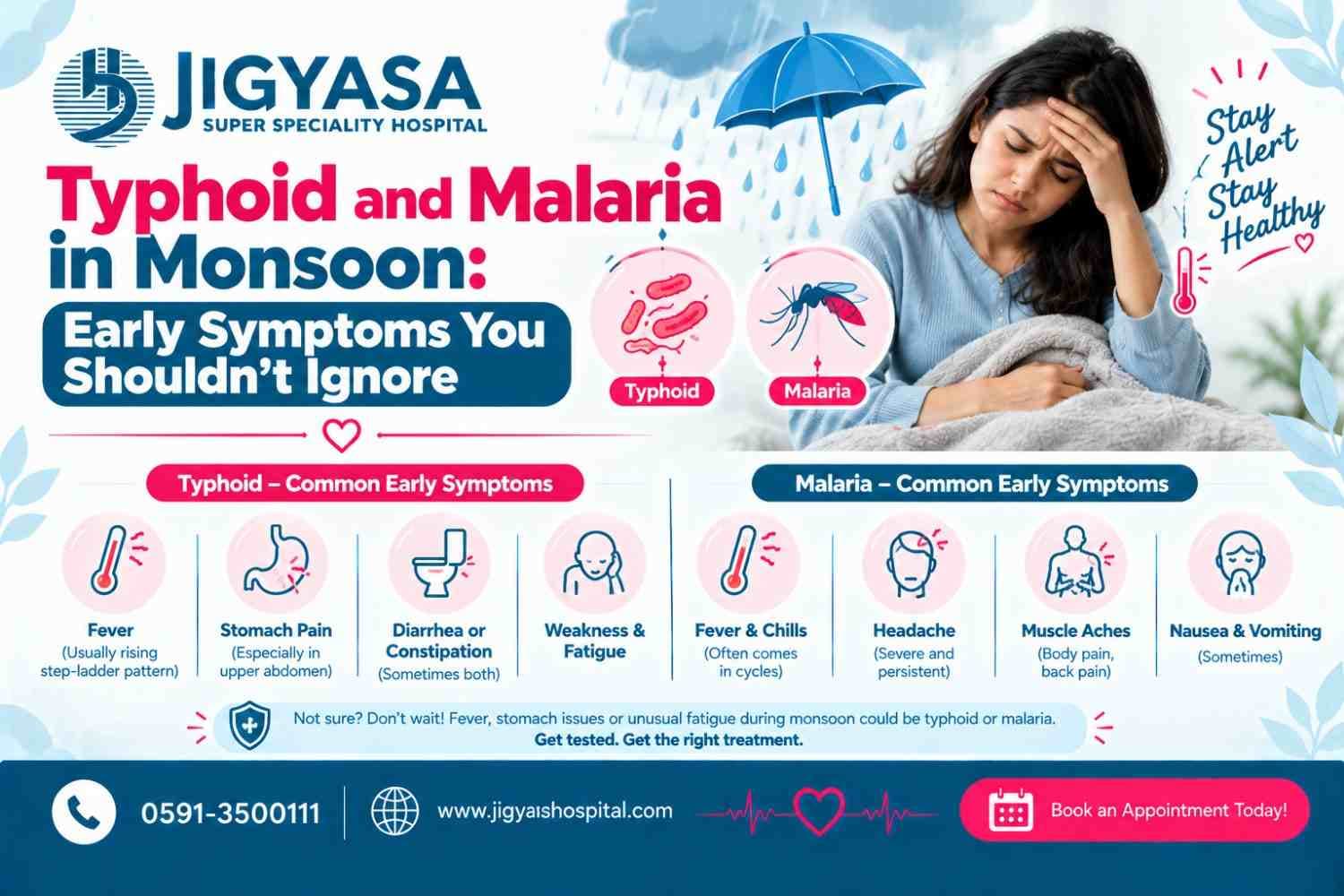
- •Gradually rising fever — often starting low-grade and progressively climbing over several days, rather than appearing suddenly with full intensity
- •Headache, often persistent
- •Weakness and fatigue, frequently more pronounced than what's typical with a common viral fever
- •Abdominal pain and discomfort
- •Loss of appetite
- •Either constipation or diarrhea, varying between individuals
- •A characteristic "step-ladder" fever pattern — where fever tends to rise through the day and may partially settle, only to rise again the next day, progressively climbing over the first week if untreated
- •Relatively slow pulse rate relative to the degree of fever, a distinctive feature doctors look for during examination
- •Rose-colored spots on the skin, appearing in some cases, typically on the trunk
Why Typhoid Symptoms Are Easy to Dismiss Initially
Because typhoid often starts with a gradual, relatively low-grade fever and general malaise, it's frequently mistaken in its early days for a common viral fever or simple fatigue, leading many patients to delay seeking proper evaluation until the fever has progressed significantly.
Understanding Malaria
Malaria is caused by a parasite transmitted through the bite of infected Anopheles mosquitoes, which multiply within red blood cells, leading to the characteristic cyclical fever pattern associated with the disease.
Early Symptoms of Malaria:
- •High fever, often with a more sudden onset compared to typhoid
- •Chills and shivering, frequently intense, sometimes preceding the fever spike
- •Sweating, typically following the fever as it breaks
- •Headache
- •Muscle and joint aches
- •Nausea and vomiting
- •Fatigue and general weakness
- •Cyclical fever pattern — in classic presentations, fever may occur in distinct episodes with symptom-free intervals in between, following a pattern that can repeat every 48 or 72 hours depending on the specific malaria parasite type, though this classic pattern isn't always present, especially early in the illness
Why Malaria Can Be Missed in Its Early Stages
Early malaria symptoms can closely resemble a common flu or viral fever, and the classic cyclical fever pattern often isn't fully established in the first few days, making it easy to underestimate the illness until it progresses or specific testing is done.
Key Differences Between Typhoid and Malaria
| Feature | Typhoid | Malaria |
|---|---|---|
| Fever onset | Gradual, step-ladder pattern | Often sudden, with chills |
| Fever pattern | Progressively rises over days | Can be cyclical (episodes with gaps) |
| Pulse relative to fever | Relatively slow | Typically rises with fever |
| Chills | Less prominent | Often prominent, intense |
| Abdominal symptoms | More common (pain, constipation/diarrhea) | Less prominent |
| Transmission | Contaminated food/water | Mosquito bite |
| Causative agent | Bacteria (Salmonella typhi) | Parasite (Plasmodium species) |
Despite these general patterns, overlap between the two is common enough that clinical symptoms alone often aren't sufficient for a confident diagnosis — this is precisely why laboratory testing is so important rather than relying on symptom pattern guesswork.
Why Self-Diagnosis and Self-Treatment Are Risky
A common and concerning practice during monsoon season is for patients to take over-the-counter fever medication and antibiotics without proper diagnosis, hoping the fever will simply resolve. This approach carries several risks:
- •Masking symptoms without treating the underlying infection, allowing the disease to progress
- •Inappropriate or incomplete antibiotic use, which can contribute to antibiotic resistance and may not adequately treat the specific infection present
- •Delayed diagnosis of the actual cause, missing the window for straightforward, effective treatment
- •Risk of complications from both typhoid and malaria if left inadequately treated, including intestinal complications with typhoid or severe organ involvement with malaria in more advanced cases
Warning Signs That Need Urgent Medical Attention
Regardless of which condition is suspected, certain symptoms indicate the illness may be progressing and require prompt evaluation:
- •Fever persisting beyond 3-4 days without improvement or proper diagnosis
- •Severe abdominal pain
- •Confusion, unusual drowsiness, or altered mental state
- •Difficulty breathing
- •Significant weakness preventing normal activity
- •Signs of bleeding, such as blood in stool or vomit
- •Persistent vomiting preventing adequate fluid intake
- •Very high fever that doesn't respond to standard fever-reducing measures
- •Yellowing of the skin or eyes (jaundice)
- •Reduced urine output
Treatment Approaches
For Typhoid:
- •Specific antibiotic treatment, guided by local resistance patterns and the severity of illness
- •Adequate hydration and rest
- •Monitoring for complications, particularly in more advanced cases
- •Completing the full prescribed course of antibiotics, even after symptoms improve, to prevent relapse or incomplete treatment
For Malaria:
- •Specific antimalarial medication, chosen based on the particular malaria parasite species identified
- •Close monitoring, particularly for certain malaria types that can progress more rapidly to severe illness
- •Supportive care for symptoms such as fever and dehydration
- •Hospitalization in more severe cases, particularly with signs of complications
Prevention Strategies for Monsoon Season
For Malaria Prevention:
- •Eliminating stagnant water around homes and work areas, which serves as mosquito breeding grounds
- •Using mosquito nets, repellents, and protective clothing, particularly during dawn and dusk when mosquito activity is highest
- •Ensuring proper screening of windows and doors where possible
For Typhoid Prevention:
- •Drinking only properly boiled or purified water
- •Avoiding street food and food from sources with questionable hygiene, particularly during monsoon season
- •Washing hands thoroughly before eating and after using the restroom
- •Ensuring fruits and vegetables are properly washed before consumption
- •Typhoid vaccination, which can provide additional protection, particularly worth discussing with your doctor if you live in or frequently travel to higher-risk areas
Internal Medicine Care at Jigyasa Hospital, Moradabad
- •Expert diagnosis and treatment of typhoid, malaria, and other monsoon-related infections
- •Comprehensive fever evaluation with laboratory testing (blood culture, malaria smear, rapid tests)
- •Inpatient and outpatient management for severe and uncomplicated cases
- •Personalized care by Dr. C.P. Singh and experienced internal medicine team
Book an Appointment: 7900903333
Address: Near Miglani Cinema, Rampur Road, Moradabad – 244001
Online Appointments: jigyasahospital.com
Internal Medicine | Typhoid Treatment | Malaria Care | Fever Clinic | Monsoon Diseases | Ayushman Bharat Accepted
Key Takeaways
- •Monsoon increases typhoid (contaminated food/water) and malaria (mosquito bites) risk due to stagnant water and compromised hygiene.
- •Typhoid: gradual step-ladder fever, abdominal pain, constipation/diarrhea, slow pulse relative to fever, rose-colored spots.
- •Malaria: sudden high fever with chills/shivering, sweating, muscle aches, cyclical fever pattern (every 48-72 hours).
- •Warning signs: fever >3-4 days, severe abdominal pain, confusion, bleeding, jaundice, persistent vomiting, reduced urine output.
- •Don't self-medicate — get tested (blood culture for typhoid, malaria smear/rapid test) for accurate diagnosis and proper treatment.
Frequently Asked Questions
Can I have both typhoid and malaria at the same time?
While uncommon, it is possible to have co-infection, particularly in areas where both diseases are prevalent, which is one more reason why proper testing — rather than assuming only one condition — is important when symptoms are significant or prolonged.
How soon after a mosquito bite can malaria symptoms appear?
Symptoms typically appear anywhere from about a week to a few weeks after an infective mosquito bite, depending on the specific malaria parasite species involved, though this can vary.
Is it necessary to get tested, or can typhoid and malaria be diagnosed just by symptoms?
Given the significant overlap in early symptoms between the two conditions, and with other viral fevers common during monsoon, laboratory testing is strongly recommended for an accurate diagnosis rather than relying on symptoms alone.
How long does typhoid treatment typically take?
Treatment duration depends on the specific antibiotic used and the severity of illness, but it's important to complete the full prescribed course even after feeling better, since stopping early can lead to relapse or inadequate treatment of the infection.
Can monsoon fever just be a common viral infection rather than typhoid or malaria?
Yes, many fevers during monsoon season are indeed due to common viral infections rather than typhoid or malaria. However, given the overlapping symptoms and the importance of prompt treatment if it is typhoid or malaria, proper evaluation rather than assumption is the safest approach, especially if fever persists beyond a few days.
Related Articles

Heart Attack Warning Signs You Must Never Ignore
Recognizing heart attack symptoms early can save your life. Learn the critical warning signs from Dr. Amit Kumar Singh, Senior Interventional Cardiologist at Jigyasa Hospital, Moradabad. Call 7900903333.

5 Early Morning Habits That Prevent Diabetes Naturally
Discover 5 powerful morning habits that naturally prevent diabetes. Expert advice from Dr. C.P. Singh, Senior Consultant Physician at Jigyasa Hospital, Moradabad. Call 7900903333.
Why Summers in UP Are Dangerous for Your Kidneys
UP summers can silently damage your kidneys. Jigyasa Hospital Moradabad explains the hidden risks, warning signs, and how to protect your kidneys this season. Call 7900903333.