
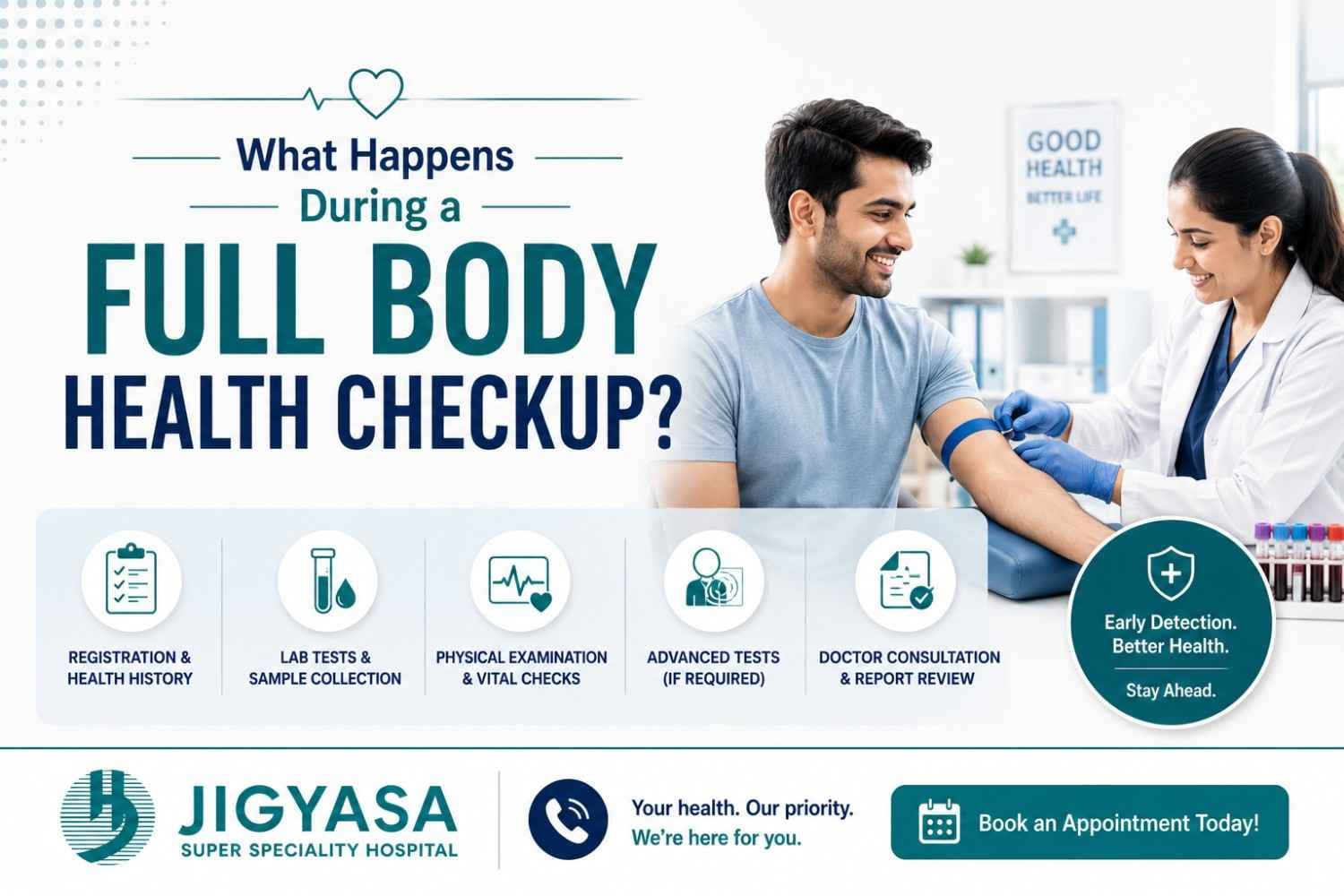
What Happens During a Full Body Health Checkup?
Not Sure What a Full Body Health Checkup Involves? Jigyasa Hospital Moradabad Walks You Through Every Test, Every Step, and Everything You Need to Prepare — So There Are No Surprises on the Day.
In India, most people visit a doctor only when something has already gone wrong — not before. Yet the diseases responsible for the majority of deaths in India — heart disease, diabetes, hypertension, cancer, kidney disease — are all detectable early, often years before symptoms appear, through a routine health checkup. A full body health checkup is not just a blood test. It is a comprehensive, systematic review of your entire body — organs, blood chemistry, heart, lungs, eyes, and more — designed to catch problems in their earliest, most treatable stages. At Jigyasa Hospital, Moradabad, our preventive health packages are designed to give you a complete picture of your health in a single visit — with expert interpretation, not just a stack of reports. This guide walks you through exactly what happens during a full body health checkup — test by test, step by step — so you arrive prepared and leave genuinely informed.
Before the Checkup: How to Prepare
- •Fasting: Most full body checkups require 8–12 hours of fasting before your appointment — no food, no sugary drinks, and no tea or coffee. Plain water is allowed and encouraged.
- •Timing: Morning appointments (ideally between 7–10 AM) are recommended — the natural overnight fast aligns perfectly, and you can eat a proper meal immediately after.
- •Medications: If you take regular medication (blood pressure tablets, thyroid medication, etc.), ask your doctor whether to take them before or after the checkup. In most cases, critical daily medications are taken with a small sip of water.
- •Clothing: Wear comfortable, loose clothing. You will be asked to change into a hospital gown for certain tests. Avoid tight-fitting clothing, belts, or jewellery that may need to be removed.
What to bring:
- •Aadhaar Card or any photo identity proof
- •Previous health checkup reports (if any) — comparison year on year is clinically valuable
- •A list of current medications and any known allergies
- •Your health insurance card if the checkup is to be claimed
What Tests Are Included in a Full Body Health Checkup?
1. Complete Blood Count (CBC): Checks the number and health of red blood cells, white blood cells, and platelets in the blood. Detects anaemia (extremely common in Indian women), infections and inflammation, blood disorders, and platelet conditions like dengue-related thrombocytopenia. A small blood sample is drawn from a vein in the arm — takes less than 2 minutes.
2. Blood Sugar Tests (Fasting, Post-Prandial and HbA1c): Checks glucose levels in the blood — both at the time of the test and as an average over the past 3 months (HbA1c). Detects pre-diabetes (a critical window for intervention), Type 2 Diabetes (affects over 10 crore Indians, many undiagnosed), and hypoglycaemia. India has the second-highest number of diabetics in the world — annual blood sugar screening is non-negotiable for every adult over 30.
3. Lipid Profile (Cholesterol Panel): Checks total cholesterol, LDL ('bad' cholesterol), HDL ('good' cholesterol), triglycerides, and VLDL. Detects dyslipidaemia — abnormal cholesterol levels that silently build up arterial plaque — and provides risk assessment for heart attack and stroke. High LDL cholesterol causes no symptoms whatsoever until a heart attack or stroke occurs — this test is your only early warning.
4. Kidney Function Tests (KFT / RFT): Checks creatinine, urea, uric acid, and electrolytes — markers of how efficiently the kidneys are filtering the blood. Detects Chronic Kidney Disease (often asymptomatic until over 50% of kidney function is already lost), gout (elevated uric acid — common in Indian men), and electrolyte imbalances affecting heart rhythm and muscle function.
5. Liver Function Tests (LFT): Checks liver enzymes (SGOT, SGPT, ALP), bilirubin, albumin, and total protein. Detects fatty liver disease (NAFLD — now affecting nearly 1 in 3 urban Indians), hepatitis B or C-related liver damage, alcohol-related liver disease, and bile duct obstruction from gallstones. Fatty liver is often completely silent — detected only through blood tests and ultrasound.
6. Thyroid Function Test (TFT / TSH): Checks TSH (Thyroid Stimulating Hormone) — and T3/T4 levels if TSH is abnormal. Detects hypothyroidism (underactive thyroid — the most common hormonal disorder in Indian women, causing weight gain, fatigue, hair loss, depression, and irregular periods) and hyperthyroidism (overactive thyroid — causing palpitations, weight loss, anxiety, and heat intolerance). Thyroid disorders are among the most underdiagnosed conditions in India.
7. Urine Routine and Microscopy: Checks pH, protein, glucose, blood, ketones, and cellular elements in the urine. Detects urinary tract infections (especially important for women), early kidney damage, undiagnosed diabetes, and kidney stones. A mid-stream urine sample is collected in a sterile container provided by the hospital.
8. Electrocardiogram (ECG): Checks the electrical activity of the heart — rhythm, rate, and conduction patterns. Detects arrhythmias (including Atrial Fibrillation, which significantly increases stroke risk), previous silent heart attacks, conduction abnormalities, and signs of left ventricular hypertrophy from uncontrolled hypertension. Ten electrodes (sticky pads) are attached to the chest, arms, and legs. You lie still for 30–60 seconds. Completely painless and non-invasive.
9. Chest X-Ray: Checks the lungs, heart size and shape, rib cage, and visible major blood vessels. Detects lung infections (including tuberculosis — highly prevalent in Uttar Pradesh), lung nodules, enlarged heart, and pleural effusion (fluid around the lungs). You stand in front of an X-ray panel and take a deep breath and hold it for 2–3 seconds. The entire process takes under a minute.
10. Abdominal Ultrasound: Checks all abdominal and pelvic organs — liver, gallbladder, pancreas, spleen, kidneys, and urinary bladder. Detects fatty liver disease, gallstones (extremely common in Indian adults), kidney stones or masses, enlarged spleen or lymph nodes, and abdominal aortic aneurysm in older men. A small amount of ultrasound gel is applied to the abdomen and a handheld probe is gently moved across the skin. Painless, no radiation, takes 10–15 minutes.
11. Eye Examination (Vision and Intraocular Pressure): Checks visual acuity, intraocular pressure, and basic fundus assessment in comprehensive packages. Detects refractive errors, glaucoma (the leading cause of irreversible blindness — almost always asymptomatic until advanced), and diabetic retinopathy (damage to the retina's blood vessels, detectable years before vision loss). The eye is also the only place in the body where blood vessels can be directly visualised — making it a window into cardiovascular and metabolic health.
12. Anthropometric Measurements and Vital Signs: Checks height, weight, BMI, waist circumference, blood pressure (both arms), pulse rate, and oxygen saturation (SpO2). Hypertension affects 1 in 3 Indian adults and causes no symptoms — the silent killer. Central obesity (fat around the abdomen) is a stronger predictor of heart disease and diabetes than overall weight.
Additional Tests in Premium Packages
Depending on age, gender, and health history, comprehensive packages may also include:
- •PSA (Prostate Specific Antigen): Prostate cancer screening for men over 45
- •PAP Smear: Cervical cancer screening for women — should be done every 3 years from age 21
- •Mammography: Breast cancer screening for women over 40
- •Vitamin D3 and B12 levels: Deficiencies are epidemic in India and easily treated once identified
- •Iron studies (Serum Ferritin): Especially important for women of reproductive age
- •Bone Density Scan (DEXA): For women post-menopause and men over 60 — screens for osteoporosis
- •Treadmill Test (TMT): Cardiac stress testing for individuals with risk factors for coronary artery disease
- •HbA1c: 3-month average blood sugar — more informative than a single fasting reading
How Long Does a Full Body Checkup Take?
- •Most full body health checkups at Jigyasa Hospital are completed within 3–4 hours — including all sample collection, imaging, ECG, vitals measurement, and a brief consultation.
- •You can plan to arrive at 8 AM fasted and return home by midday — with a comprehensive picture of your health.
- •Reports are typically ready within 24–48 hours, after which a doctor consultation is scheduled to interpret findings and advise on any follow-up action.
Who Should Get a Full Body Checkup — and How Often?
- •Adults over 30: At least once a year — the age at which lifestyle diseases begin silently accumulating.
- •Adults over 40: Twice a year — risk of heart disease, diabetes, hypertension, and cancer rises significantly.
- •Individuals with diabetes, hypertension, or obesity: Every 6 months — closer monitoring is essential.
- •Women over 40: Annually — add PAP smear and mammography to the standard panel.
- •Men over 45: Annually — add PSA testing.
- •Smokers and tobacco users: Every 6 months — heightened risk across multiple organ systems.
- •Anyone with a family history of heart disease, cancer, or diabetes: Annual screening from age 25.
Comprehensive Health Checkup Packages at Jigyasa Hospital, Moradabad
- •Jigyasa Hospital offers structured health checkup packages — from essential preventive panels to comprehensive master checkups — designed to be affordable, thorough, and clinically meaningful.
- •All tests are performed in our NABL-standard diagnostic facility with quality-controlled reagents and equipment.
- •Every checkup is followed by a doctor consultation — so you receive proper interpretation and personalised advice, not just a report you cannot read.
- •Our packages are designed for individuals, corporate groups, and families — with senior citizen and women-specific panels available.
- •We accept major health insurance, Ayushman Bharat, and corporate health cards for eligible packages.
Book Your Health Checkup Today: 7900903333
Address: Near Miglani Cinema, Rampur Road, Moradabad – 244001
View Packages Online: jigyasahospital.com
Preventive Health Packages | Master Health Checkup | Corporate Packages | Senior Citizen Panel | Women's Health Panel | Ayushman Bharat Accepted
Key Takeaways
- •A full body health checkup is a systematic, multi-system evaluation — not just a blood test — covering the heart, blood, liver, kidneys, thyroid, lungs, abdomen, and eyes in a single visit.
- •The tests included detect the most common and dangerous conditions in India — diabetes, hypertension, high cholesterol, anaemia, thyroid disease, fatty liver, and early kidney damage — most of which cause no symptoms until advanced.
- •Preparation is straightforward: fast for 8–12 hours, wear comfortable clothing, bring your identity proof and previous reports.
- •Adults over 30 should get a full body checkup at least once a year — not only when they feel unwell.
- •At Jigyasa Hospital, Moradabad, every checkup comes with a doctor consultation — because a report without interpretation is just numbers on paper.
Frequently Asked Questions
What is the difference between a basic health checkup and a full body checkup?
A basic checkup typically covers CBC, blood sugar, and urine test — useful but limited. A full body checkup adds lipid profile, kidney and liver function, thyroid, ECG, chest X-ray, and ultrasound — giving a genuinely comprehensive health picture across all major organ systems.
How many hours of fasting is required before a health checkup?
Most full body checkup panels require 8–12 hours of fasting for accurate blood sugar and lipid readings. Plain water is allowed and encouraged during the fasting period. Morning appointments make this easy by leveraging the natural overnight fast.
Is a full body checkup painful?
The only mildly uncomfortable part is the blood draw — a small needle prick in the arm that takes less than 2 minutes. All other components — ECG, ultrasound, X-ray, urine sample, and vital measurements — are completely painless and non-invasive.
Can I take my regular medications before the checkup?
For most daily medications (blood pressure, thyroid, heart medication), continue taking them as prescribed with a small sip of water. Inform the team at registration. Blood thinners and diabetes medication may have specific instructions — check with your prescribing doctor in advance.
Can a full body checkup detect cancer?
A standard full body checkup can detect markers suggestive of certain cancers — including abnormal liver enzymes, elevated PSA (prostate), cervical changes (PAP smear), and breast abnormalities (mammography). However, it is a screening tool, not a definitive cancer diagnosis. Any suspicious finding is followed up with specialist evaluation and targeted investigations.
How soon will I get my reports?
Most routine reports are available within 24–48 hours. At Jigyasa Hospital, a doctor consultation is scheduled once all reports are compiled — so you receive an interpreted summary, not just raw data.
Related Articles

Heart Attack Warning Signs You Must Never Ignore
Recognizing heart attack symptoms early can save your life. Learn the critical warning signs from Dr. Amit Kumar Singh, Senior Interventional Cardiologist at Jigyasa Hospital, Moradabad. Call 7900903333.

5 Early Morning Habits That Prevent Diabetes Naturally
Discover 5 powerful morning habits that naturally prevent diabetes. Expert advice from Dr. C.P. Singh, Senior Consultant Physician at Jigyasa Hospital, Moradabad. Call 7900903333.

Why Summers in UP Are Dangerous for Your Kidneys
UP summers can silently damage your kidneys. Jigyasa Hospital Moradabad explains the hidden risks, warning signs, and how to protect your kidneys this season. Call 7900903333.